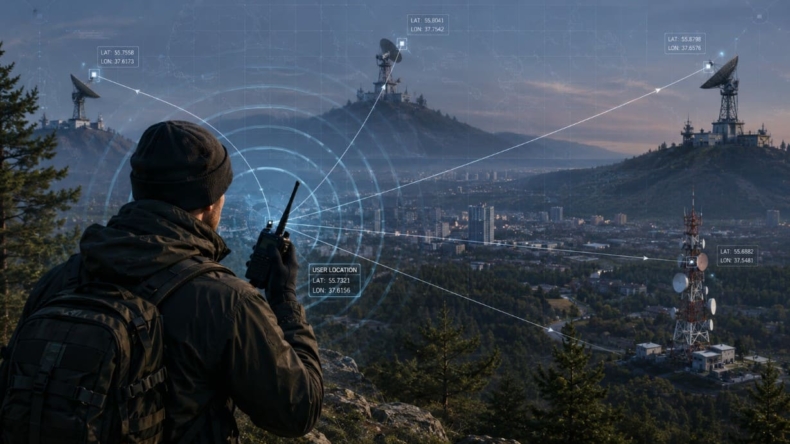

Amateur Radio Direction Finding (ARDF) is a special competitive outlet for those who want to combine the physical challenge of outdoor navigation with the technical puzzle of radio science. ARDF is an international amateur radio sport, colloquially known in many parts of the world as “fox hunting” or “transmitter hunting” . Participants use specialized radio receiving equipment, a map and a compass to locate radio transmitters hidden within the general vicinity .
The sport is overseen internationally by the International Amateur Radio Union (IARU) and is participated in by thousands of people of all ages, linking physical fitness, geography and radio technology.
How the “Fox Hunt” Works
An ARDF competition is normally held on a defined course outdoors, usually in a mixed woodland or park area of one to several square kilometres. There are five hidden “foxes,” or automated radio transmitters, in this area.
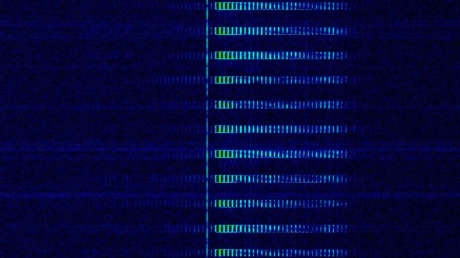
To avoid signal interference and add an element of strategy, the transmitters do not broadcast simultaneously. Instead they share a frequency and broadcast on a repeating five minute cycle.
- Fox 1 transmits for the first minute.
- Fox 2 transmits during the second minute, and so on, up to Fox 5 in the fifth minute.
- After five minutes, the cycle repeats.
Each transmitter transmits a unique identification signal in Morse code (MOE, MOI, MOS, MOH, MO5, etc.). Competitors begin the race at timed intervals. They must navigate the terrain, determine the bearing of each transmitting ‘fox’ when it is on the air, locate the hidden transmitters in any order and reach the finish line within a given time limit.
A sixth transmitter, known as the beacon, operates continuously on a different frequency near the finish line to help competitors find their way back once they have completed the hunt.
The Equipment
Unlike traditional amateur radio, which often involves heavy base stations and large antenna arrays, ARDF equipment must be highly portable, lightweight, and durable enough to withstand running through dense forests.
- The Receiver and Antenna: Competitors carry a handheld radio receiver connected to a directional antenna. The type of antenna depends on the frequency band being used:
- 80-Meter Band (3.5 MHz): Uses a small loop antenna or a ferrite rod antenna. These antennas are highly directional and help competitors determine the precise line of the signal.
- 2-Meter Band (144 MHz): Uses a directional “Yagi” antenna (resembling a handheld television antenna) or a Moxon antenna.
- Map and Compass: Competitors are provided with a detailed topographical map of the area (similar to those used in traditional orienteering) and use a magnetic compass to navigate the terrain and plot their bearings.
- Electronic Timing: Competitors carry a small electronic recording card (often a Sportident finger stick) to register their visit at each transmitter’s checkpoint.
The Two Frequencies: Different Challenges
ARDF competitions generally feature two distinct events based on the radio frequency used, each requiring different tactical approaches:
- The 80-Meter Band (3.5 MHz): Signals at this lower frequency travel primarily via ground waves. They are relatively unaffected by terrain obstacles like hills or dense foliage, meaning the signal path is usually a straight line from the transmitter to the receiver. The challenge on this band lies in speed and precise close-in navigation.
- The 2-Meter Band (144 MHz) VHF ( Very High Frequency) signals do not behave the same way. They bounce easily off hills, cliffs and big buildings, creating “multipath propagation.” A competitor may get a strong hint that seems to be coming from one direction, only to discover it is an echo bouncing off a hillside. But the 2-meter band can be a tricky one to work, requiring analysis and experience as well as strategic movement to help sort out the false signals.
A Sport for Everyone
One of the most defining characteristics of ARDF is accessibility. Competitors are grouped by age and gender and the difficulty of the courses and the number of transmitters to be found are adjusted accordingly.
It does require a basic knowledge of radio propagation and map reading to get started. Many local clubs offer introductory sessions in which newcomers may borrow equipment and learn the basics. Usually you do not need an amateur radio license to participate, since you are only receiving signals and not transmitting them.
US-Specific Nuances: Frequencies, Terminology, and Local Culture
For a reader based in the United States, there are several regional differences in terminology, frequency usage, and equipment preferences to keep in mind.
US Frequency Allocations and Regulations
While US events follow the general IARU guidelines using the 80-meter and 2-meter bands, local frequencies are strictly regulated by the Federal Communications Commission (FCC):
- The 80-Meter Band (3.5 MHz): For official US competitions, transmitters are typically assigned within the 3.510–3.600 MHz range. However, since basic Technician-class license holders in the US do not have Morse code (CW) privileges below 3.525 MHz, organizers often must adjust frequencies slightly or use General or Extra-class control operators to identify the transmitters.
- The 2-Meter Band (144 MHz): Transmitters are typically assigned to 144.500–144.800 MHz or 145.500–145.800 MHz. US organizers are particularly careful to select frequencies that avoid active local repeater networks and stay clear of the national simplex calling frequency (146.520 MHz) to prevent interference.
“Radio Orienteering” vs. “T-Hunting”
In the US, the term “Fox Hunt” can refer to two very different formats:
- Radio Orienteering (ARDF): This is the international, on-foot sport described above. Because the term “Amateur Radio Direction Finding” was frequently confused with other activities, the American Radio Relay League (ARRL) and Orienteering USA officially favor the term Radio Orienteering for this format.
- Mobile T-Hunting (Vehicular Hunts): Traditionally, “fox hunting” in many US amateur radio clubs has been a vehicular activity. Teams drive around a city or county in cars equipped with roof-mounted antennas, tracking a hidden transmitter operating on the 2-meter (VHF) or 70-centimeter (UHF) band. Once they park near the coordinates, they may do a brief on-foot search to find the final hiding spot.
The DIY Spirit and Popular US Gear
At the local club level, many American participants prefer a budget-friendly, do-it-yourself approach to equipment:
- The “Tape Measure” Yagi: One of the most popular home-brew directional antennas in the US is built using pieces of steel tape measure and PVC pipe. It is highly directional, inexpensive, and resilient when dragged through dense brush.
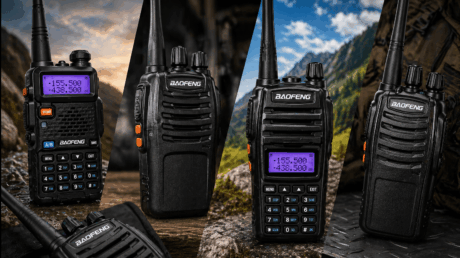
- Handy Talkies (HTs) and Attenuators: Rather than buying specialized ARDF receivers, casual US hunters often use standard handheld dual-band FM transceivers (such as those by Baofeng or Yaesu) paired with an external RF attenuator. The attenuator is crucial to reduce the incoming signal strength as the hunter gets closer to the transmitter, preventing the radio from being overloaded.
The Origins and Evolution of ARDF
The practice of radio direction finding is nearly as old as radio itself, but its transformation into a competitive, map-and-compass sport took several decades to mature.
Early Precursors (The 1920s)
Recreational transmitter hunting: The earliest documented examples of this were in the UK. One of the earliest recorded events, then known simply as a “D.F. (Direction Finding) Hunt,” was organized in Derbyshire, England, and written about in the July 21, 1926, issue of The Wireless World and Radio Review. In these early days the activity was mostly a slow-paced, technical exercise to test the capabilities of bulky, early-generation radio receivers in the field.
Post-WWII and the Cold War (The 1950s)
The modern sport of ARDF, which tightly integrates the physical running and navigation of traditional orienteering with radio science, truly took shape in Northern and Eastern Europe during the late 1950s.
Several factors drove its rapid rise during this era:
- Civil Defense and Military Training: During the Cold War, radio direction finding was recognized as a vital civil defense skill. Governments in the Soviet Union, Eastern Bloc nations, and China heavily promoted the activity through schools and state-sponsored radio clubs to train youth in radio operation and navigation.
- Lack of Private Vehicles: Because personal automobiles were uncommon for the average citizen in post-war Europe, early organizers abandoned vehicular hunts in favor of on-foot competitions in forests and parks, laying the groundwork for the modern athletic format.
- Standardized Rules: Throughout the 1950s, amateur radio societies in England, Denmark, and other European countries began proposing standardized rules for competitive, timed events.

International Formalization
As interest grew, the sport quickly moved to the international stage:
- 1961: The first official European Championship was held in Stockholm, Sweden, attracting competitors from several European nations.
- 1980: The International Amateur Radio Union (IARU) assumed global governance of the sport, hosting the first official World ARDF Championship in Cetniewo, Poland, with eleven European and Asian nations participating.
- 1990s: The international, on-foot style of ARDF was officially introduced to North America, with the first US championship occurring in Portland, Oregon, in 1991.
Today, ARDF remains a unique testament to how a military and civil defense necessity of the 20th century was successfully repurposed into a peaceful, highly athletic sport enjoyed by a global community of radio enthusiasts.
Amateur Radio Direction Finding is a fascinating discipline that tests both the mind and the body. It demands physical endurance to navigate challenging off-trail terrain, spatial awareness to read a topographical map, and the technical skill to interpret radio signals under the pressure of a ticking clock. Whether pursued as a casual weekend hobby or as a highly competitive international sport, ARDF remains one of the most engaging ways to experience the practical side of radio technology in the great outdoors.