
Successfully tracking a standard walkie-talkie requires specialized equipment, knowledge of the radio frequency being used, and often multiple receiving stations working together to pinpoint the signal’s location.
The walkie-talkie is so simple that it is generally assumed to be private as well. But is it so? Does someone listen to your conversations? Can a walkie talkie be tracked and used to reveal your location? Most importantly.To answer these questions, it’s useful to understand how these devices work in the first place.
How Do Walkie-Talkies Actually Work?
Most people never think about what happens after they press the Push-to-Talk button. You speak, the other person hears you, and that’s usually the end of it. Behind the scenes, though, a walkie-talkie is doing quite a bit of work in a fraction of a second.
When you start talking, the radio takes the sound of your voice and turns it into a radio signal. That signal leaves the antenna and travels through the air until another radio on the same channel picks it up. The receiving unit then converts the signal back into sound, allowing the other person to hear your message almost immediately. The whole process feels simple from the user’s perspective, which is probably why walkie-talkies have remained popular for so long.
If you’ve ever listened to a radio station in your car, the basic idea is surprisingly similar. The difference is that a walkie-talkie doesn’t just receive signals—it also transmits them. In a sense, every radio becomes a tiny broadcasting station whenever its user presses the PTT button.
The main parts are fairly straightforward:
- Transmitter – turns your voice into a radio signal.
- Receiver – turns incoming radio signals back into sound.
- Antenna – sends and receives those signals.
- Microphone – captures what you say.
- Speaker – lets you hear incoming transmissions.

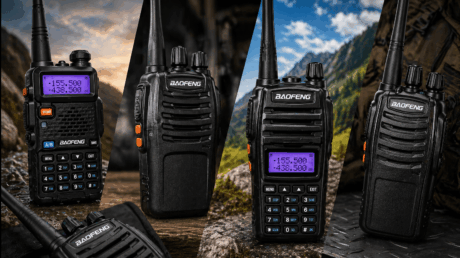
Not all walkie-talkies are built for the same purpose. Some are simple Family Radio Service (FRS) models designed for casual use and short-range communication. Others, such as GMRS radios, offer higher power and greater range but require a licence in the United States. Then there are professional PMR and LMR systems used by security teams, construction crews, emergency responders and countless other organisations that depend on reliable communication every day.
These differences aren’t just about range. The frequencies they use, the power they transmit with and the features they include can all affect how easily a radio transmission can be monitored, identified or traced.
The Core Methods of Tracking Walkie-Talkies
So, can they be tracked? The short answer is yes, under certain conditions. It’s not always as simple as hitting a button on a smartphone app, but the underlying principles are quite robust. The primary methods revolve around detecting and analyzing the radio signals they emit.
The FCC (Federal Communications Commission) in the US actively tracks down illegal radio stations, often referred to as “pirate radio”, that interfere with licensed broadcasters or emergency services.
Triangulation: Pinpointing by Angle
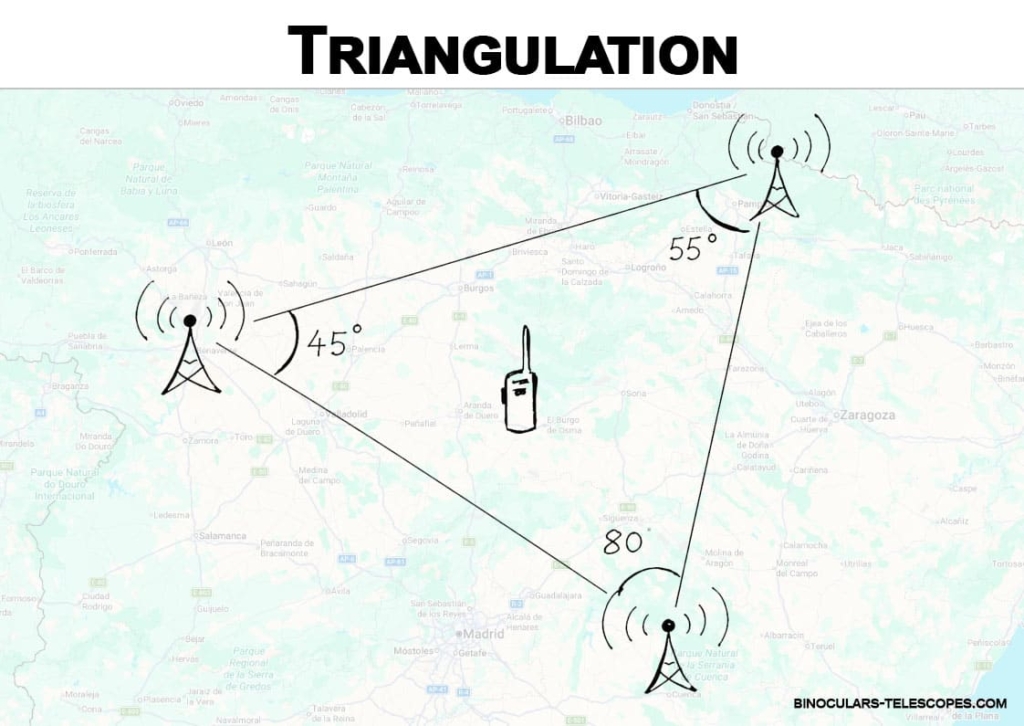
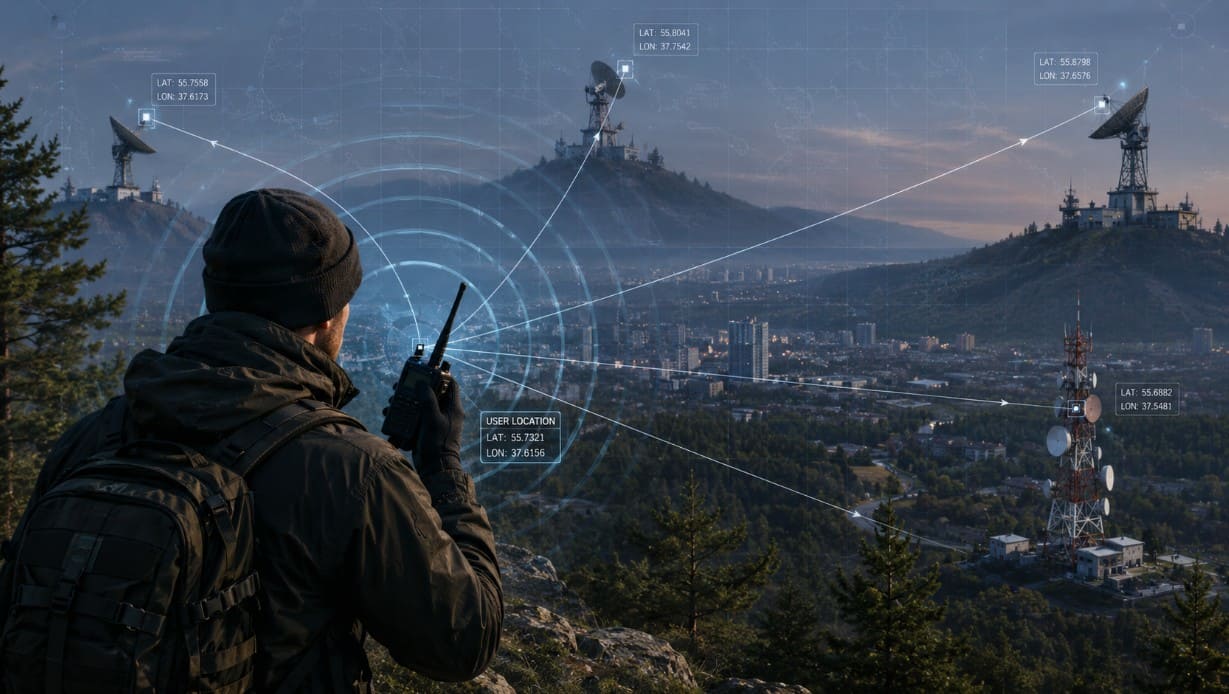
Remember the geometry class? We all learned about triangles, didn’t we? Well, triangulation applies that very idea to radio waves. This method requires at least two, but better three or more, receiving stations with directional antennas. Each station measures the angle of arrival of the radio signal. The approximate location of the walkie-talkie is found at the intersection of these lines drawn from each receiver based on these angles.
Think of it like this: if you’re standing in a park and hear a sound, you can tell its general direction. If two of your friends, standing at different spots, also tell you the direction they hear it from, you can all draw imaginary lines, and where those lines cross is where the sound originated. Radio triangulation works on the same principle, but with radio waves instead of sound waves. It’s a classic technique, nearly as old as radio itself .
During World War II, high-frequency direction finding (HF/DF), known as “Huff-Duff,” played a decisive role in the Battle of the Atlantic. British engineer Robert Watson-Watt, also known as one of the pioneers of radar, developed a system that allowed for the rapid determination of the direction of radio signals.
Let’s consider a simplified example of how triangulation might work:
| Receiver | Coordinates (x, y) | Angle of Arrival (degrees) |
| A | (0, 0) | 30 |
| B | (4, 0) | 60 |
| C | (2, 3) | 45 |
By using these angles and the known positions of the receivers, the position of the walkie-talkie can be calculated. The lines of bearing from each receiver intersect at the location of the walkie-talkie. While this table provides a theoretical example, real-world scenarios involve more complex calculations and often account for signal reflections and environmental factors.
Trilateration: Measuring by Distance
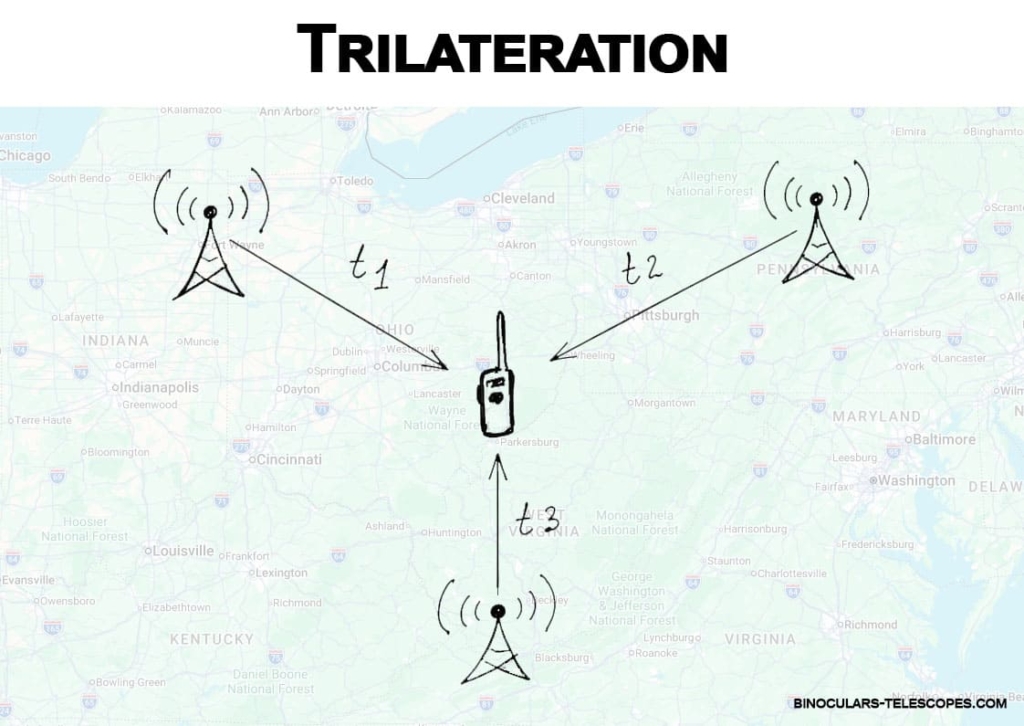
The position is found by using trilateration but instead of measuring angles for triangulation , distances are measured . This method requires the exact distance of the walkie-talkie from at least three receiving points. The distance can be worked out from how long it takes a signal to reach a receiver, because we know how fast radio waves travel. For each distance measured there’s a circle around the receiver and the intersection point of all (minimum of three) circles is where the walkie-talkie is.
The best example of trilateration is the GPS systems that we use every day in our lives. Your phone isn’t measuring angles to satellites, it’s measuring the time it takes for signals from multiple satellites to reach it, and then calculating its position based on those distances. So in general, walkie-talkies usually do not have GPS (unless specified, which we will get to) but the principle of trilateration is fundamental to modern positioning technology.
In real life
Triangulation and trilateration are two fundamental techniques for locating an emergency beacon, e.g., a Personal Locator Beacon (PLB) or an Emergency Position-Indicating Radio Beacon (EPIRB), in search and rescue (SAR) operations. These devices send distress signals on specific frequencies which are received by satellites (the COSPAS-SARSAT system) or ground stations. When a distress signal is received by a satellite or multiple ground receivers the exact location of the beacon can be determined by either trilateration ( measuring the time of arrival of the signal ) or triangulation ( measuring the angle of arrival ) . This allows rescue teams to reach people in distress quickly, whether they are on land, at sea or in the air.
Signal Monitoring and Spectrum Analysis
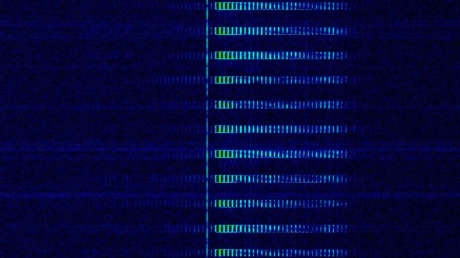
In addition to geometric methods, specialized equipment only monitors and analyzes radio signals. Walkie-talkies can be detected transmitting by using RF (Radio Frequency) detectors and spectrum analyzers to scan a specific range of frequencies. Trained operators can often get a general idea of the proximity of the transmitter, and even the type, by analyzing properties such as signal strength, frequency, and modulation. Its less about finding a specific point, and more about detecting activity and narrowing down an area. It’s like listening to a conversation in a crowded room. You don’t necessarily know who’s talking or where they’re at, but you know there’s a conversation going on.
Factors Influencing Traceability
The ease and accuracy of tracking a walkie-talkie aren’t constant; they depend on several critical factors. It’s not a one-size-fits-all situation. In short:
Stronger signals and longer transmissions are generally easier to locate, while mountains, buildings, and dense forests can make tracking less accurate by disrupting radio waves. Modern digital radios may use encryption to protect conversations from being understood, but encryption does not prevent the signal itself from being detected or traced. In short, while some conditions make tracking more difficult, no walkie-talkie becomes completely invisible simply because it uses a different frequency or encrypted communications.
Frequency and Power: Different walkie-talkies operate on different frequency bands (e.g., FRS, GMRS, UHF, VHF) and transmit at varying power levels. Lower frequencies tend to travel further and penetrate obstacles better, but higher frequencies can offer more precise localization over shorter distances. A more powerful signal will naturally be detectable from a greater range, making it easier to track.
Low Frequencies: Longer range, but more susceptible to terrain and building interference.
High Frequencies: Shorter range, but better penetration in complex environments.
Transmission Duration and Method: A walkie-talkie that transmits continuously or for long periods is much easier to track than one used for short, intermittent bursts. The longer the signal is active, the more data receiving stations have to work with for accurate positioning. This is why, historically, covert operators tried to keep their transmissions as brief as possible.
Environmental Conditions: The surrounding environment plays a huge role. In open, flat terrain, radio signals travel predictably, making tracking relatively straightforward. However, in urban areas with tall buildings, dense forests, or mountainous regions, signals can reflect, refract, and scatter (known as multipath propagation). This can createa confusing mess for tracking equipment, increasing the difficulty and potential error of location.
Technologies of Encryption: Many modern digital walkie-talkies offer encryption features. While encryption scrambles the content of your conversation, making it unreadable to unauthorized listeners, it doesn’t hide the fact that a signal is being transmitted. An encrypted signal can still be detected and tracked, but its contents remain private. So, while encryption protects your words, it doesn’t make you invisible on the airwaves.
| Easier to track | Harder to track |
|---|---|
| High transmit power | Low transmit power |
| Long or continuous transmissions | Short, infrequent transmissions |
| Open terrain with few obstacles | Dense urban areas, forests, or mountains |
| Strong, clear radio signal | Weak or obstructed signal |
| Multiple receiving stations available | Limited monitoring coverage |
| Signal is actively transmitting | Radio is turned off or not transmitting |
Note: Encryption can hide the content of a conversation, but it does not prevent the radio signal itself from being detected or located.
Walkie-Talkies with Built-in Tracking (GPS)
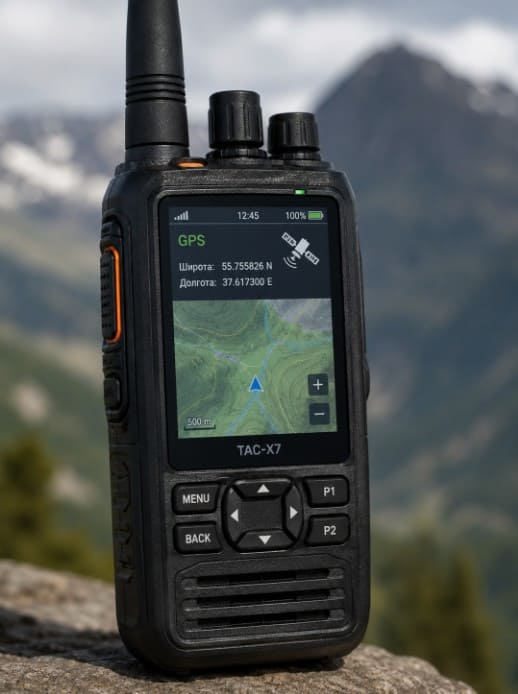
While traditional walkie-talkies rely on their radio signals for potential tracking, some advanced models come with integrated positioning capabilities, much like your smartphone. These devices often include built-in GPS (Global Positioning System) or GLONASS modules. They actively transmit their precise coordinates, making them easily trackable.
These GPS-enabled walkie-talkies are particularly valuable in professional settings where real-time location monitoring is crucial. Think about search and rescue teams, security personnel, or logistics operations. Knowing the exact location of each team member can be a game-changer for safety and efficiency. For instance, models like the ETMY ET-C9 offer optional GPS positioning, allowing users to track locations in real-time .
Who Can Track Walkie-Talkies?
Unauthorized tracking or eavesdropping can have serious legal and ethical implications.
It’s not just a hypothetical scenario; various entities possess the capability and the need to track radio signals
Law Enforcement Agencies
Police, intelligence services, and other government bodies are equipped with sophisticated radio monitoring equipment and trained personnel.
They routinely use direction-finding techniques, including triangulation, to locate sources of illegal transmissions, assist in criminal investigations, or manage large-scale events .
For example, the FCC (Federal Communications Commission) in the US actively tracks down illegal radio stations, often referred to as “pirate radio”, that interfere with licensed broadcasters or emergency services. They use mobile units with specialized equipment to triangulate the source of these transmissions, sometimes narrowing it down to a specific building or even a room.
Private Individuals / Organizations
While not as common or as equipped as government agencies, private individuals and organizations can also engage in radio tracking.
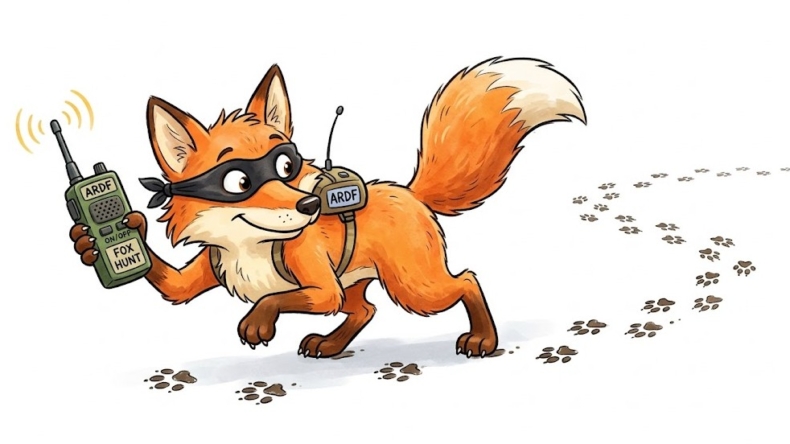
This might include amateur radio enthusiasts participating in “fox hunts” (a game of hide-and-seek using radio transmitters, also known as Amateur Radio Direction Finding (ARDF)) , or companies monitoring their employees’ locations using GPS-enabled radios. However, it’s important to note that unauthorized tracking or eavesdropping can have serious legal and ethical implications.
Limitations: It’s crucial to understand that tracking a standard walkie-talkie isn’t a trivial task. It requires specialized equipment, knowledge of radio frequencies, and often, a coordinated effort involving multiple receiving stations. It’s not something the average person can do with a smartphone app.
Risks and Legal Aspects of Tracking
The ability to track walkie-talkies raises significant concerns regarding privacy and legality. Have you ever considered who might be listening to your seemingly private conversations?
Privacy
The most obvious risk is the potential for eavesdropping. Unless you’re using encrypted digital radios, your conversations on standard analog walkie-talkies are essentially public broadcasts. Anyone with a scanner or a compatible radio tuned to the same frequency can listen in. This is a critical consideration if you’re discussing sensitive information.
Legal Implications
The legality of tracking and monitoring radio signals varies significantly by jurisdiction. In many places, listening to unencrypted public broadcasts (like amateur radio or FRS channels) is legal, but intercepting encrypted communications or using tracking equipment for malicious purposes is strictly prohibited. Furthermore, operating certain types of radios (like GMRS in the US) requires a license, and using them without one can lead to fines and penalties.
Ethical Considerations
Even if it’s technically legal, tracking someone’s location without their consent raises ethical questions. It’s a delicate balance between security, safety, and individual privacy.
How to Prevent Tracking (Enhancing Privacy)
If you’re concerned about your privacy while using walkie-talkies, there are steps you can take to minimize the risk of being tracked or eavesdropped upon.
- Encryption and Secure Channels: The most effective way to protect the content of your conversations is to use digital walkie-talkies with strong encryption. This ensures that even if your signal is intercepted, the listener will only hear scrambled noise.
- Distraction Techniques: While more relevant for covert operations, techniques like frequency hopping (rapidly changing the transmission frequency) or using short, burst transmissions can make it significantly harder for tracking equipment to lock onto your signal.
- Mindful Usage: Perhaps the simplest advice is to be mindful of what you say. Avoid discussing sensitive personal information, financial details, or specific locations over unencrypted channels. Keep your transmissions brief and to the point.
The Future of Walkie-Talkie Tracking Technologies
The world of radio technology is constantly evolving, and tracking capabilities are no exception. We can expect to see continued advancements in this field.
Technological Advancements: Improvements in antenna design, signal processing algorithms, and the integration of Artificial Intelligence (AI) will likely make tracking systems more accurate, faster, and capable of handling complex environments (like dense urban areas) more effectively.
Expansion of GPS Capabilities: As GPS technology becomes smaller, cheaper, and more power-efficient, we can expect to see it integrated into a wider range of walkie-talkies, even entry-level models. This will make location tracking more ubiquitous and accessible.
Some real-world cases of walkie-talkie tracking
In the real world, a New York case demonstrates how walkie-talkies can indirectly lead to the arrest of a suspect, even when the radios are not being actively tracked.
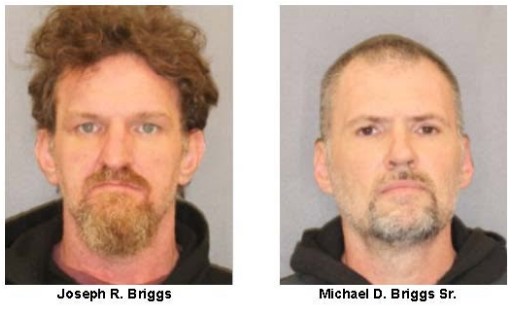
Two brothers, Joseph Briggs and Michael Briggs Sr., allegedly entered a home on Brickyard Road in the town of Stillwater, Saratoga County, New York, in December 2025. Investigators say the two stayed in touch during the burglary using two-way radios.
The first break in the case came when an off-duty sheriff’s deputy spotted a vehicle associated with the incident and relayed a description to responding officers. Later, deputies found the vehicle on Halfway House Road and stopped it, arresting Michael Briggs Sr.
Joseph Briggs had not been found at that point. He continued to use the walkie-talkie, not knowing that his partner was already in custody. Shortly after Michael’s arrest, Joseph called him on the radio and asked him to pick him up from a bike path near Halfway House Road.
That transmission kind of gave away where Joseph was. Deputies monitoring the situation knew where he was waiting and went in to arrest him a short time later.
The interesting thing about this case was that police did not use sophisticated radio-tracking equipment or triangulation. The walkie-talkie didn’t transmit GPS coordinates, nor was it “tracked” in the way many might imagine. Instead the radio communication itself gave the investigators the information they needed. Joseph basically gave away his location by calling someone who was already in custody with the police.
The incident is a good reminder that while most consumer walkie-talkies aren’t trackable like smartphones, radio transmissions can still give away a user’s location. In many instances the greatest danger is not the radio signal itself but information transmitted on it.
Miami pirate radio operator arrested during a live broadcast (2025)
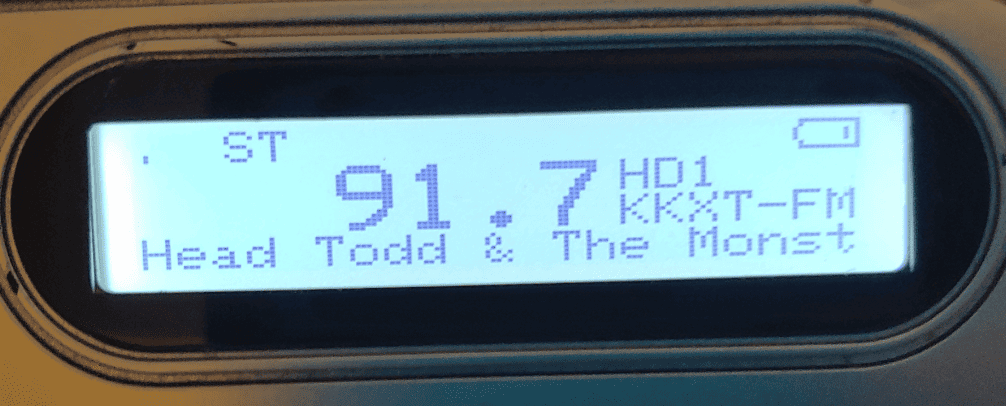
MIAMI – Miami-Dade Sheriff’s deputies arrested Abdias Datis, known on-air as “DJ AJ” or “DJ AJ 305,” while he was broadcasting from his unlicensed radio station, Unique FM on 91.7 MHz in August 2025. The arrest came in the execution of a search warrant at his home in the Biscayne Gardens area of Miami. When officers entered the property, FCC agents found and seized the transmission equipment which was still on.
This case is particularly interesting because the FCC had been after the station for years. Investigators traced the signal, gauged its strength and pinpointed transmissions to several locations associated with Datis. FCC field agents had located the 91.7 MHz signal in his home by 2024–2025 and had heard the station identify itself as “Unique FM” and the host as “DJ AJ.” The evidence for the probe was a mix of conventional radio direction-finding and information from social media accounts linked to the station and its operator.
Another interesting point is that Datis is said to have continued broadcasting despite earlier FCC enforcement actions. He was fined $120,000 in 2024, a penalty that was later increased to more than $325,000 after more illegal broadcasts were discovered. After the penalties were issued, FCC agents detected and traced the station multiple times, investigators said.
It is a contemporary illustration of the use of radio signals to locate an operator. The FCC didn’t make all the technical details public, but official documents say agents tracked and traced the unauthorized signal multiple times to a specific address before law enforcement intervened.