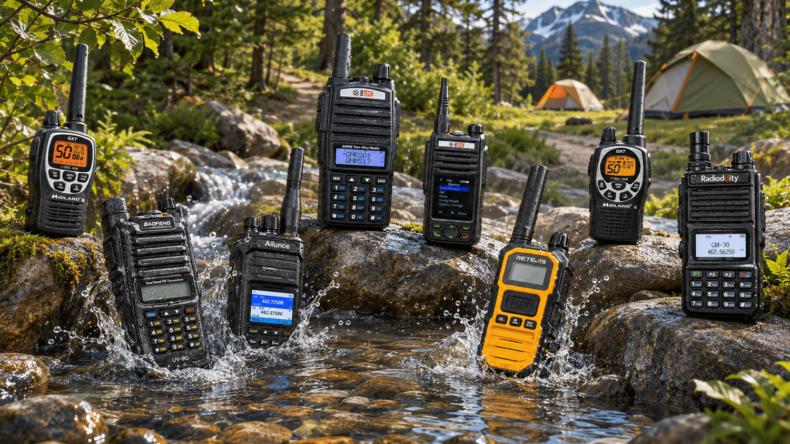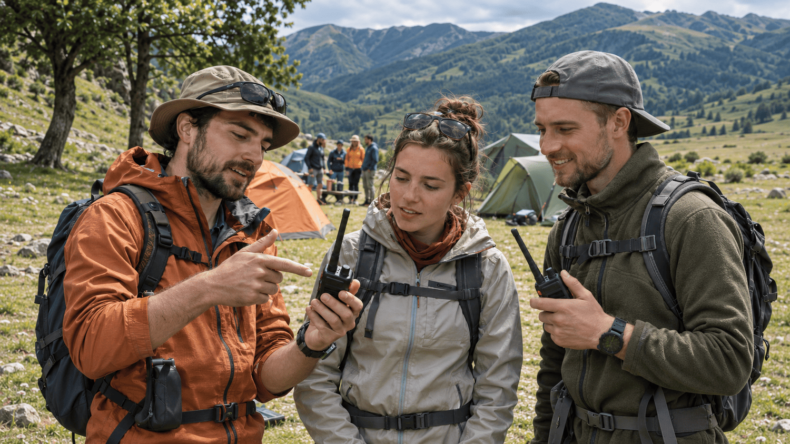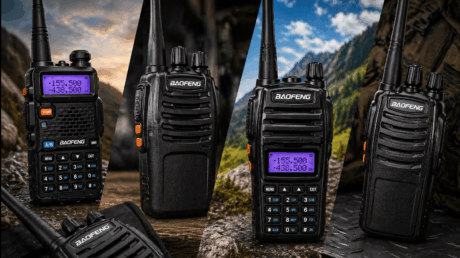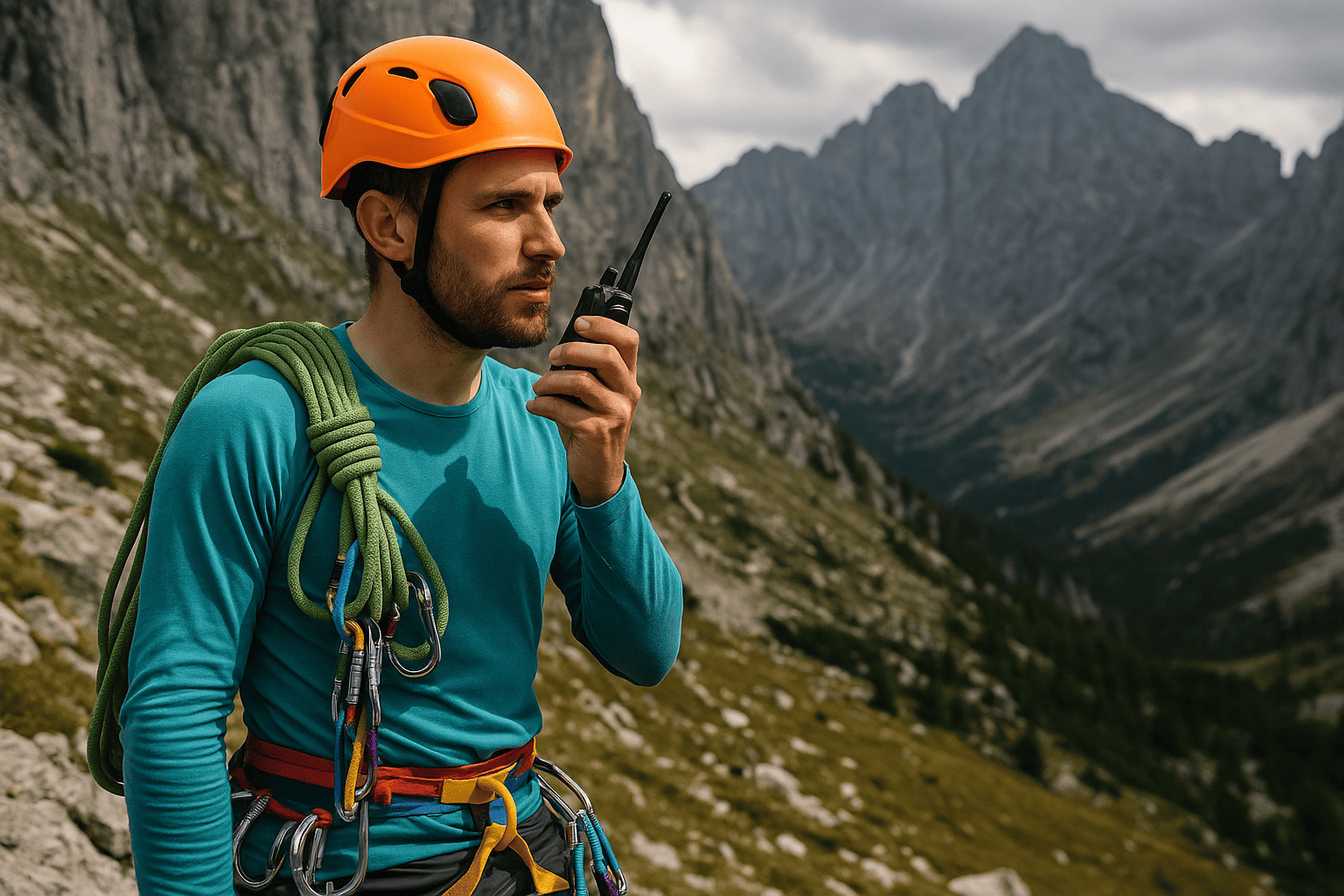
The Rocky Talkie Mountain Radio is our first choice for climbing: its carabiner, backup leash, and straightforward FRS operation address the practical needs of a rope team. Choose the Midland T71VP3 for a lower-cost hiking pair with AA backup, or the BCA BC Link 2.0 when remote microphone controls fit your backpack setup. The Rocky Talkie Expedition adds GMRS repeater capability for authorized users. No choice guarantees contact behind a ridge. For mountain communication, secure attachment, accessible controls, and a tested group routine matter as much as the radio itself.
- Technical climbing: start with the Rocky Talkie Mountain Radio.
- Hiking value: compare the Midland T71VP3 and Cobra RX680 pairs.
- Wet approaches: consider the Motorola T600 H2O and its exact charging revision.
- Repeater use: choose the Expedition only with the required GMRS authorization and route planning.
- Check mounting and access to PTT while wearing gloves.
- Match the exact US service, model revision, and kit contents.
- Plan power for both radios, including the approach and descent.
Climbing and mountain walkie-talkies ON

- ✓ Compare radio kits
- ✓ Check the exact version
- ✓ View current offers
As an Amazon Associate, we earn from qualifying purchases at no extra cost to you.
Quick Comparison: Eight Radios for Climbing and Mountains
Compare the complete setup, not advertised miles. Dollar symbols indicate a fixed editorial price band per radio in the stated pack, not the price of the whole kit. Where Amazon pricing was unavailable, a comparable manufacturer or US-retailer price informed the band. A blank band means a sufficiently current comparable price was not verified. Follow the store button for current offers. N/A means the exact value or carrying configuration could not be verified.
| Category | Best Value for Money | Advanced Features | Premium Options | Budget Options | ||||
|---|---|---|---|---|---|---|---|---|
| Model |
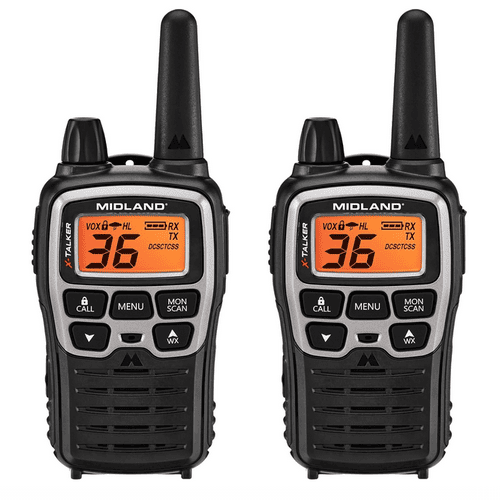 Midland X-Talker T71VP3 — US FRS Pair |
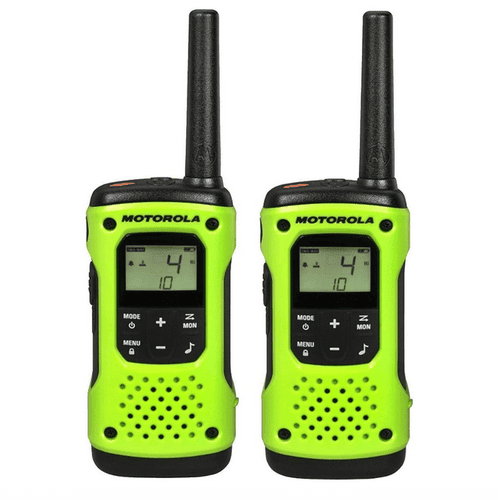 Motorola Talkabout T600 H2O — US Micro-USB Pair |
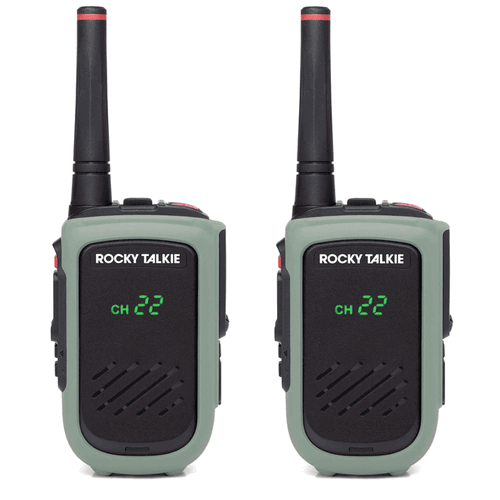 Rocky Talkie Expedition 5 Watt — US GMRS Pair |
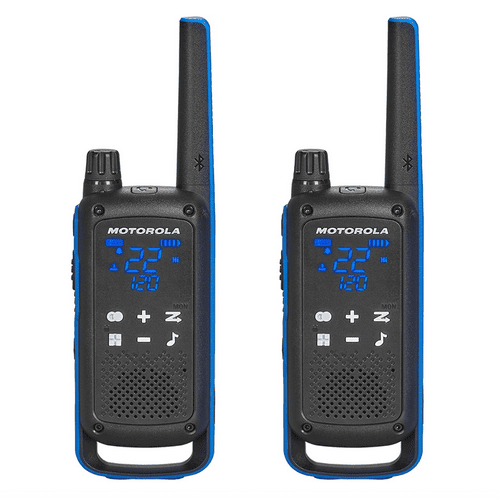 Motorola Talkabout T802 — US FRS Pair |
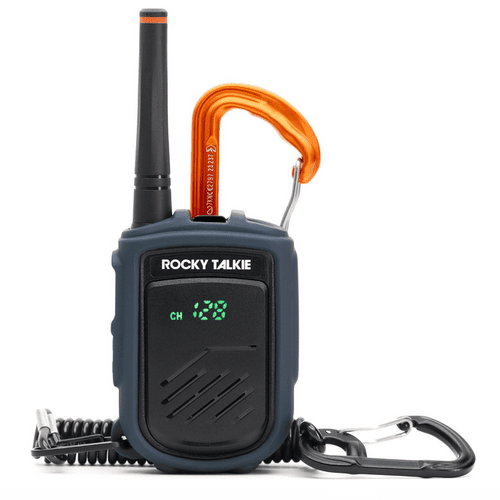 Rocky Talkie Mountain Radio |
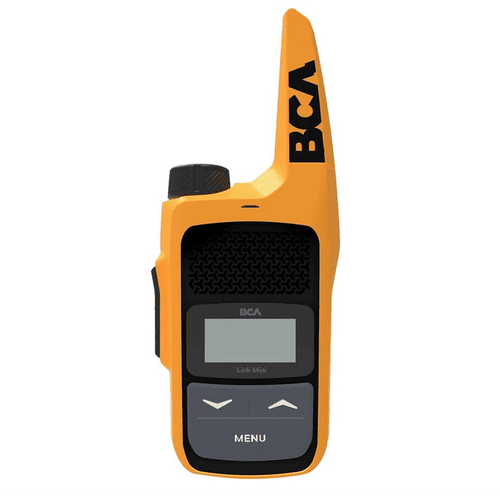 BCA BC Link Mini — NA FRS C2314001010 |
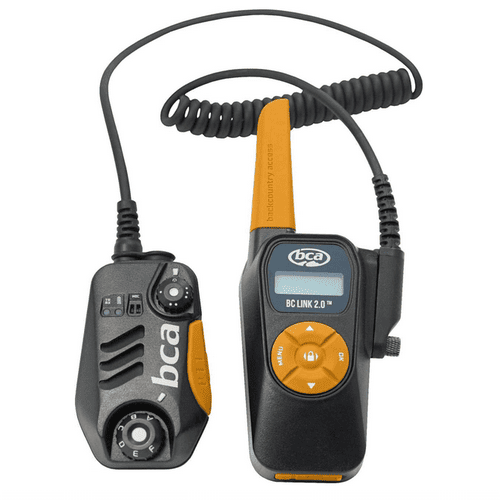 BCA BC Link 2.0 — NA FRS C1714003010 |
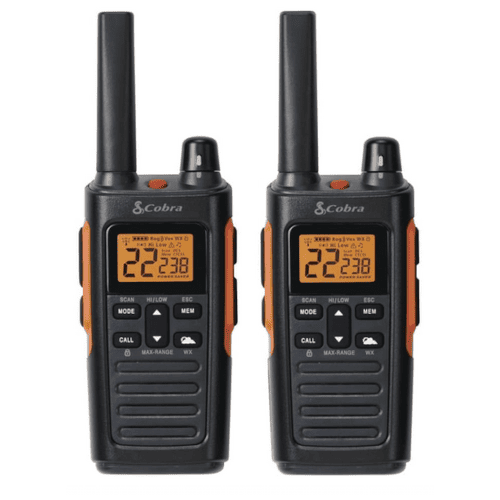 Cobra RX680 — US FRS Pair |
| Radio standard / version | US FRS | US FRS; selected micro-USB kit | US GMRS | US FRS; T802 blue/black pair | US FRS | NA FRS, C2314001010 | NA FRS, C1714003010 | US FRS |
| License / authorization | No individual license | No individual license | GMRS authorization required for each operator as applicable | No individual license | No individual license | No individual license | No individual license | No individual license |
| Featured | AA backup power | Floating radio body | GMRS repeater support | App location sharing | Secure harness attachment | Multiple strap mounts | Remote microphone controls | Vibrating call notification |
| Channels / memory | 22 frequencies + 14 channel/code presets | 22 frequencies; 121 tone/code choices | 22 direct channels + 8 repeater pairs; weather receive separate | 22 frequencies; 121 tone/code choices | 22 frequencies; 128 channel/code presets in current manual | 22 frequencies; 121 tone/code choices | 22 frequencies; preset selection and tone/code settings | 22 frequencies + 38 channel/code presets |
| Attachment / backup retention | Belt clips; backup leash not included | Whistle belt clips; add suitable retention | Steel clip + backup leash; carabiner optional | Belt clips; add suitable retention | Carabiner + backup leash | Webbing clips, strap, belt clip + leash | Smart Mic strap clip + secured base | Belt clips; backup leash not included |
| PTT / remote interface | On-radio PTT; eVOX available | On-radio PTT; iVOX/VOX available | On-radio PTT; optional M3 hand mic | On-radio PTT; app and compatible Bluetooth options | On-radio PTT; optional hand mic | On-radio PTT; single-unit design | Remote PTT, volume, and presets | On-radio PTT; VOX available |
| Ready-to-carry weight | N/A; published 6.2 oz lacks a clear carrying basis | 8.6 oz with batteries (datasheet); extra retention adds weight | 9.1 oz manufacturer specification; accessory total N/A | 7.2 oz with batteries (datasheet); phone and retention extra | 7.9 oz with leash (manual); mounting configuration matters | N/A complete setup; manufacturer lists 6 oz radio | N/A verified complete configuration | N/A; package weight excluded |
| Protection | Water resistant; IP rating N/A | IP67; floats with specified NiMH configuration | IP67 | IP54; not submersible | IP56; not submersible | Current manual IP55; listing IPX5; not submersible | IP56; not submersible | IP54; splashproof |
| Battery / charging | NiMH packs or 3 AA each; micro-USB / dock | NiMH packs or 3 AA each; micro-USB | 1800 mAh replaceable Li-ion; USB-C | 1300 mAh NiMH packs or 3 AA each; USB-C | 1550 mAh replaceable Li-ion; USB-C | 1800 mAh built-in Li-ion; USB-C | 2300 mAh built-in Li-ion; micro-USB | Included Li-ion packs; dock and micro-USB cable |
| Main trade-off | Mounting and protection less specialized | Bulk and older charging connector | Licensing, weight, and cost | App setup and phone battery dependence | Higher cost for a pair; no NOAA | Revision details and runtime figures differ | Cable management and system bulk | No immersion protection or AA fallback established |
| Price & Offer | $ | $ | $$$ | $ | $$ | $$ | $ | $ |
Quick Picks by Use Case
Start with the job the radio must do for your group.
Licensing & Legal Use in the United States
Choose a service every participant can use
The FRS versions in this guide are intended for operation without an individual FCC license, subject to the applicable rules. Under 47 CFR §95.305, authorization depends on the service and compliant equipment. FRS power limits are channel-dependent: §95.567 limits effective radiated power to 0.5 W on channels 8–14 and 2 W on channels 1–7 and 15–22. A radio marketed as “2 W” does not transmit at that power on every channel.
A valid individual license is required to operate a GMRS station.
47 CFR §95.1705, individual licenses required; eligibility; who may operate; cooperative use.
The Expedition is the GMRS model here. A license holder may authorize qualifying immediate family members, as defined in §95.1705(c), but a family license does not cover an ordinary group of unrelated climbing friends. Ensure each operator has the appropriate authorization before transmitting. GMRS station identification is governed by §95.1751; learn the call-sign requirements as part of preparation.
FRS and GMRS radios can communicate on compatible shared channels, but interoperability does not remove the GMRS operator’s obligations. Match actual frequencies and tones. Do not modify an amateur transceiver or import a PMR446 unit and assume that programming US frequencies makes it compliant FRS equipment. NOAA reception is for listening to weather broadcasts, not calling emergency services.
How We Selected and Evaluated These Radios
We compared eight US-market models with different roles: harness attachment, affordable hiking pairs, wet-route protection, backpack mounting, remote controls, GMRS repeaters, and app-linked features. We also considered alternatives appearing in the earlier guide. Similar colors and different pack sizes did not count as separate radios. European PMR446 versions and amateur radios were not included as ordinary US FRS alternatives.
- Attachment: Primary mounting and backup retention.
- Controls: PTT access and remote microphone arrangements.
- Power: Battery replacement, AA fallback, and charging connector.
- Protection: Splash resistance versus specified immersion protection.
- Carried system: Battery, mounts, microphone, cables, and phone requirements.
- Group compatibility: Service, operator authorization, frequencies, and tones.
- Cost: The equipment needed for two people, rather than a misleading single-unit price.
This is a document-based buying comparison, not a field test by our editorial team. Manufacturer manuals and specifications support technical details; exact Amazon listings identify the selected offers. We do not assign invented range scores, rank audio without comparable measurements, or turn advertised battery days into a common test result. Missing measurements and conflicting revisions are identified where they affect the choice.
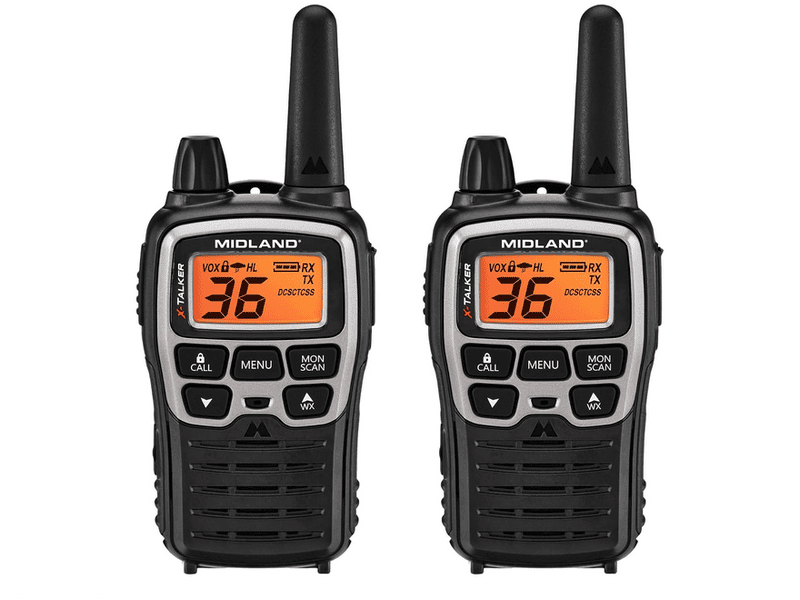
Midland X-Talker T71VP3 — US FRS Pair
The T71VP3 is a practical package for two hikers who want weather reception and flexible power without buying two premium radios. Its charging accessories are useful at home; a secure climbing mount needs separate attention.
Why We Selected It
This kit gives two people a complete starting point: radios, rechargeable packs, belt clips, and charging equipment. Standard AA backup is a useful distinction from radios dependent on a dedicated lithium-ion pack. For hiking and mountain approaches, that flexibility can matter more than a long feature list. For technical climbing, the case is weaker: the kit does not include the carabiner-and-leash arrangement that makes the Mountain Radio attractive on an exposed pitch.
- Included rechargeable packs and a desktop charger simplify preparing both radios together before a trip; they do not eliminate the need for backup power.
- Three AA batteries per radio offer an alternative power source; keep spare cells dry and follow the manual on battery type and charging.
- Weather scanning and alerts provide another source of information where broadcasts are receivable; they are not a way to transmit to rescuers.
Two hikers or occasional climbers looking for a complete pair, straightforward shared-channel operation, and a familiar AA fallback for longer approaches.
Climbers expecting a supplied retention leash, verified immersion protection, or repeater access. A belt clip alone needs careful evaluation on a climbing harness.
Our Verdict
The T71VP3 earns its Best Value for Money category through the package and power options, rather than a claim that it outperforms the other radios across a mountain. Choose it over the Cobra if AA fallback is central to your plan. Choose the Mountain Radio instead when attachment to climbing gear is the deciding factor. The Midland also needs a realistic charging plan: micro-USB is less convenient if the rest of your equipment uses USB-C, so pack and test the correct cable.
PROs
- Two radios and charging accessories included
- AA backup power
- NOAA weather scan and alerts
CONs
- No verified IP rating in the reviewed specifications
- Micro-USB charging
- No supplied backup retention leash
US FRS version and kit contents are documented by Midland. The specification sheet gives 6.2 oz without a clear battery/mounting basis, so it is not used as a verified ready-to-carry weight. Runtime depends on usage and power setting.
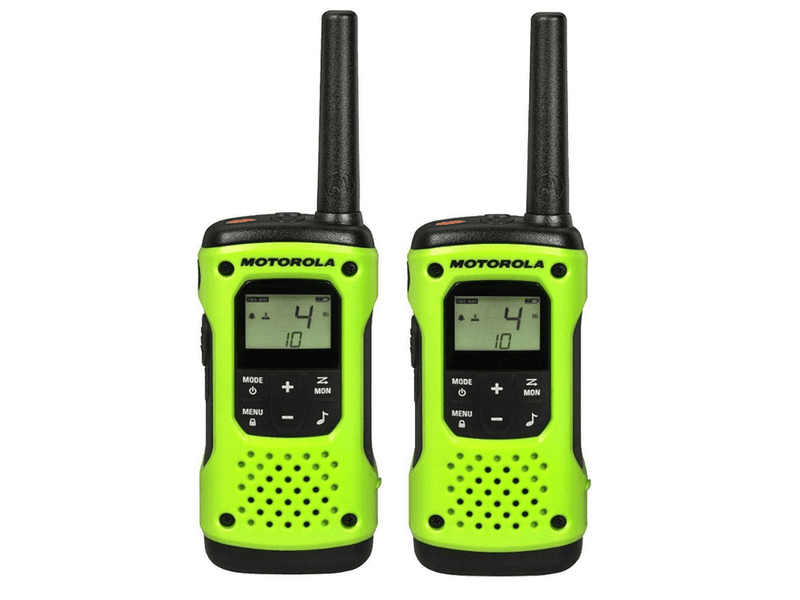
Motorola Talkabout T600 H2O — US Micro-USB Pair
The T600 H2O is worth considering when wet approaches and accidental immersion are more likely than a need for the lightest harness setup. The selected US pair uses micro-USB; newer USB-C descriptions do not apply automatically.
Why We Selected It
The meaningful distinction is IP67 protection and the ability to float with the specified NiMH battery configuration. Those features make the T600 more relevant than splashproof models for routes involving water. It also accepts AA batteries, which adds flexibility when recharging is impractical. For a mostly dry rock climb, however, a floating body provides little benefit if the radio is awkwardly positioned or not secured against a fall.
- A floating body and water-activated flashlight can help locate a dropped radio; flotation depends on the batteries specified by Motorola.
- IP67 covers the stated temporary immersion test with the radio properly closed; headset use has separate restrictions and is intended for dry conditions.
- NiMH packs and optional AA batteries give two power options; spare batteries still need a protected place in the group power plan.
Hikers and climbers whose approaches include wet terrain, streams, or trips where accidental immersion is a meaningful purchasing concern.
Minimalist climbers seeking the simplest harness-mounted package. Buyers specifically wanting USB-C should verify a different T600 revision rather than assuming it is included here.
Our Verdict
The T600 is the stronger fit than the RX680 when immersion resistance is a real requirement. It is less compelling than the Mountain Radio when secure attachment and compact handling dominate the decision. Our Best Value for Money category reflects the protection and two-radio package, not a promise of the lowest current price. The emergency alert button is a local radio feature, not an automatic rescue connection. Secure both units, test their audio position, and keep the charging connector distinction clear when buying accessories.
PROs
- IP67 temporary immersion protection
- Floats with specified NiMH batteries
- AA alternative and weather reception
CONs
- Bulkier water-focused design
- Selected kit uses micro-USB
- Headset use restricted to dry conditions
The linked two-pack lists a dual micro-USB charging cable. Motorola has since published USB-C descriptions for the series; this review keeps the selected older kit separate. IP67 and flotation conditions follow Motorola documentation, not assumptions based on the H2O name.
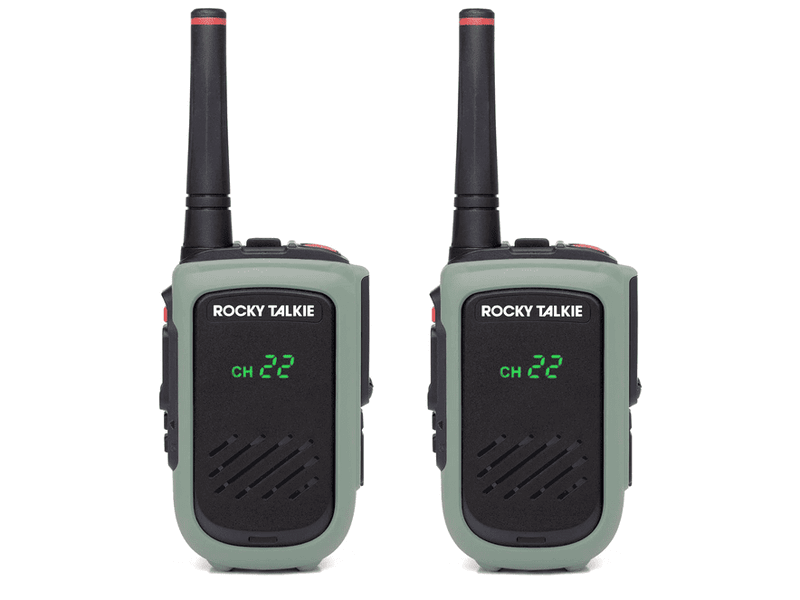
Rocky Talkie Expedition 5 Watt — US GMRS Pair
The Expedition is the relevant upgrade when an authorized GMRS group needs repeater capability, NOAA reception, and IP67 protection. More power alone is not a reason to expect contact through a mountain ridge.
Why We Selected It
The Expedition adds a genuinely different radio option to this selection: eight repeater channel pairs alongside direct shared-channel voice. A reachable, permitted repeater can make a different communication path possible, but the route needs planning and testing. NOAA reception and IP67 also distinguish it from the Mountain Radio. These features are useful for prepared groups; they bring licensing responsibilities and more decisions than ordinary FRS operation.
- Repeater capability offers an additional path when a suitable repeater is reachable and access is allowed; it provides no automatic coverage on an unfamiliar route.
- The steel clip and backup leash provide retention options; the carabiner attachment is an additional accessory rather than standard equipment.
- A replaceable lithium-ion battery and USB-C support trip power planning, while NOAA reception provides weather information where a broadcast signal reaches you.
GMRS-authorized users who have a specific use for repeaters, weather monitoring, or immersion protection and are willing to prepare their equipment before leaving.
A group of unrelated friends expecting one member’s family GMRS license to cover everyone. Unlicensed participants should use appropriate FRS equipment for ordinary independent operation.
Our Verdict
The Expedition is a meaningful upgrade from the Mountain Radio if you use its extra capabilities. For ordinary nearby climbing conversations, the Mountain Radio is lighter and avoids GMRS licensing. For repeater use, the Expedition has a clear role the other models do not fill. Budget for a full pair and any mounting accessories, then verify repeater settings and permissions. Do not pay for five watts on the assumption that it guarantees better signal quality in every canyon, behind every buttress, or through a ridge.
PROs
- GMRS repeater support
- IP67 protection and NOAA reception
- Replaceable battery and USB-C
CONs
- GMRS authorization required
- Heavier than the Mountain Radio
- Carabiner attachment sold separately
The selected Amazon offer is a two-pack. The manufacturer calls this model Expedition; earlier references may call it the 5 Watt Radio. Manual and product-page runtime claims differ, so no comparative days-of-use ranking is assigned.
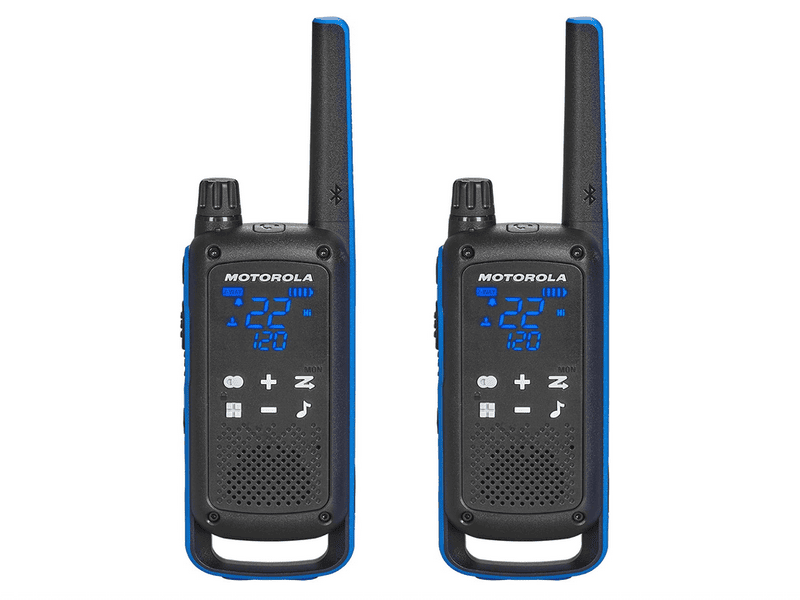
Motorola Talkabout T802 — US FRS Pair
The T802 adds phone-linked messages and location sharing to ordinary FRS voice. It makes sense for a group that wants those tools and will set them up; it is not a satellite communicator.
Why We Selected It
Motorola’s TALKABOUT app uses paired radios to exchange information without cellular service when the radio link works. That can help separated hiking groups share a location more clearly than a spoken description. The radio also supports compatible Bluetooth audio accessories. These are distinct benefits, but they introduce phone compatibility, pairing, permissions, and battery considerations. Ordinary on-radio voice remains the simpler way to communicate between a climber and belayer.
- App-linked messages provide a way to exchange short information when speaking is inconvenient; the receiving setup and usable radio connection are still required.
- Location sharing can help explain where another group member is; it does not create internet access, satellite coverage, or an automatic rescue service.
- USB-C and optional AA power offer flexible charging logistics, but add phone and Bluetooth accessory batteries to the plan if you use those features.
Hiking groups that want app-linked messaging or location sharing alongside voice and are willing to verify every phone and pairing before the trip.
Climbers who want the simplest possible system or do not want to manage a phone. Choose the Mountain Radio for straightforward harness-based voice communication.
Our Verdict
The T802 earns its place through additional ways to communicate, not superior coverage compared with every other FRS radio. Choose it over the T600 if app-linked features matter more than immersion resistance. Choose the T600 if a wet-route equipment plan makes IP67 the priority. For technical climbing, keep a simple voice routine even after pairing the app. Test with cellular service disabled and the exact phones you intend to carry; an app store listing alone does not prove the full setup will work on your route.
PROs
- App-linked location and messaging
- USB-C and AA alternative
- Compatible Bluetooth audio accessory support
CONs
- Phone setup required for app functions
- IP54 rather than immersion protection
- More batteries and settings to manage
This review concerns T802, not the original T800 or the dock-equipped T803 kit. Motorola’s datasheet specifies NiMH packs, IP54, and USB-C. Official app listings remain accessible; device-specific pairing and offline performance were not tested by us.
Rocky Talkie Mountain Radio
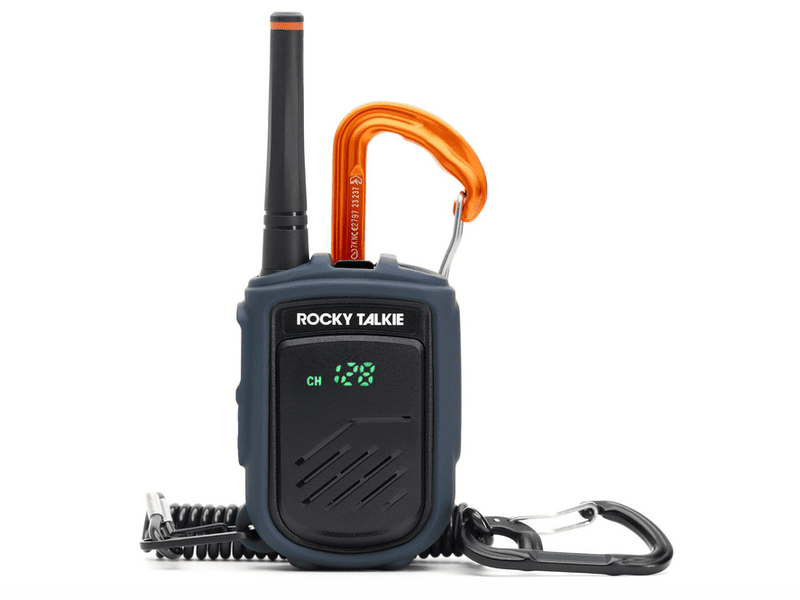
The Mountain Radio is our first choice for climbers who want straightforward group communication and a secure attachment system. Its carabiner and backup leash address a practical problem that extra menus and advertised mileage do not solve.
Why We Selected It
The strongest reason to choose this FRS radio is how it attaches to your equipment. The supplied carabiner and backup leash suit a climbing harness or backpack, while the channel lock helps prevent unintended changes. That makes it a more focused choice for multi-pitch climbing than a conventional belt-clip radio. You still need to position the microphone where speech reaches it and test the controls with your actual gloves.
- The included carabiner gives you an attachment option beyond a plastic belt clip; the separate leash provides backup retention if the primary connection comes loose.
- A replaceable battery supports planning for longer trips, but the correct spare adds cost and must be protected during transport.
- IP56 suits rain and snow exposure with covers closed; it does not make a dropped radio safe for immersion in a stream.
Climbing partners who prioritize secure attachment, simple voice communication, and a compact single-unit design for approaches, exposed pitches, and the descent.
Buyers needing NOAA weather reception, repeater access, or immersion protection. Choose the Expedition for those radio features, accepting GMRS authorization and greater weight.
Our Verdict
Compared with the BCA Link Mini, the Mountain Radio makes the clearest case for attachment directly to climbing equipment. Compared with the Midland pair, it costs considerably more to equip two people. That premium is justified when the mount and backup retention solve your actual carrying problem. It is harder to justify for occasional conversations around camp. Buy two individual radios or the correct two-radio kit, and practice a communication routine before relying on them on a climb.
PROs
- Carabiner and backup leash included
- Replaceable lithium-ion battery
- Channel lock and USB-C charging
CONs
- No NOAA reception or repeaters
- Not submersible
Assessment uses the manufacturer specifications and Mountain Radio manual, not our own range testing. The manual lists 173 g for the radio alone and 224 g with leash; check the supplied attachment configuration when comparing carried weight.
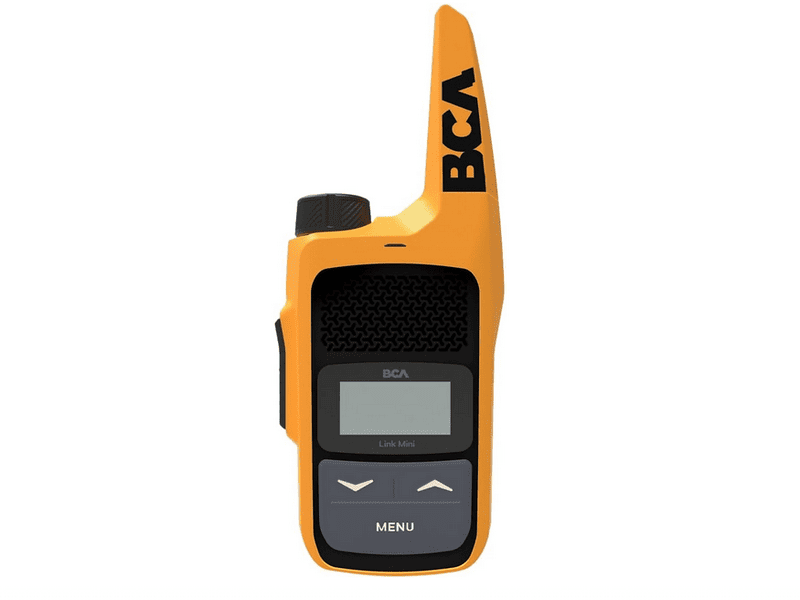
BCA BC Link Mini — NA FRS C2314001010
The Link Mini is a specialized alternative for users who want a single-piece radio on a backpack strap. Its supplied mounting options are the attraction; inconsistent runtime figures across listings should not determine the purchase.
Why We Selected It
The Link Mini combines a compact radio body with webbing clips, a strap, a belt clip, and a carabiner leash. That gives backpack users several ways to place the controls within reach without adopting a separate radio-and-microphone system. For mountaineering with a pack, the mounting arrangement can be more useful than phone connectivity. Fit still needs checking with your own straps, clothing, and the position in which you use the radio.
- Supplied attachment options accommodate different backpack arrangements; choose the one that resists sliding and keeps the microphone clear of clothing.
- A carabiner leash adds backup retention, but its routing should avoid loose loops near climbing equipment and the path of the rope.
- USB-C reduces cable variety in a modern trip kit; confirm charging with the actual power bank and cable you plan to carry.
Backpack-based hikers and mountaineers who value mounting flexibility, a self-contained radio, and USB-C charging without an external microphone cable.
Buyers expecting immersion protection or a proven runtime advantage over every alternative. Direct harness users may prefer the Mountain Radio attachment arrangement.
Our Verdict
Choose the Mini over the Link 2.0 when you want to keep the entire radio accessible in one piece. Choose the Link 2.0 when a remote microphone is the main requirement. Against the Mountain Radio, the decision is chiefly where you carry the radio and which mount fits best. The premium role comes from this carrying system, not extra transmission power. For a group using mixed brands, match the underlying frequency and tone rather than relying on identical code numbers.
PROs
- Several mounting options supplied
- Backup leash included
- USB-C charging
CONs
- Not designed for immersion
- Listing and current manual specifications differ
- Dedicated battery rather than AA fallback
This is the North American FRS model. The current manual specifies IP55 and a maximum 33 hours; the selected listing says IPX5 and 18 hours. We do not claim a fixed runtime or assume the listing identifies the latest hardware revision.
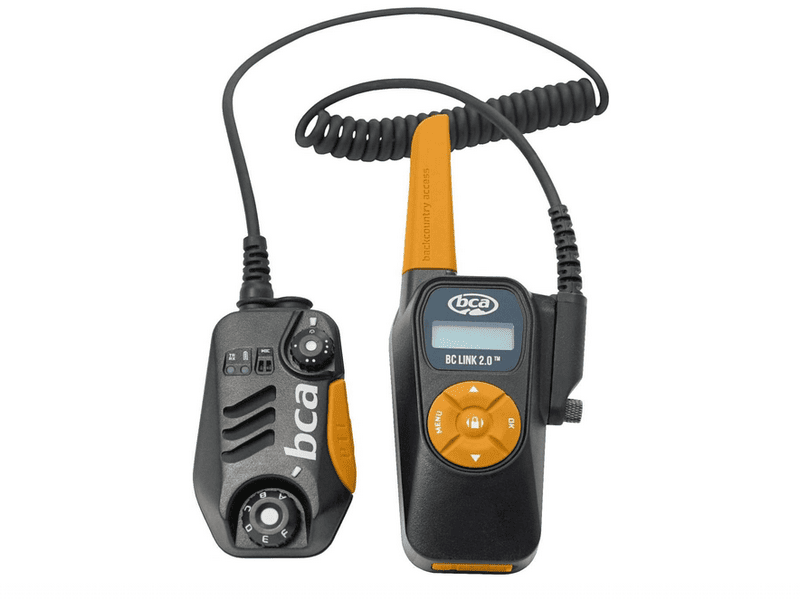
BCA BC Link 2.0 — NA FRS C1714003010
The Link 2.0 is a distinct choice for users who want the radio body in a backpack and the main controls on a shoulder strap. The extra cable and components need to earn their place.
Why We Selected It
BCA separates the radio base from a Smart Mic with PTT, volume, and preset selection. That layout is useful when removing a radio from a pocket or reaching a small side button would interrupt the task. It is a different proposition from adding a basic speaker microphone to a family radio. For backpack-based mountaineering, assess whether this arrangement makes communication easier in your own gloves and layers before accepting the additional bulk.
- The Smart Mic brings frequently used controls onto a strap; you can leave the base unit secured rather than extracting it for each call.
- Preset selection allows agreed group channels to be prepared in advance; every user still needs to understand which preset is active.
- The connection cord needs deliberate routing and secure attachment; keep slack away from the rope path and test movement with the loaded pack.
Backpack-based mountaineers and winter travelers who want a remote control interface and are prepared to organize the cable and base unit carefully.
Minimalist climbers who remove their pack frequently or want the fewest parts. The Mountain Radio or Link Mini is a simpler single-unit alternative.
Our Verdict
Choose the Link 2.0 over the Mini for its remote interface, not an expectation of more power or guaranteed range. Both are FRS radios. Its higher price makes sense when the Smart Mic remains in the right place and makes calls easier during your activity. If the cord catches, the pack is frequently removed, or the microphone competes with shoulder gear, the design may be a disadvantage. Assess the entire worn system before buying, including the base, cable, microphone, and charging routine.
PROs
- Remote PTT, volume, and preset controls
- Purpose-designed two-piece system
- IP56 protection
CONs
- More components and a cable to manage
- Higher pair cost
- Micro-USB charging
The reviewed North American manual identifies FRS operation, IP56, and a Smart Mic. Its runtime statement differs substantially from retailer claims; we do not repeat 80-hour or standby figures as a guaranteed trip runtime. Total carried weight is not consistently documented.
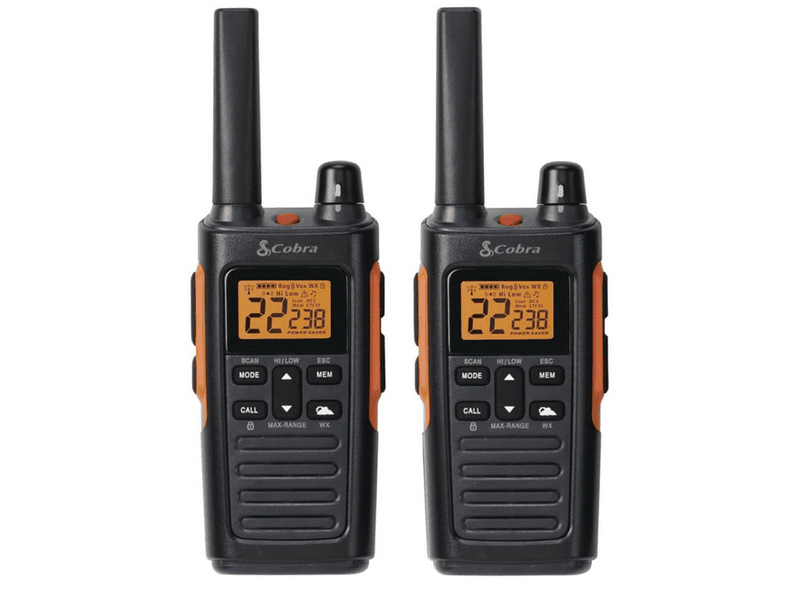
Cobra RX680 — US FRS Pair
The RX680 offers a rechargeable pair, charging dock, weather alerts, and splash protection at a lower entry cost than specialized climbing radios. It suits trail and camp communication better than an exposed harness mount.
Why We Selected It
Cobra supplies the practical basics for two users without requiring GMRS licensing. The IP54 rating, vibrating notification, and included charging dock create a useful package for day hikes and base camp. This is our budget role within this selection, not a claim that it is always the cheapest radio on the market. Its appeal depends on the current kit price and whether its standard clips fit the way you intend to carry it.
- VibrAlert provides a tactile notification option when you might miss a call tone; it does not improve reception or guarantee you notice every transmission.
- The supplied dock charges both radios in one place, making it convenient for home preparation and less suited to charging inside a moving backpack.
- IP54 gives documented splash resistance, but a stream crossing or accidental dunk calls for a different level of protection.
Budget-conscious hiking partners and groups needing a pair for nearby coordination around trails, the approach, or camp, with occasional rain exposure.
Users choosing equipment for immersion, repeaters, or a ready-made harness retention system. Do not buy it expecting a floating radio or IP67 protection.
Our Verdict
Choose the RX680 over the Mountain Radio when the cost of equipping two people matters more than a specialized climbing mount. The Midland is the more relevant alternative if you want AA backup; the T600 is more appropriate if immersion protection drives the purchase. Treat the Cobra as a sensible voice tool with clear limits. Its 60 presets do not provide 60 independent frequencies, and neither the preset count nor the mileage printed on the packaging establishes reliable coverage along your route.
PROs
- Rechargeable two-radio kit
- IP54 splash protection
- Weather alerts and vibrating notification
CONs
- Not submersible or floating
- No included backup leash
- Dock and micro-USB charging routine
Cobra documentation identifies the RX680 as license-free FRS and describes 22 standard channels plus 38 preset combinations. The manufacturer weight field appears to describe the package, so a verified carried weight is unavailable. No independent audio or range advantage is claimed.
How to Choose Walkie-Talkies for Climbing and Mountains
The best two-way radios for mountains fit the group, route, and carrying arrangement. Start with these decisions before comparing power or preset counts.
Start with secure attachment and rope clearance
Place a radio where it stays attached during climbing and remains reachable at a stance. A carabiner and backup leash can address retention, but a loose tether can create its own snagging problem. Route it deliberately, inspect attachment points, and keep it clear of ropes and moving equipment. A radio mount is not a life-support connection.
Try the complete arrangement while wearing your climbing harness and loaded pack. Check bending, looking up, removing a layer, and taking off the backpack. A belt clip that works on a hiking waistband may be awkward on a gear loop. The Mountain Radio favors direct attachment; the BCA models offer different ways to organize equipment around rucksack straps.
Check PTT access before relying on hands-free communication
Push-to-talk, or PTT, gives deliberate control over when you transmit. Test whether gloves, pack straps, or clothing interfere with the button and whether the microphone is exposed to your voice. A remote mic can improve access, but its cable needs careful routing and secure connectors.
VOX enables voice-activated transmission on equipped models, yet wind, breathing, and gear noise can trigger it or mask speech. Hands-free communication is useful only after you have tested it in representative conditions. Do not assume VOX provides continuous full-duplex conversation between a climber and belayer. Agree on short, distinct commands and require confirmation of critical messages.
Compare the whole power system
Battery life depends on transmission time, receive activity, standby time, temperature, battery condition, and optional Bluetooth features. An “up to” figure or a number of advertised days is not a common measurement across these models. A 5/5/90 duty cycle means 5% transmitting, 5% receiving, and 90% standby, not continuous conversation.
Choose between carrying the correct spare pack, AA batteries, or a tested power bank. Lithium batteries have different chemistries and charging requirements; a lithium-ion pack is not interchangeable with a primary lithium AA cell. Follow the radio’s battery instructions. USB-C describes a connector, not guaranteed fast charging or compatibility with every USB-C-to-C supply. Keep ports dry and observe the manufacturer’s charging-temperature limits.
Separate water resistance from durability
Weather resistance and impact durability answer different questions. IP54, IP55, and IP56 indicate different dust and water tests; none is an immersion claim. IPX4 describes splash protection without stating a dust rating. A splashproof radio can suit rain exposure, while an IP67 model may be more appropriate where a dunk is plausible.
Protection depends on closed covers, intact seals, and the specified configuration. A headset connection can change the conditions of use. Flotation is another feature entirely: Motorola specifies battery conditions for the T600. An IP rating also does not establish how a radio will survive rock impacts, rope abrasion, or repeated drops.
Plan for cold-weather performance and carried weight
For winter hiking and mountaineering, use the model’s documented operating and charging limits. Reduced runtime in the cold means a summer battery routine may be inadequate. Do not charge a cold pack outside its permitted temperature range merely because a power bank is available. Keep essential power accessible and protected, with enough reserve for delays and the descent.
Compare lightweight radios as complete systems. A radio-only weight excludes some combination of battery, clip, carabiner, leash, external microphone, and cable. App features also require a phone. Where the exact ready-to-carry configuration is unclear, weigh the equipment you will actually wear rather than trusting a package weight or a bare-radio number.
Match the service and useful features to the group
FRS is the straightforward starting point for unrelated friends who want ordinary US group communication without individual licenses. GMRS makes sense when appropriately authorized users need the Expedition’s additional capabilities. A reachable repeater can provide another path, but permission, settings, and coverage must be checked in advance.
CTCSS and DCS codes filter received audio; they do not encrypt your conversation or reserve a frequency. Different brands may number tones differently. App-linked location and messages add another compatibility layer, while NOAA reception depends on broadcast coverage. Choose each feature because it solves a specific group need, and maintain a simple voice procedure that everyone can use.
Real-World Range and Communication Limits
A short separation around a rock buttress can be harder than a much longer unobstructed path across a valley. Communication range depends on the path between both antennas, not a circle drawn around each user.
Line of sight is a useful starting point, but vegetation, rock, antenna position, and the people carrying the radios affect the link. More power can help in some situations without making an obstructing ridge disappear. Keep the antenna upright and clear of the body where practical, following the model’s operating instructions. If you lose contact, change position only where it is safe to do so.
Manufacturer mileage claims describe particular favorable conditions. They are not measurements of your route, and this guide does not convert them into guaranteed distances. Test likely communication points, agree on check-in times and regroup locations, and decide what happens after a missed call. Reliable communication requires that routine as well as suitable equipment. For emergency communication beyond your group, make a separate plan appropriate to the area; a local alert button does not automatically contact rescue services.
Before Your First Trip
Set the same shared frequency and compatible CTCSS/DCS tone, or temporarily disable receive filtering when troubleshooting. Test both directions. Extra preset numbers may not correspond across brands. GMRS users should verify authorization and call-sign procedures; repeater users should confirm permission and the actual settings.
Put on the harness, backpack, gloves, and layers you expect to use. Secure the main mount and backup retention. Check PTT access and microphone position, then move through normal climbing motions. Keep cords and tethers clear of ropes and equipment.
Charge both radios, test your cable and power bank, and pack suitable reserves. T802 users should download maps, pair phones, grant necessary permissions, and test messaging with cellular service disabled. Keep an ordinary voice channel ready even if the app works.
Use names, concise messages, and clear acknowledgments. Establish check-ins, a backup channel, and regroup points. Decide how to respond to lost contact before separating. A radio should support an agreed climbing communication system, not replace training or judgment.
What to Avoid When Buying a Mountain Radio
- Buying by maximum mileage. Advertised distance does not establish coverage across a ridge or behind a pitch. Evaluate mounting, power logistics, and the actual route instead.
- Mixing regional versions. A PMR446 unit and a US FRS radio are different purchasing choices. Similar cases and model-family names do not establish compatible, authorized operation.
- Comparing a single radio with a pair. Count complete working units. A BCA base and its Smart Mic together form one radio system, not equipment for two people.
- Confusing splash protection with immersion. The RX680 is IP54, not a floating IP67 radio. Check accessory restrictions and battery-dependent flotation conditions on the T600.
- Assuming codes provide privacy. More presets do not mean more independent frequencies, encryption, or freedom from other users on the same channel.
- Skipping a worn-equipment test. Secure a belt clip, check the backup leash, and test audio with your jacket and gloves. A radio packed out of reach is hard to use when needed.
Special Cases & Common Questions
Can different brands communicate on the same climb?
Yes, when they use compatible shared frequencies and matching tones. Start with standard shared channels rather than extra presets, and test in both directions. If one radio receives but the other does not, disable receive tones while troubleshooting. Compatible frequencies do not remove GMRS authorization requirements.
Should a belayer use VOX?
Only if the complete setup works reliably in representative conditions. VOX can react to wind or gear noise and may miss the start of speech. Deliberate PTT and short acknowledged messages are often easier to manage. Never assume a transmitted command was received simply because the radio indicated transmission.
Which radio makes sense for via ferrata?
The Mountain Radio or Link Mini is a sensible starting point if its mount fits your equipment. Keep the radio and tether clear of the lanyards and other working gear. Choose based on access, retention, and the group’s route plan; a radio does not guarantee contact around a cliff or eliminate the need for training.
Do I need an external microphone for climbing?
No. A reachable single-unit radio can be simpler. An external microphone is useful when it gives you better access without creating awkward cable routing. The Link 2.0 integrates remote controls; other models have optional accessories. Confirm exact electrical compatibility, mounting, and weather restrictions rather than buying by connector appearance alone.
Does the T802 work without a phone?
Yes, ordinary on-radio voice communication does not require the app. Phone-linked messaging and location features need a compatible paired setup and a usable radio link. Test the exact phones offline before departure. The phone’s displayed location does not prove the other group member has received an update.
Does NOAA reception let me call rescuers?
No. NOAA weather channels provide received broadcasts. A radio’s emergency button generally alerts compatible nearby radios according to its manual; it is not an automatic 911 or satellite connection. Arrange emergency contact methods appropriate to the location and do not assume a rescue team is monitoring your chosen recreational channel.
Final Recommendation
Choose the Rocky Talkie Mountain Radio when secure attachment and straightforward climbing communication are the priorities. Choose the Midland T71VP3 when equipping two hikers economically and carrying AA backup matter more than a specialized mount. Choose the BCA BC Link 2.0 if a remote microphone genuinely improves your backpack setup. The rest of the comparison addresses specific needs such as wet approaches, GMRS repeaters, and app-linked messages. Whichever you choose, test the worn system, match the group’s settings, and agree on a procedure for lost contact before the route.
Back to comparison