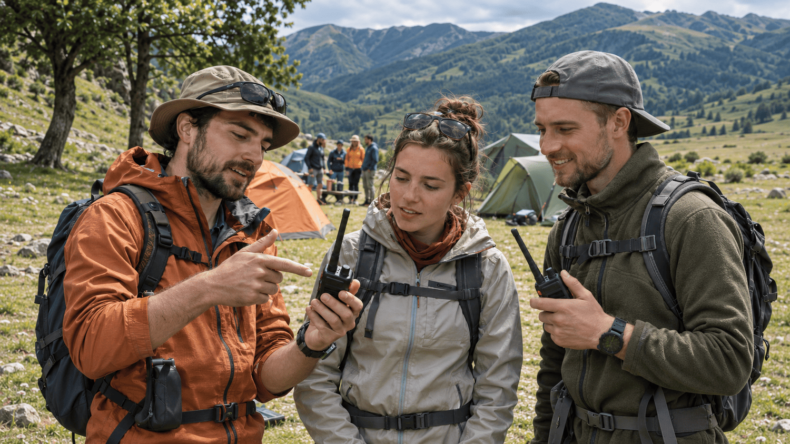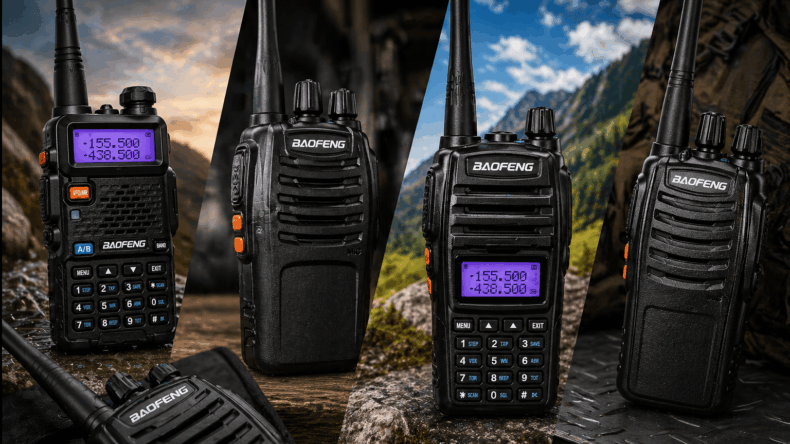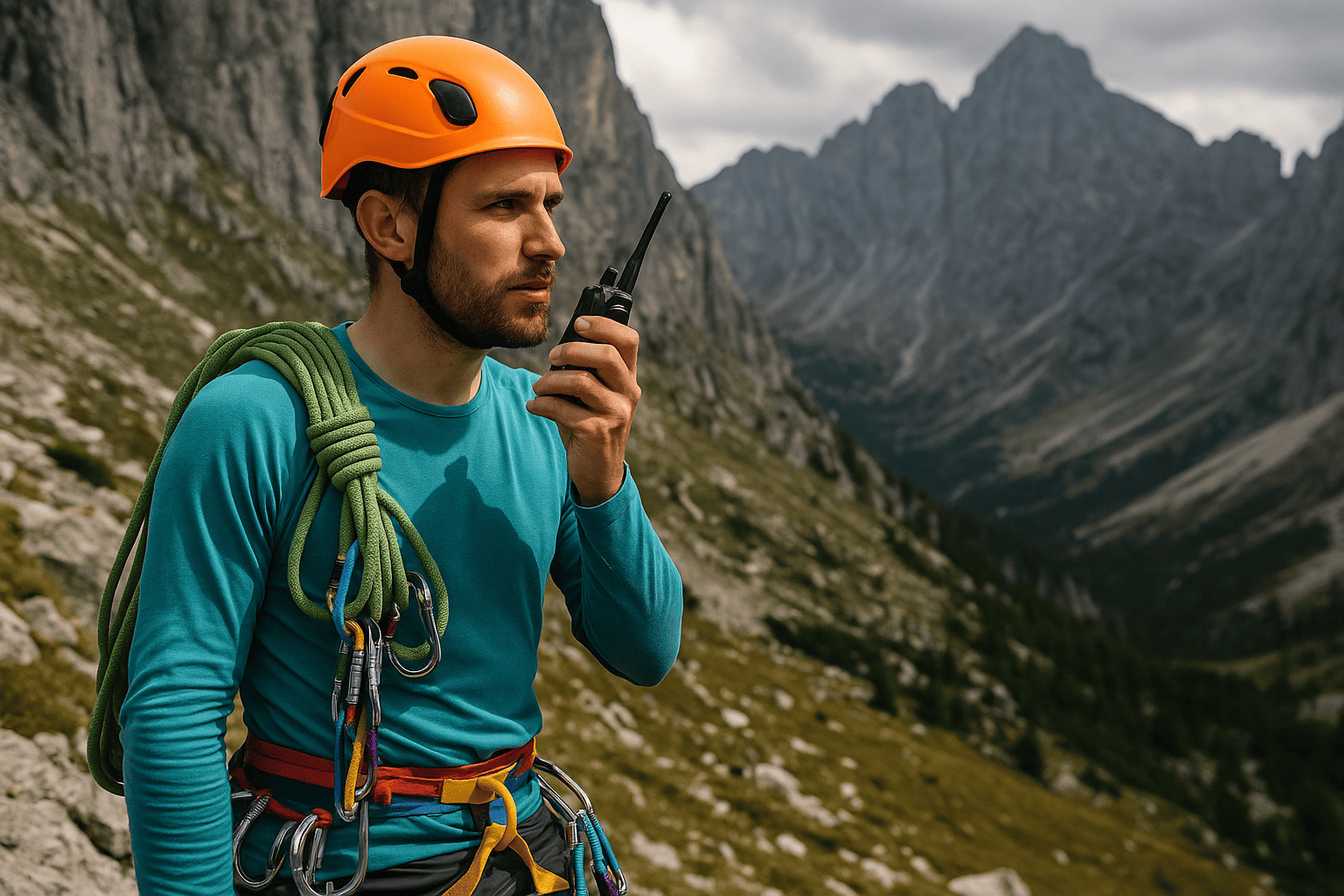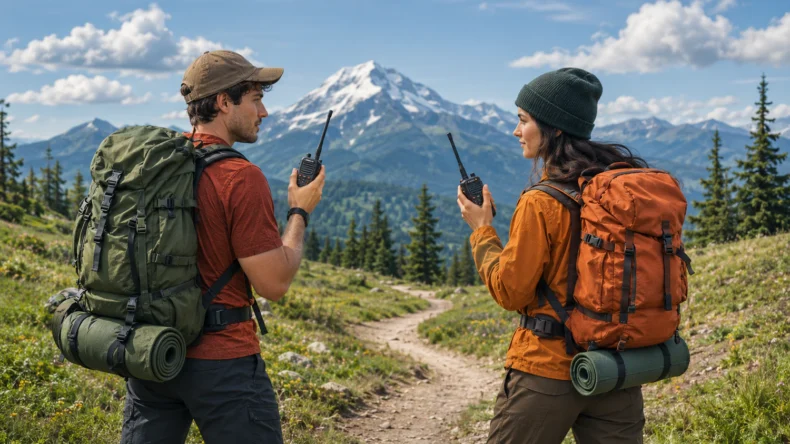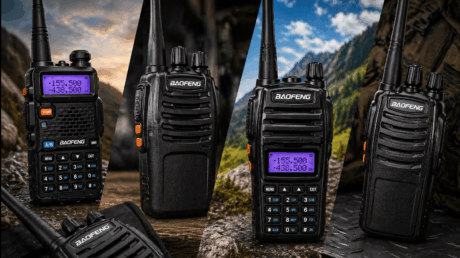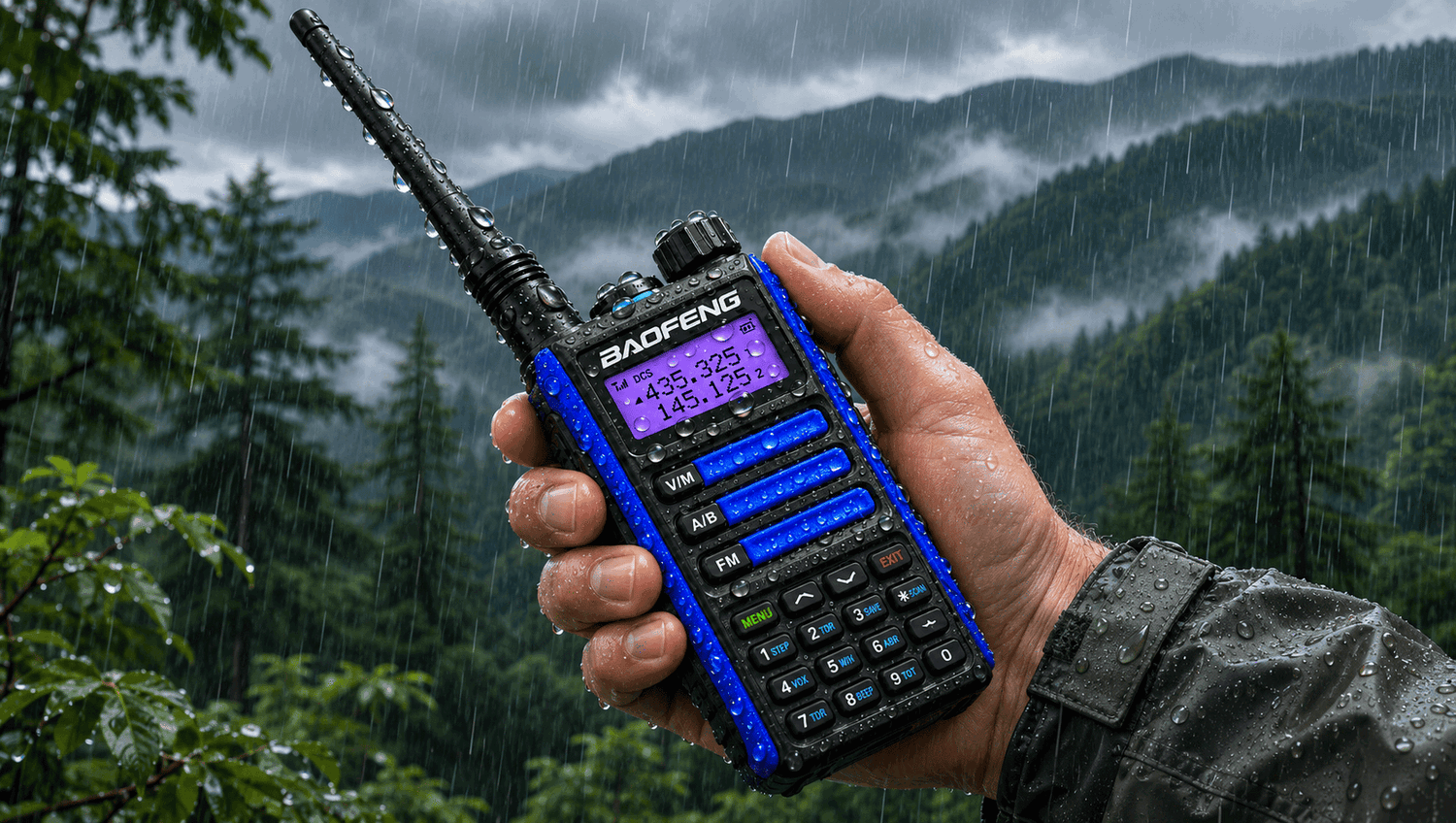
The Baofeng UV-9G is the first waterproof Baofeng radio I’d consider for a U.S. family that already uses GMRS and expects to encounter wet conditions. Baofeng specifies IP67, and the two-radio kit gives both users the same controls. For licensed amateur operators, the GT-3WP is the simpler choice when you want documented temporary immersion protection. The UV-16R adds USB-C charging, but its IP68 claim comes from the seller and needs better documentation. The MP31 makes sense when you expect occasional splashes and can keep the radio out of the water.
- GMRS with immersion protection: Baofeng UV-9G.
- Amateur radio with documented immersion conditions: Baofeng GT-3WP.
- GMRS for splashes: Baofeng MP31.
- Before you buy: Match the radio service to your group and check the water rating for the exact version.
- Whether you need splash resistance or protection during temporary immersion.
- Whether everyone who will transmit can operate under the applicable U.S. rules.
- Whether the offer includes one radio or a pair, and which charging accessories come with it.
Shop Baofeng two-way radios on

- ✓ Compare radio kits
- ✓ Check the exact version
- ✓ View current offers
As an Amazon Associate, we earn from qualifying purchases at no extra cost to you.
Quick comparison of five Baofeng radios
Start with the radio service, then compare water protection and charging. The UV-16R and UV-9R Plus ratings are attributed to the listings for the specific versions below. N/A marks a specification that could not be verified consistently.
| Category | Best Value for Money | Budget Options | Advanced Features | ||
|---|---|---|---|---|---|
| Model | 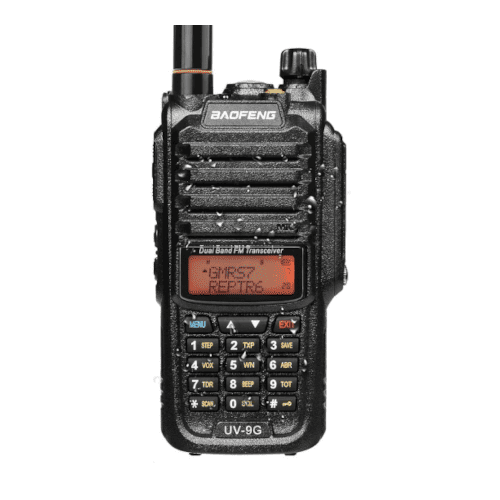 Baofeng UV-9G | 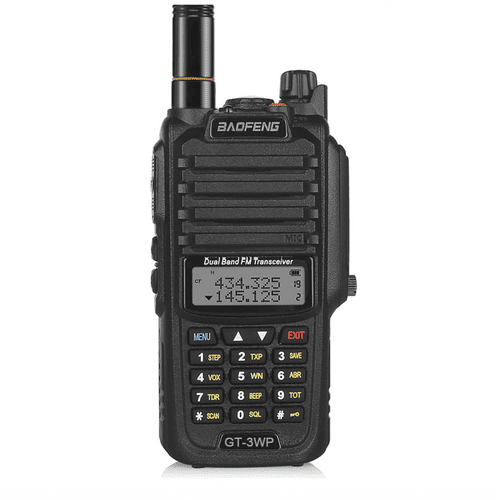 Baofeng GT-3WP | 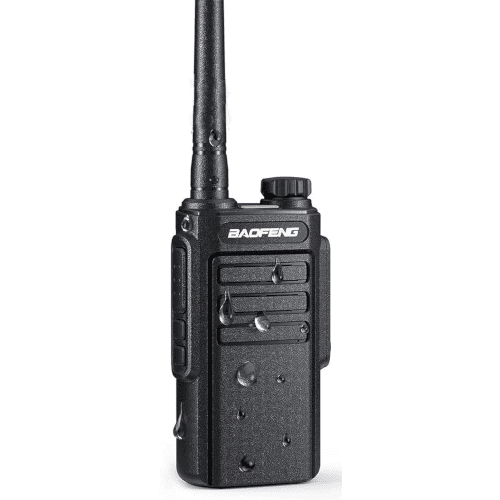 Baofeng MP31 | 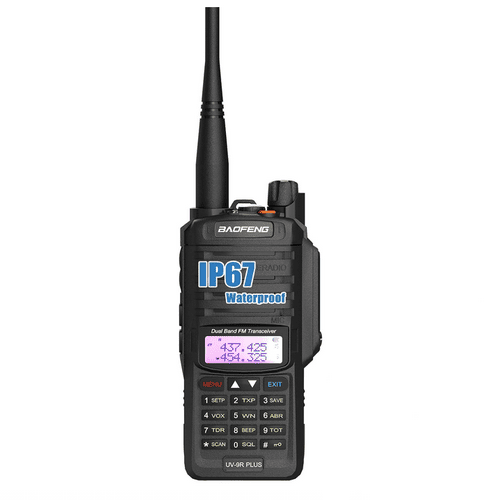 Baofeng UV-9R Plus 8W | 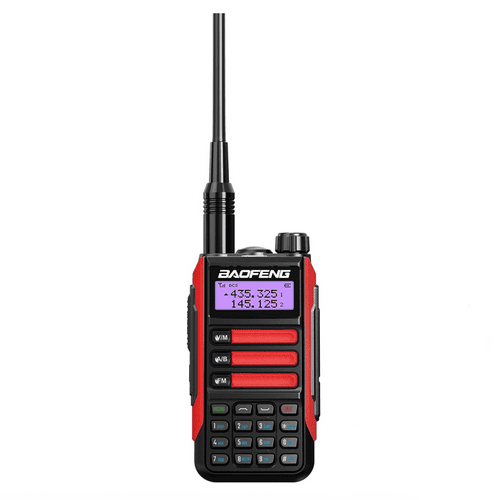 Baofeng UV-16R |
| Radio standard / version | GMRS, U.S. version | Amateur VHF/UHF | GMRS, U.S. version | Amateur VHF/UHF use | Amateur VHF/UHF |
| License / authorization | GMRS license rules | Amateur control operator required | GMRS license rules | Amateur control operator required | Amateur control operator required |
| Featured | IP67 GMRS | Documented immersion conditions | USB-C charging | Dual-band operation | USB-C charging |
| Channels / memory | 30 GMRS presets, including 8 repeater channels | Up to 128 memories | 22 GMRS simplex channels | N/A | 128 memories per listing |
| Ready-to-carry weight | N/A | N/A | N/A | N/A | N/A |
| Protection | IP67, manufacturer specification | 3.3 ft for 30 min, manufacturer specification | IP54, splash-resistant | IP67, listing claim | IP68, listing claim with test conditions unspecified |
| Battery / charging | Rechargeable Li-ion | Rechargeable Li-ion | USB-C rechargeable | Rechargeable Li-ion | USB-C rechargeable |
| Main trade-off | GMRS eligibility for the group | Amateur setup and channel programming | Splash protection only | Listing claims need version checks | IP68 depth and duration unverified |
| Price & Offer | $ | $ | $ | $ | $ |
Quick Picks by Use Case
Pick the situation closest to yours.
Licensing & Legal Use
Choose the radio service your group can use
The UV-9G and MP31 are GMRS models with equipment authorizations under FCC Part 95E. Under 47 CFR § 95.1761, a GMRS transmitter must be certified for that service. Under § 95.1705, GMRS use requires an individual license. The rule allows specified immediate family members to operate under the licensee’s authorization. If you are equipping a group of friends, work out whose authorization covers each person who will transmit before deciding how many radios to buy.
The GT-3WP, UV-9R Plus 8W, and UV-16R are discussed here for amateur radio use. Under 47 CFR §§ 97.5 and 97.105, transmitting in the amateur service requires appropriate station authorization and a control operator who ensures compliance. The operator’s privileges determine the frequencies and emissions the station may use. A radio’s tuning range can extend beyond those privileges.
Before buying, write down the service your group already uses and the channels or frequencies you plan to share. If someone sends you a channel list for a programmable handheld, verify the service behind that list and the rules that apply to the transmitter. A channel label, a seller’s category, and an FCC ID on a different version each tell you less than the grant for the exact model.
How We Selected and Evaluated These Radios
We compared five Baofeng handhelds associated with specific U.S. Amazon listings. The group includes two GMRS models and three considered for amateur use. We retained the MP31 as a splash-resistant reference because its rating helps explain what buyers give up when they choose a simpler GMRS kit for wet conditions.
- Water exposure. We separated splashing from immersion and looked for a stated depth and duration.
- Version identity. We matched each claim to the model name and listing it came from.
- Radio service. We checked which models fit a U.S. GMRS or amateur setup.
- Charging. We considered what the buyer needs to carry to recharge away from home.
- Kit contents. We distinguished one radio with accessories from a two-radio offer.
- Channel setup. We compared GMRS presets with the programmable memories used on amateur models.
This comparison uses manufacturer specifications, equipment authorization records, manuals, and identifiable listings. The water ratings are documented claims. We did not perform immersion or range tests. Where a seller claim lacks manufacturer confirmation for the same version, the comparison labels it accordingly.
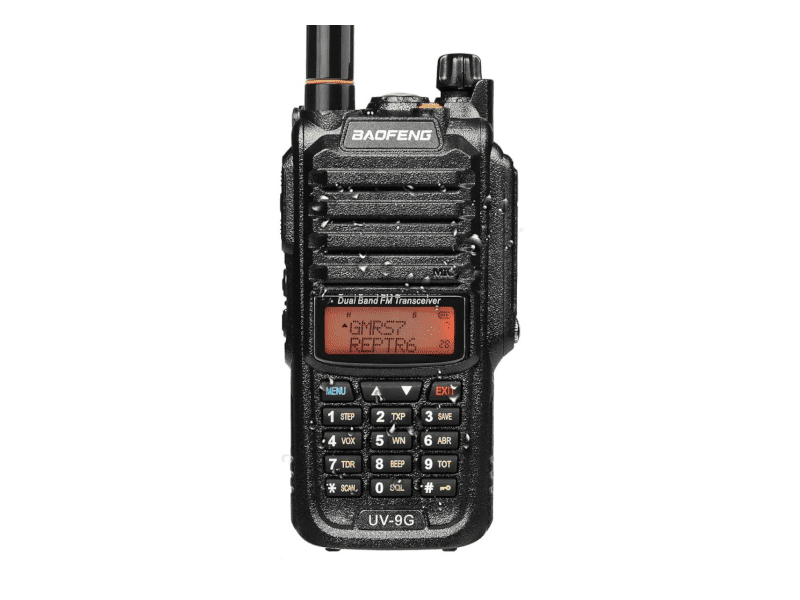
Baofeng UV-9G
The UV-9G is the strongest fit here for a GMRS group that wants two matching radios and a manufacturer-specified IP67 rating. Its repeater presets give the pair room to grow with your setup.
Why We Selected It
For a trip near water, the enclosure rating is a more useful starting point than the range printed on the packaging. Baofeng specifies IP67 for the UV-9G and documents its GMRS presets. Buying the pair gives you a common set of controls for both ends of a call. It also makes a pre-trip check easier because you can set both radios to the same channel and verify what each person hears.
- Manufacturer-specified IP67 gives you a documented enclosure rating to compare with the MP31’s splash protection.
- Matching controls let both users practice the same channel changes and call procedure before splitting up.
- Repeater presets give you a starting point if you have already identified a compatible GMRS repeater and verified access.
Families operating under the GMRS rules who want a matching pair for wet campgrounds, fishing trips, or vehicle travel where a handheld may be exposed to more than a passing splash.
Groups whose shared channels are on amateur repeaters, or buyers who want USB-C charging and expect to keep the radios sheltered whenever they are close to the water.
Our Verdict
Choose the UV-9G over the MP31 if a drop into shallow water is a realistic risk. The difference you are paying for is the enclosure protection, so compare the total kit cost and make sure the offer includes both radios. If your use is mostly around a campsite and the radios travel in a dry bag between calls, the MP31’s USB-C charging may matter more. The UV-9G earns its place when you expect exposure and want a two-radio GMRS setup from the start.
PROs
- Manufacturer-specified IP67
- GMRS repeater presets
- Matching two-radio kit
CONs
- GMRS authorization requirements apply
- Water protection depends on the radio being properly closed and assembled
The IP rating and preset count come from Baofeng’s UV-9G documentation. The associated FCC ID is 2AJGM-P52UV. The offer considered here is the two-radio U.S. listing.
Baofeng GT-3WP
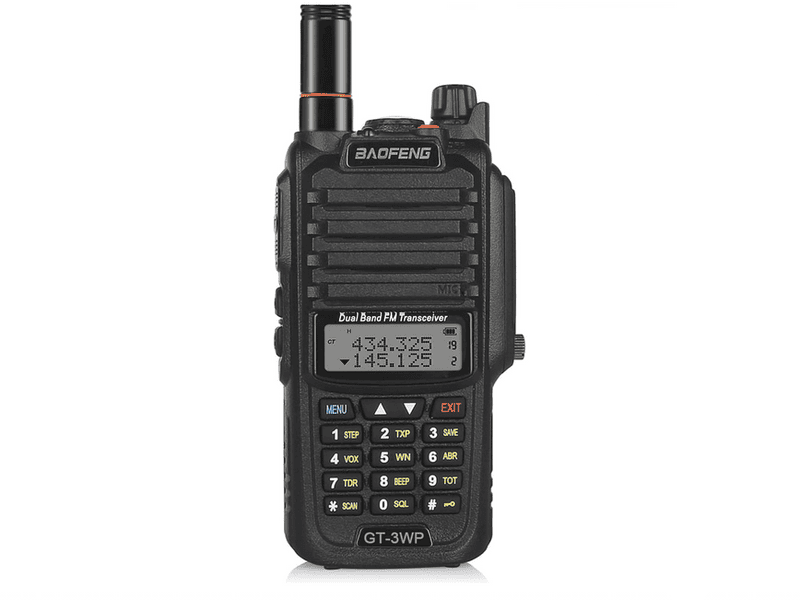
The GT-3WP is the budget amateur radio I’d pick here for wet weather. Baofeng specifies a depth and duration for immersion, giving you a concrete limit to use when planning how to carry it.
Why We Selected It
Baofeng specifies 30 minutes at one meter, about 3.3 feet. That is a more useful buying detail than a generic waterproof label, particularly when a seller carries several similarly named Baofeng radios. The GT-3WP also offers up to 128 memories, so an amateur operator can save a small set of local simplex and repeater frequencies and keep frequently used entries easy to find.
- A stated immersion depth and duration make the enclosure claim easier to interpret before taking the radio near water.
- Programmable memories let you give a short list of local frequencies an order that makes sense for your outings.
- Selectable power gives an operator options when checking a nearby contact before trying a longer path or a repeater.
Licensed amateur operators looking for an inexpensive spare or an everyday handheld for outdoor use, especially if they already know the frequencies and repeaters they plan to program.
Buyers equipping a GMRS family, or anyone expecting a ready-to-share pair. A second unit and the appropriate programming are separate parts of a two-person amateur setup.
Our Verdict
The GT-3WP makes more sense than the UV-9R Plus 8W if your reason for buying is predictable water protection on a limited budget. Baofeng gives you a specific immersion condition for the GT-3WP, while the Plus claim comes from the exact listing. If you need a charging setup built around USB-C, compare the UV-16R and confirm its enclosure documentation first. If you need only a basic amateur handheld for wet outings, the GT-3WP is the easier purchase to justify.
PROs
- Stated immersion depth and duration
- Manufacturer documentation
- Up to 128 programmable memories
CONs
- Single radio in the referenced offer
- Requires an amateur operating plan and programming
The immersion conditions and memory capacity are from Baofeng’s GT-3WP product documentation. The price tier uses the U.S. single-unit manufacturer offer for the same model.
Baofeng MP31
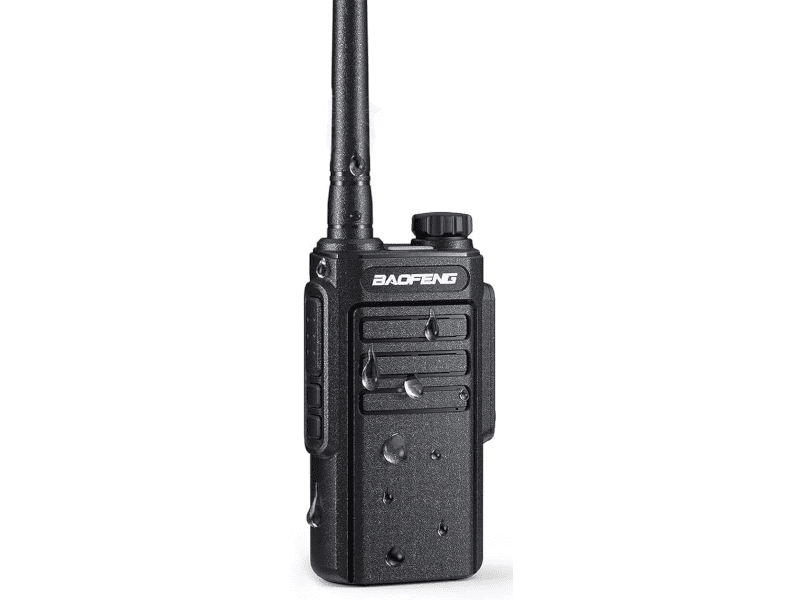
Choose the MP31 for sheltered campsites and trips where incidental splashes are the main concern. It pairs USB-C charging with an IP54 enclosure and comes as a two-radio kit in the referenced listing.
Why We Selected It
Amazon calls this kit waterproof, while the detailed specification identifies IP54. It belongs in the comparison because a buyer may see both descriptions and assume it has the same water protection as the UV-9G. The MP31 offers a practical combination for lighter exposure. You get a GMRS pair and a USB-C charging connection, with a clear limit on what the enclosure is rated to handle.
- USB-C charging makes it easier to share a charging setup with other compatible equipment you already carry.
- Two matching radios give both users the same menu and controls during a quick check before leaving camp.
- The stated IP54 rating gives buyers a clear basis for choosing how and where to carry the radio.
GMRS users who want a matching pair for a campground, vehicle convoy, or similar setting and can put the radios away when they expect sustained exposure near water.
Paddlers, anglers, and anyone else whose handheld could fall into water. Those buyers should look for a documented immersion rating and think through how they will retrieve the radio.
Our Verdict
Compare the MP31 directly with the UV-9G. If USB-C charging will simplify every trip and the worst exposure you expect is a splash around camp, the MP31 is a sensible choice. For repeated use close to the waterline, choose the UV-9G for its manufacturer-specified IP67 enclosure. Work out the cost of the whole kit before deciding. A two-pack only saves you money if you need two radios that match the same service and exposure.
PROs
- USB-C charging
- Two-radio offer
- Part 95E equipment authorization
CONs
- IP54 covers splashes only
- GMRS authorization requirements apply
Baofeng and the U.S. listing identify IP54. The FCC record for 2AJGM-MP31 identifies the GMRS equipment authorization. This review covers the two-radio offer linked in the comparison.
Baofeng UV-9R Plus 8W
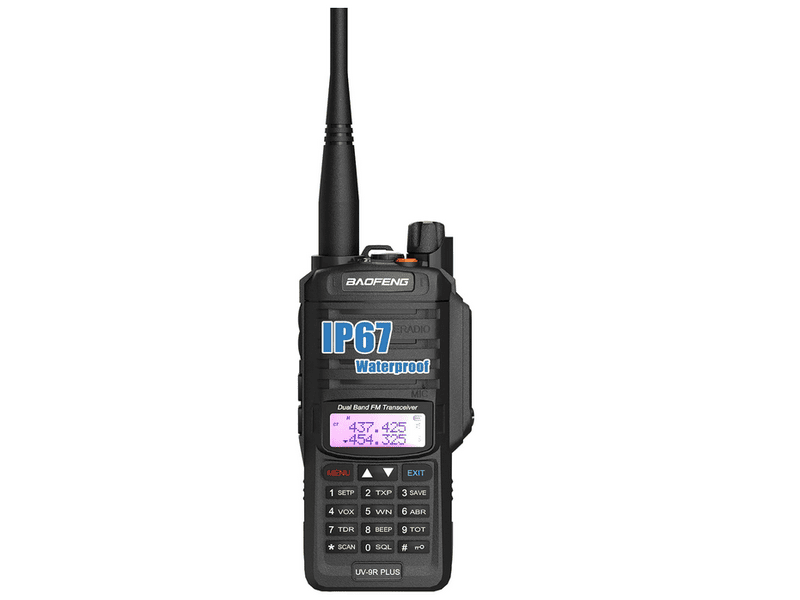
The UV-9R Plus 8W is worth comparing if you want a programmable dual-band ham handheld. The seller lists IP67 for this version. Verify the exact model before treating that claim as a buying criterion.
Why We Selected It
The referenced listing identifies a Plus version with VHF and UHF capability and claims IP67. Its appeal is the flexibility to set up amateur channels on both bands in a handheld marketed for wet conditions. The 8W designation helps identify the listing. Actual performance on a given path depends on the terrain, the antenna at both ends, and whether your group can use a suitable repeater.
- VHF and UHF operation gives a licensed operator flexibility when the local amateur plan uses both bands.
- Programmable operation lets you organize local simplex frequencies and repeater settings around the trips you actually take.
- The exact Plus listing gives you a model identifier to check when comparing seals and accessories across UV-9R variants.
Amateur operators comfortable checking the model label, accessories, and technical details of a marketplace listing before deciding whether the Plus version fits their existing setup.
Buyers who need a purchase decision based on manufacturer-documented immersion conditions, or GMRS users choosing a handheld for a group already organized around GMRS channels.
Our Verdict
Compare the UV-9R Plus 8W with the GT-3WP before paying extra for the Plus. Both are relevant to a dual-band amateur setup, but the GT-3WP has clearer water-exposure documentation. Choose the Plus if you can confirm the listing and it fits a specific need in your kit, such as a compatible spare or accessory setup you have already checked. Where the seller offers only a broad waterproof claim and a wattage figure, the GT-3WP gives you a clearer basis for spending your money.
PROs
- VHF and UHF capability
- Programmable amateur setup
- IP67 claim tied to a specific listing
CONs
- Water rating and wattage rely on listing data
- Plus, Pro, and other UV-9R offers are easy to confuse
The supplier record for this ASIN names the UV-9R Plus and gives the IP67 and 8W claims. Treat those as listing specifications. Current Amazon availability was unverified.
Baofeng UV-16R
Consider the UV-16R if USB-C charging is important to your amateur setup. The listing also claims IP68. Ask for the exact depth and duration before using that claim to plan around immersion.
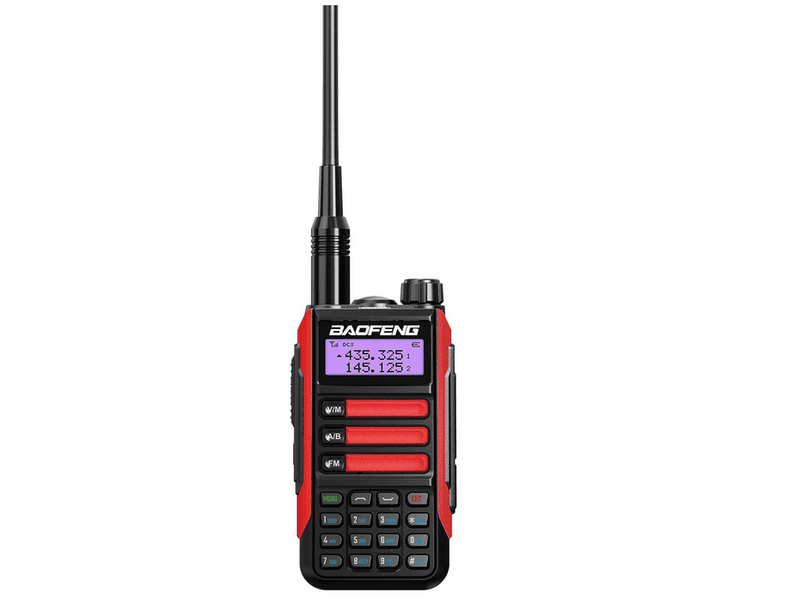
Why We Selected It
The UV-16R combines a programmable amateur handheld with USB-C charging. That can simplify an overnight kit if you already carry a compatible power bank and have tested the charging combination at home. The referenced offer includes an acoustic-tube headset, which may be useful around a noisy campsite. Verify the enclosure instructions before assuming the same water rating applies with an accessory attached.
- USB-C charging gives you the option to build the radio into a compatible power-bank setup you already carry.
- Programmable memories can keep regularly used amateur frequencies and repeater settings together for faster changes in the field.
- The listed headset gives you a second listening option when the handheld speaker is difficult to hear.
Amateur operators who want to simplify their charging kit and have time to verify the exact UV-16R package, including which accessories are supplied and what the water rating covers.
Buyers who need clearly documented immersion conditions before an upcoming trip, or anyone choosing mainly on the strength of an IP68 badge without depth and duration information.
Our Verdict
I would choose the UV-16R over the GT-3WP only when USB-C charging solves a practical problem and the seller confirms the version. For example, it can reduce what you carry on an overnight trip if your existing power bank and cable can charge it reliably. If the deciding factor is a known immersion limit, the GT-3WP is the easier pick. The UV-16R’s higher listed IP number gives you a question to ask the seller before paying a premium.
PROs
- USB-C charging
- Programmable VHF/UHF memories
- Headset included in the referenced kit
CONs
- IP68 test conditions unverified
- Current Amazon availability unverified
The UV-16-series manual identifies the UV-16R as an amateur model. The IP68 claim, USB-C feature, and kit contents are tied to the indexed listing for the specified ASIN.
How to choose a waterproof Baofeng radio
Think about what will happen to the handheld on your trip, who will use it, and how you will charge it when you get back to camp.
Match the water rating to your exposure
IP54 covers splashing. IP67 adds protection against temporary immersion under specified conditions. For an IP68 claim, look for the depth, duration, and configuration specified for that product. If you routinely stand on a dock or use a radio beside a boat, an immersion claim with stated conditions is more useful than a badge in a product photo. If the radio spends most of the trip in a covered vehicle or in your pack, charging and ease of use may matter more.
Check how the enclosure is sealed
Look at the accessory connector, charging port, and battery latch before you leave. Find out what must be closed or installed for the rating to apply. This matters if you plan to run a speaker microphone up a shoulder strap or leave a charging cable attached. A rating for the closed radio does not establish protection with those connections exposed. Try your carry position with the radio secured so it stays accessible without hanging by a cable.
Buy for the channels your group actually uses
Start with the other radios. If your group already uses GMRS and can operate under the relevant rules, compare the UV-9G and MP31 first. If your group uses amateur simplex frequencies or repeaters, look at the programmable models. Then agree on a channel plan before the trip. This saves time when a radio turns up with a different channel name, a receive tone that hides calls, or settings left over from someone else’s outing.
Plan charging around the trip
Make a short list of the batteries, cables, and power sources you’ll need. A USB-C model can save space if it charges from the power bank already in your bag. Test that combination before you rely on it. With a cradle-based setup, decide whether you can recharge at the end of the day or need a charged spare. Close the charging-port cover after charging and inspect it whenever you pack the radio for wet use.
Compare the cost of a usable kit
Check the quantity in the offer and count the accessories you actually need. A single radio with a headset can cost more to deploy for two people than a pair with basic charging accessories. Check the model identifier against the product photos and the box contents, especially for the UV-9R Plus and UV-16R. A second unit is useful only if you can set it up for the same radio service and the same operating plan.
Practice with the controls you’ll use outdoors
Try clipping the radio where you can reach the push-to-talk button with one hand. If you wear gloves, practice changing to the backup channel and turning the volume up without taking them off. Keep the channel plan short enough that everyone remembers what to do when they miss a call. A quick rehearsal with the actual radios will tell you more about that part of the setup than a long list of menu features.
Real-World Range and Communication Limits
Two users with a clear path across open ground may have an easier time making contact than two users closer together on opposite sides of a ridge. In town, buildings and vehicles can change the path again. Water protection helps the radio survive exposure. It tells you nothing about whether the other person can hear you from a given spot.
Test in terrain that resembles the outing. Walk apart, try a call from behind a hill or building, and notice where you regain contact. If you plan to use a repeater, verify that the group can access it from the places you expect to stop. Pick a time and place to regroup if calls fail. A plan like that is more useful than comparing advertised mileage or buying a handheld based on the largest wattage figure.
Compatibility & Programming
Identify who will transmit, which rules cover their use, and which service the group will use. Check the model label on each handheld before distributing the radios.
Check the channel or frequency and any tone settings at both ends. If you plan to use a repeater, verify its settings and try it from a location where you expect coverage.
Have each person transmit and receive, then repeat on the backup channel. Check the batteries and charge any spares. A radio that hears the group may still have a transmit setting that needs attention.
Set a check-in time and a meeting point. Make sure everyone knows when to try the backup channel and when to head to the meeting point.
What to avoid when shopping
- Relying on the word waterproof in a marketplace title. The MP31 is a good example of why you should read the detailed IP rating before ordering.
- Assuming the UV-9R Plus and UV-9R Pro share specifications. Check the model identifier for the actual offer, especially if several variants use the same product photos.
- Buying by wattage alone. If a route passes behind terrain that blocks the signal, plan your channels, check-in points, and repeater use before spending extra on advertised power.
- Assuming a plugged-in accessory preserves the enclosure rating. Ask which configuration the manufacturer rated and check the connector cover when using the radio by itself.
- Comparing a two-pack price with a single-radio price as if the boxes were equivalent. Check the kit contents and count how many people need a radio.
Special Cases & Common Questions
Can I use the MP31 on a kayak?
Its IP54 rating covers splashes, so keep it in a suitable dry pouch when there is a chance it could go overboard. For a GMRS radio you plan to handle regularly on the water, the UV-9G gives you manufacturer-specified IP67 protection. Check separately how you will secure and retrieve it.
Does IP68 make the UV-16R the most waterproof radio here?
The seller’s claim alone gives too little information to rank it first. Ask for the depth, duration, and configuration covered by that rating for the exact UV-16R you intend to buy. The GT-3WP gives you a stated immersion depth and duration you can use in that comparison.
Will an IP67 radio float?
Look for a separate flotation specification. IP67 describes enclosure protection under test conditions. If a radio sinks beyond the stated depth, you may have both a recovery problem and exposure outside the rating. Use an attachment appropriate to your activity and check it with the radio in its actual carry position.
Can I plug a USB-C radio into the power bank I already own?
Try the exact radio, power bank, and cable together at home. Confirm the radio indicates charging and that the battery level actually rises. Check the charge port cover afterward so the radio is ready to carry outdoors. The MP31 and the referenced UV-16R package both list USB-C charging.
Can I keep a speaker microphone connected in the rain?
Check the instructions for both the radio and the microphone. An accessory can change how the connector is sealed, so look for a rating that covers the assembled configuration. If the instructions only describe the radio with its connector cover closed, use that configuration when you need the stated enclosure protection.
Final Recommendation
For a U.S. GMRS family choosing one pair for trips where a radio could get soaked, start with the Baofeng UV-9G. For a licensed amateur operator buying a handheld chiefly for wet conditions, choose the GT-3WP for the manufacturer’s stated immersion depth and duration. If your group uses GMRS, expects occasional splashes, and values USB-C charging, the MP31 is the simpler fit. Before ordering, check the full model name and the number of radios in the box. If a different version appears in the checkout listing, verify its rating separately.
Back to comparison