
←
⟶
Dear readers! Today’s piece isn’t a typical article — it’s a full investigation. We’ve already crossed into the second quarter of the 21st century. Once-unimaginable technologies are within reach, and we’re preparing for a flight to Mars. So why is it that entire organizations around the world are still working on an idea that’s 130 years old? After all, a space elevator seems like a utopia straight out of science fiction. Or is it?
I wanted to understand why this idea has proven so resilient, and whether it could ever actually be built. What drove Tsiolkovsky to design the world’s first model of a space elevator, and what was the mood in the world at the time? If you’re curious too, start reading from the beginning. If you’d rather get straight to the point, feel free to skip Part I.
The story of a human dream that may one day become a road to the stars.
In 1895, a modest physics teacher sat in the depths of the Russian provinces, studying blueprints of the newly built Eiffel Tower. While all of Paris was cursing it as an eyesore, this man thought: “What if we extended it all the way to the stars?” That’s how the concept we now call the Space Elevator was born. So what is a space elevator, exactly? In its simplest form, it’s a cable running from the ground to space, letting cargo and people ride up to orbit instead of being blasted there.
Chapter 1. Why has humanity always reached for the sky?
For thousands of years, people built enormous structures reaching straight upward. This was never a passing engineering whim. Height served as a fundamental cultural and sacred code: the sky was universally seen as the seat of absolute power and eternal order, standing against earthly chaos and decay.
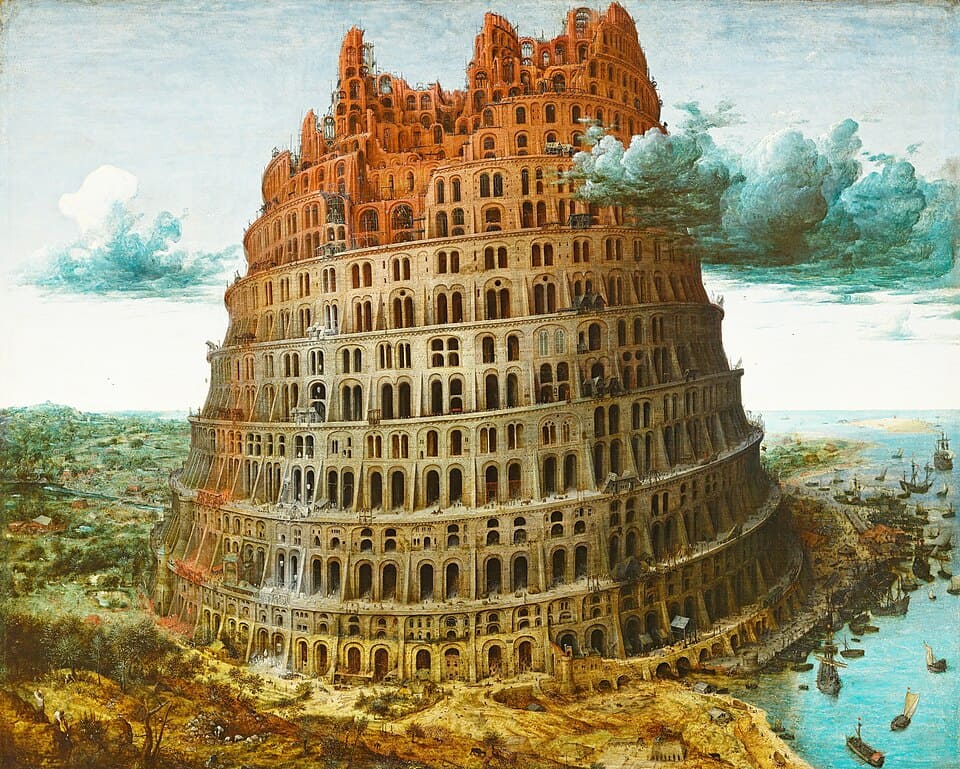
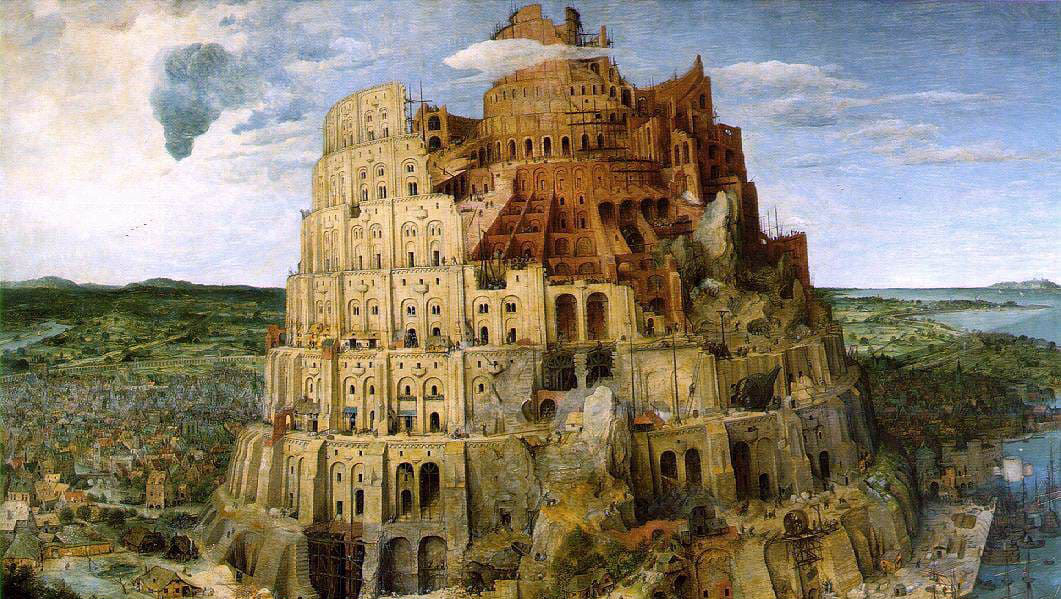
Think of the myth of the Tower of Babel and the real ziggurats of Mesopotamia — structures like Etemenanki. For the ancient people of the Tigris-Euphrates basin, these terraced giants weren’t a bold attempt to physically “storm” the dwelling place of the gods. They were built as artificial sacred mountains — bridges and portals between the earthly and heavenly worlds. Every step toward the top symbolically brought a person closer to cosmic order.
Similar images surface all over the world.
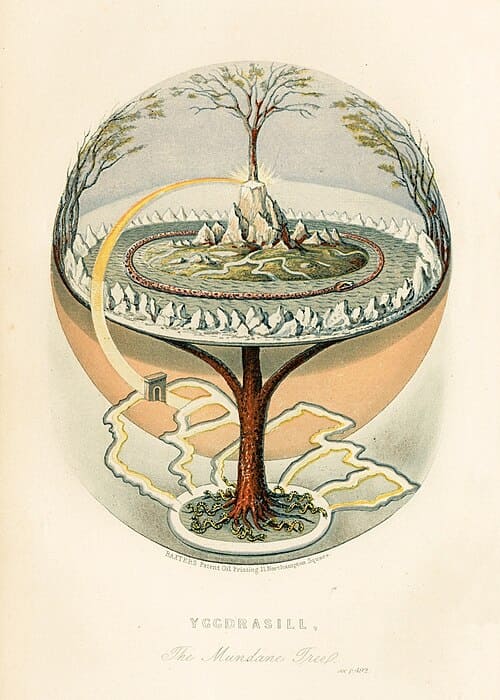
The biblical Jacob’s Ladder is a vertical channel of communication along which angels travel between heaven and earth. For many peoples, this role is played by the archetype of the World Tree (Axis Mundi), running through all three tiers of the universe and serving as the pillar of creation. In antiquity, the sky was associated with the harmony of the spheres; later, towers became a symbol of earthly power, through which a ruler demonstrated dominion over space and subjects. Modern anthropology confirms it: the pull of height is a cognitive constant. The human mind metaphorically links “up” with goodness, purity, and spiritual superiority.
There’s no direct technological line between a ziggurat and the blueprints for a space elevator — they’re two echoes of the same impulse: to cross the boundary between the earthly home and the heights of heaven. And there’s still room here for future research: scholars still debate what drove the builders of the ziggurats more strongly — a desire to dominate the landscape, or pure religious ecstasy — while the precise calculations behind the soil stability under Mesopotamia’s multi-ton structures remain a blank spot in the history of architecture.
Chapter 2. When towers became a symbol of progress

At the close of the Middle Ages, humanity’s perception of height underwent a seismic shift, and by the industrial 19th century it had changed for good. The vertical slowly lost its sacred meaning: from a tool for communing with God, it turned into a manifesto of human reason and technical supremacy.
The first step came from Gothic cathedrals and city bell towers. The skeletal frame system of French Gothic architecture pulled off a real feat: heavy stone became visually weightless, and the spires of Chartres and Beauvais shot up through the clouds.
But it was the industrial 19th century that truly changed everything. Rolled steel and the safe passenger elevator gave the world its first American skyscrapers. Height stopped being a religious category and became an economic one — the equivalent of land value, a symbol of financial power and engineering triumph. World’s fairs became the main showcases where nations competed over the scale of their artificial landmarks.
The high point of the era was the Eiffel Tower — Gustave Eiffel’s 300-meter lattice-metal structure, built for the 1889 World’s Fair in Paris. Society greeted its construction with mixed feelings. Newspapers from 1887–1890 were filled with angry manifestos from the Parisian intelligentsia, who called the tower a “gigantic skeleton” and a “factory chimney,” accusing the project of destroying the city’s historic look. But the massive flow of visitors and the unprecedented bird’s-eye panorama it offered quickly won the public over — metal and precise calculation had proven they could tame gravity itself.
That’s when height became synonymous with scientific and technical progress: the Eiffel Tower showed humanity that super-tall metal structures were no longer a myth but a solvable engineering problem, permanently expanding the horizons of inventors’ thinking. Though we know far less about how provincial newspapers and ordinary workers received the tower — nearly all the surviving archival material reflects only the views of a narrow circle of the capital’s intellectual elite.
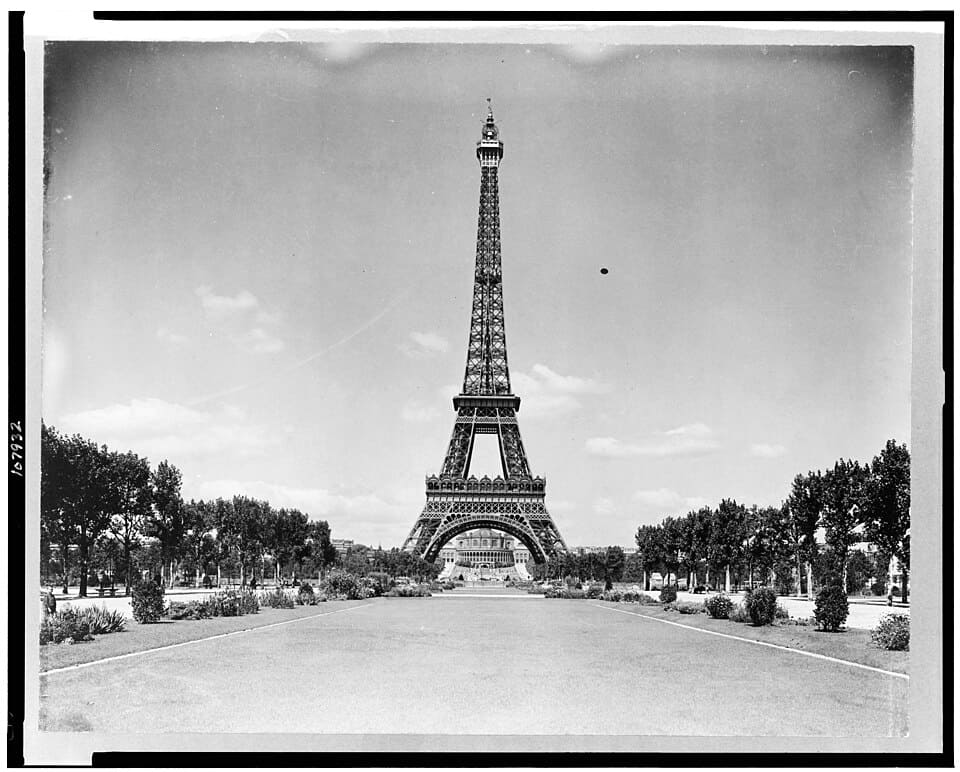
Chapter 3. The Late 19th Century: The Age That Learned to Dream
The years 1860–1895 were marked by an almost boundless faith in the power of the human mind. Technological barriers were falling one after another, and the word “impossible” seemed on the verge of disappearing from dictionaries for good — much like today, amid the excitement over neural networks and talk of flights to Mars.
The Second Industrial Revolution fueled this optimism. Electricity was entering everyday life, the telephone was connecting cities, and X-rays were pushing back the boundaries of the visible. Mass production of high-quality steel made it possible to build enormous bridges and skyscrapers, railways linked continents, and the first automobiles and airships marked the beginning of humanity’s physical conquest of the air. People encountered technological marvels every day, and scientific optimism gradually turned into a kind of civic religion.
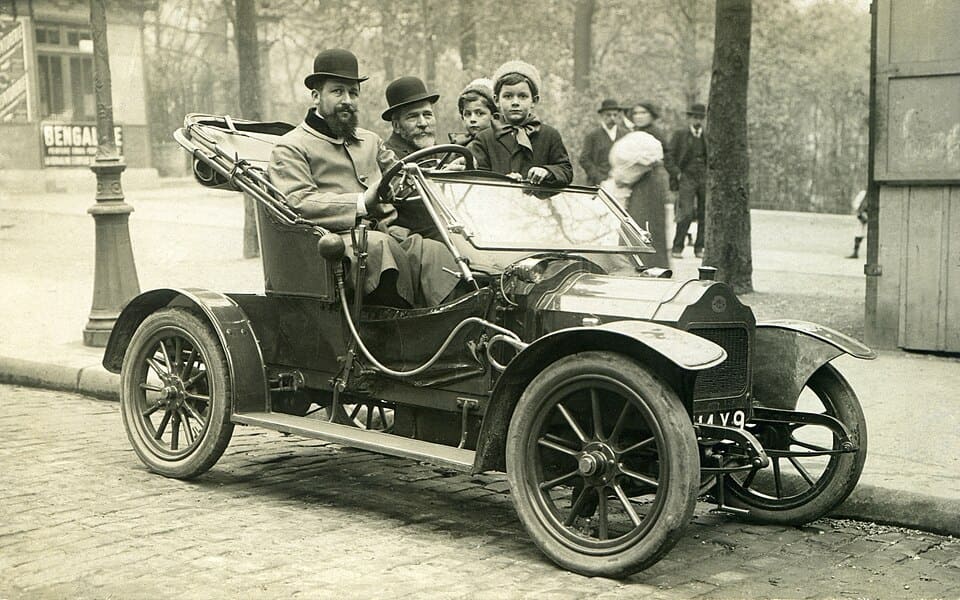
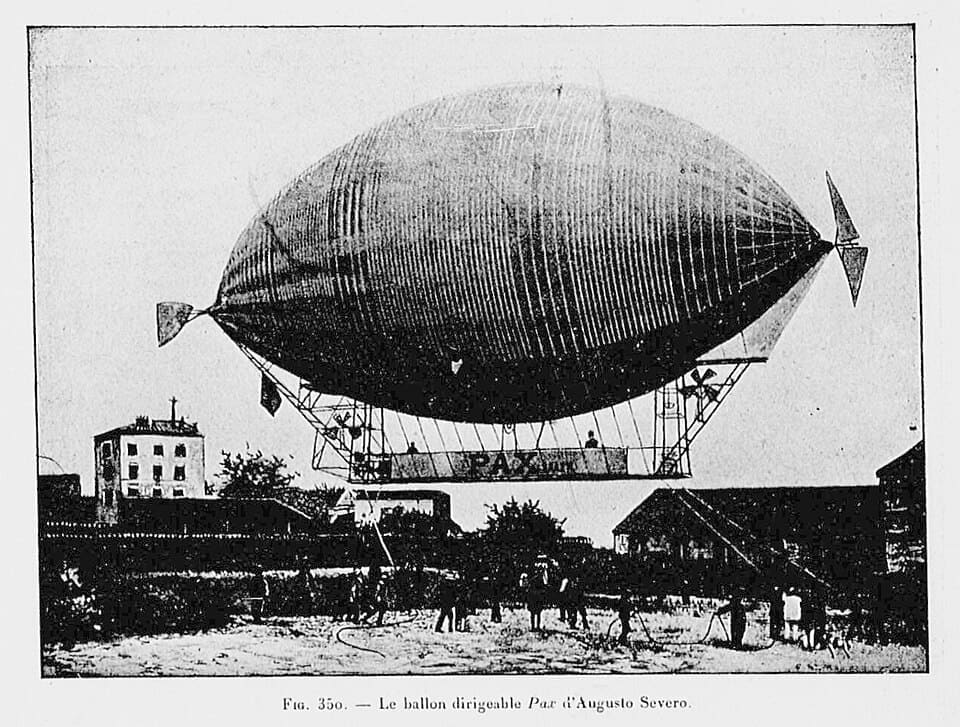
Science fiction led the charge in this process. Jules Verne’s novels trained readers to see space travel as a rigorous ballistic problem rather than a fairy tale. The French astronomer and writer Camille Flammarion, through his popular-science writing, blurred the line between hard astronomical fact and the poetic dream of life on other worlds. H. G. Wells went on to build new technological myths, preparing the human mind for a departure from its home planet.
The technological explosion of the late 19th century created a uniquely fertile psychological ground: people genuinely believed that any bold engineering fantasy could be made real in metal. Space stopped being an abstract philosophical realm and became a potential destination for future transport systems — though historians of science still aren’t entirely sure how closely the paths of professional scientists and early science-fiction writers actually crossed, or whether private discussions between them shaped the real engineering pursuits of the time.
Chapter 4. Russian Cosmism: The Spiritual Roots of the Space Elevator
While Western thought was moving along a path of pragmatic, industrial conquest of height, something quite different was taking shape in Russia — Russian Cosmism. This intellectual movement grew out of a profound sense of the indissoluble unity between the macrocosm of the universe and the microcosm of the individual human being.
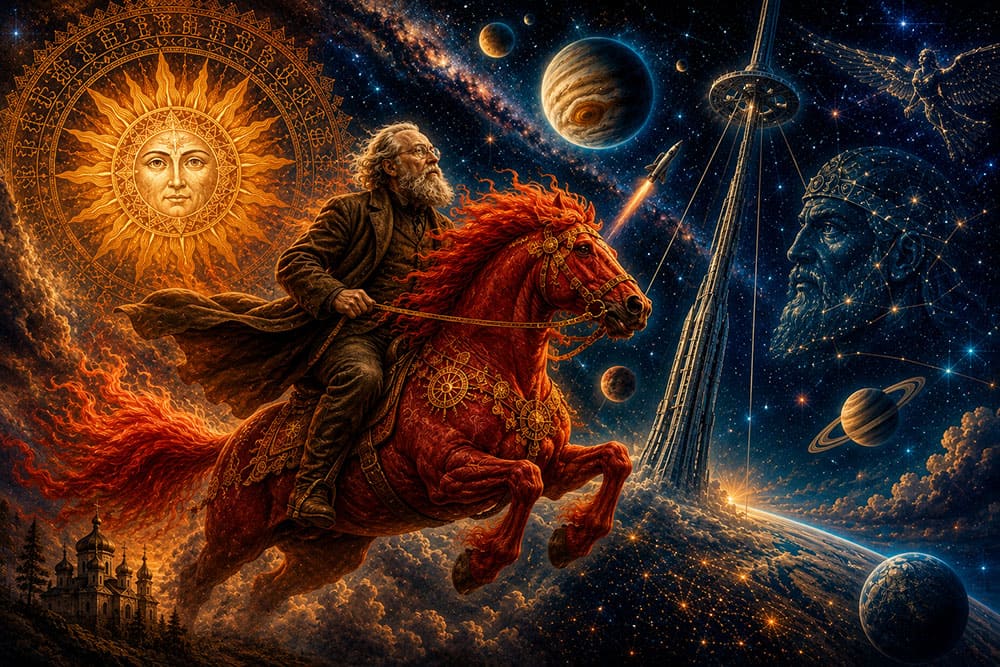
The philosopher Nikolai Fyodorov approached the question of height not from an engineering angle, but an ethical one. In his “Philosophy of the Common Task,” he formulated a radical mission: humanity is obligated to defeat death, physically resurrect its ancestors, and learn to command the forces of nature. And since there won’t be enough room on Earth for all the resurrected generations, settling other planets becomes inevitable. These ideas would later grow into Vladimir Solovyov’s religious-philosophical concept of All-Unity, Vladimir Vernadsky’s scientific work on the noosphere, and Alexander Chizhevsky’s studies in heliobiology. It may seem strange to a Western reader, but in Russia, space engineering was born not out of military calculation but out of an almost religious philosophy. Before building a rocket, Russian thinkers first had to answer an existential question: why should humanity leave Earth at all? Fyodorov’s answer — for the salvation of humanity and out of ethical duty — became the fuel on which Tsiolkovsky’s ideas would later grow.
This cosmic worldview also found its way into poetry of the Silver Age (the second golden era of Russian modernist poetry in the late 19th and early 20th centuries, known for its extraordinary artistic creativity and influential poets). Long before Cosmism took shape as a movement, Fyodor Tyutchev was describing the abyss of the starry sky and the duality of the human soul before infinity. Sergei Yesenin, in his revolutionary poems “Transfiguration” and “Pugachev,” raised peasant cosmology to a planetary scale, treating social upheaval as a cosmic shift.
“Oktoikh”
by Sergei Yesenin, 1917.
Плечьми трясем мы небо,
Руками зыбим мрак
И в тощий колос хлеба
Вдыхаем звездный злак.
Literal translation: “With our shoulders we shake the sky, / with our hands we stir the darkness, / and into the lean ear of wheat / we breathe a starry grain.”
“Inonia,”
by Sergei Yesenin, 1918.
Не хочу восприять спасения
Через муки его и крест:
Я иное постиг учение
Прободающих вечность звезд.
Я иное узрел пришествие —
Где не пляшет над правдой смерть.
Как овцу от поганой шерсти, я
Остригу голубую твердь.
Literal translation: “I do not want to receive salvation / through his (God’s) torments and his cross: / I have grasped another teaching, / that of the stars piercing eternity. // I have beheld another coming — / where death does not dance over truth. / Like a sheep of unclean wool, I / will shear the blue firmament.”
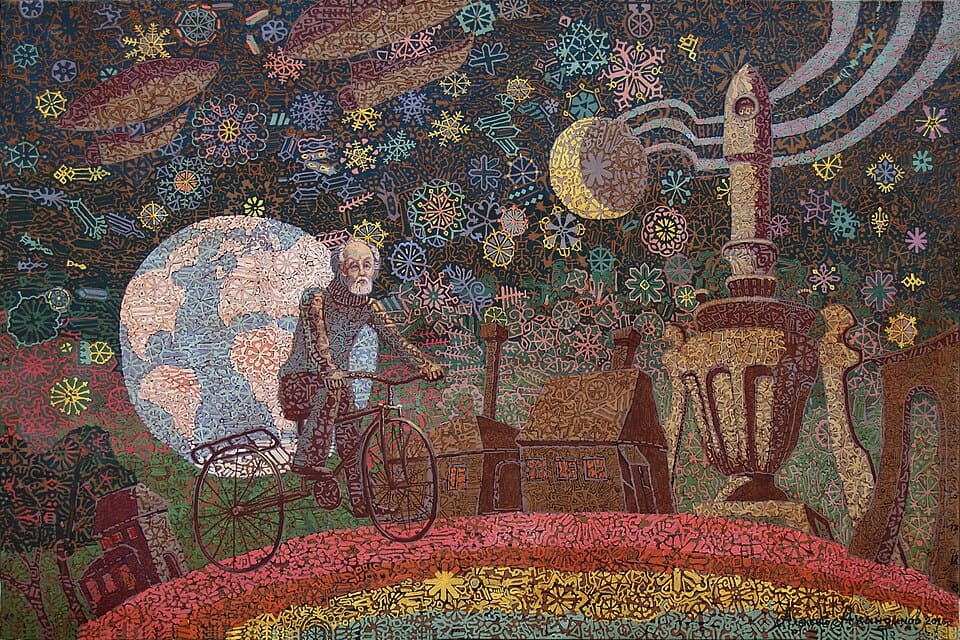
In Russian culture, space first became philosophy and poetry, and only afterward an engineering problem: the question of why had to be answered first (for the sake of ethical duty and salvation), and only then the question of how to actually do it. One thing, though, remains a mystery: how personally familiar the Silver Age poets — including Alexander Blok and Valery Bryusov — actually were with Fyodorov’s manuscripts, unpublished during his lifetime, since his ideas were more often passed along by word of mouth in intellectual circles than in print.
Chapter 5. Konstantin Tsiolkovsky, the Visionary Behind the Space Elevator
Konstantin Eduardovich Tsiolkovsky is the central figure in the history of theoretical cosmonautics, yet his phenomenon can’t be understood through the lens of a standard academic biography. He was a profound provincial thinker whose forced isolation paradoxically became his greatest intellectual asset.
Left almost completely deaf after a bout of scarlet fever in childhood, Tsiolkovsky never received a formal university education and was a classic self-taught scientist. He lived in Kaluga and Borovsk, far from the capital’s scientific centers — Kaluga remains to this day a small, quiet provincial town about 150 kilometers southwest of Moscow, surrounded by dense forests, where in the late 19th century life moved slowly and traditionally. Knowing no foreign languages, he had great difficulty reading foreign scientific literature. Yet his intellectual circle extended far beyond Kaluga — through letters, the scientist kept in touch with the whole world. The Archive of the Academy of Sciences has records of more than 700 of his correspondents, among them prominent foreign specialists and science popularizers — Willy Ley, Hermann Oberth, Robert Lademann, and Alexander Shershevsky.
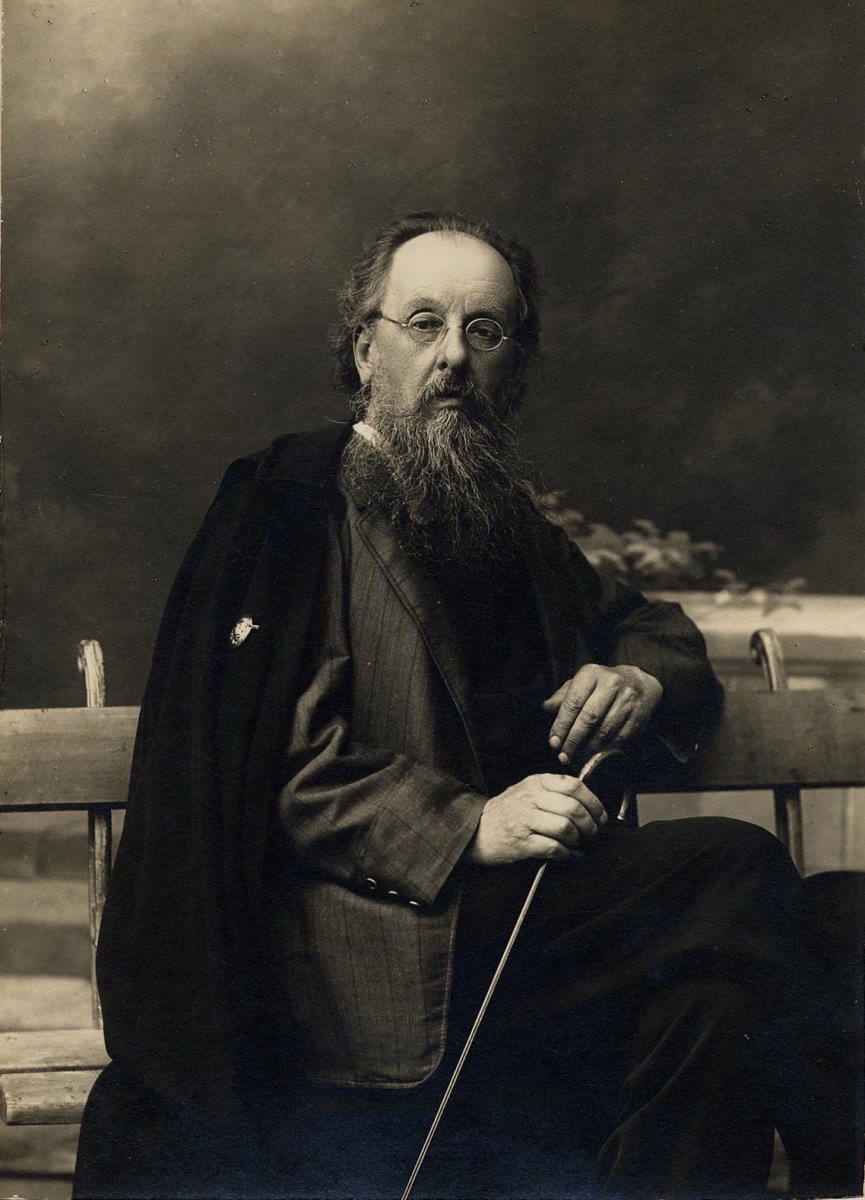

A huge influence on his formation came from Nikolai Fyodorov, whom the young Tsiolkovsky met in Moscow while studying at the Chertkov Public Library. Fyodorov effectively became his mentor, planting in him a belief in humanity’s cosmic future. Tsiolkovsky’s personal library consisted of foundational works on physics, chemistry, and analytical mechanics, which he meticulously double-checked, deriving the formulas himself. His early engineering projects were devoted to aeronautics: mindful of his homeland’s priority in the field, in 1893–1894 he translated his work “Is a Metal Airship Possible?” into French and sent it, along with a model, to the French Academy of Sciences. He later patented his airship designs in nine countries, including Russia, the United States, Germany, and France.
Tsiolkovsky was able to imagine the impossible precisely because of his sensory isolation and independence from the academic dogmas of his time: his deafness forced his mind to construct flawless thought experiments in absolute silence, where the laws of mechanics and gravity could be analyzed without regard for the skepticism of his contemporaries. That said, because part of his personal archive was lost in floods in Kaluga, historians of science still don’t know the full list of books Tsiolkovsky studied during his Moscow years — which makes it difficult to trace the evolution of his early physical ideas.
Chapter 6. A historical investigation: was Tsiolkovsky ever in Paris?
A striking legend has firmly taken root in 21st-century popular aerospace literature and internet articles: that Konstantin Tsiolkovsky personally visited the World’s Fair in Paris, saw the Eiffel Tower with his own eyes, and was instantly inspired to design the space elevator. Let’s conduct a rigorous historical investigation of this claim.
A study of K. E. Tsiolkovsky’s personal archive at the Russian Academy of Sciences (Fund No. 555) thoroughly disproves this version. Not a single mention of any trip outside the Russian Empire appears in his surviving diaries, letters, or family memoirs. In his autobiographical notes and correspondence — including a 1930 letter to Robert Lademann — Tsiolkovsky stated directly that he had never been abroad and deeply regretted not knowing any foreign languages. The modest budget of a Kaluga math teacher simply couldn’t have covered such an expensive trip abroad. His ties to France were purely epistolary: sending his airship designs to the Academy of Sciences in 1894, and his correspondence with the engineer Ary Sternfeld, who helped get Tsiolkovsky’s books into the National Library of Paris.
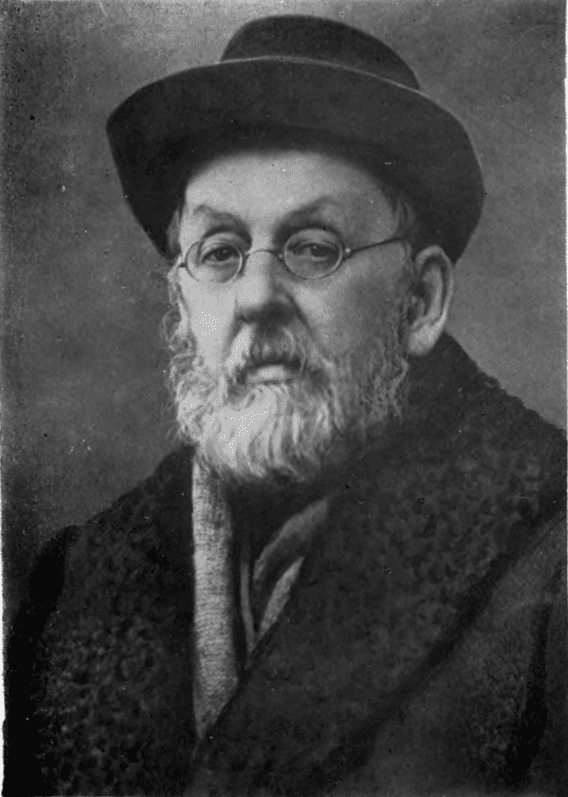
The legend of the “Paris trip” itself was born long after the scientist’s death — in the late 1950s, riding the wave of popular interest in the space elevator that followed Yuri Artsutanov’s publications. Journalists and science popularizers used the Eiffel Tower as a convenient, vivid metaphor for explaining the Kaluga thinker’s train of thought. Over time, through a chain of careless retellings in the mass press, the phrase “Tsiolkovsky was inspired by the design of the Eiffel Tower” morphed into a false biographical fact: “Tsiolkovsky visited the Eiffel Tower in Paris.”
So: no documentary evidence has ever been found that K. E. Tsiolkovsky was in Paris — the scientist never once left his homeland. His inspiration wasn’t a personal visit but the detailed drawings and articles about the Eiffel Tower published in Russian technical journals in 1889–1890, which he studied carefully at his workbench.
Chapter 7. The birth of the “heavenly tower”
In 1895, K. E. Tsiolkovsky’s book “Dreams of Earth and Sky, and the Effects of Universal Gravitation” was published in Moscow, funded by the Kaluga patron A. N. Goncharov. This publication, which appeared during the scientist’s lifetime, is considered the official birthplace of the first technical description of a space elevator in history.
These are drawnings from Tsiolkovsky’s paper “Album of Space Travel”, 1933:
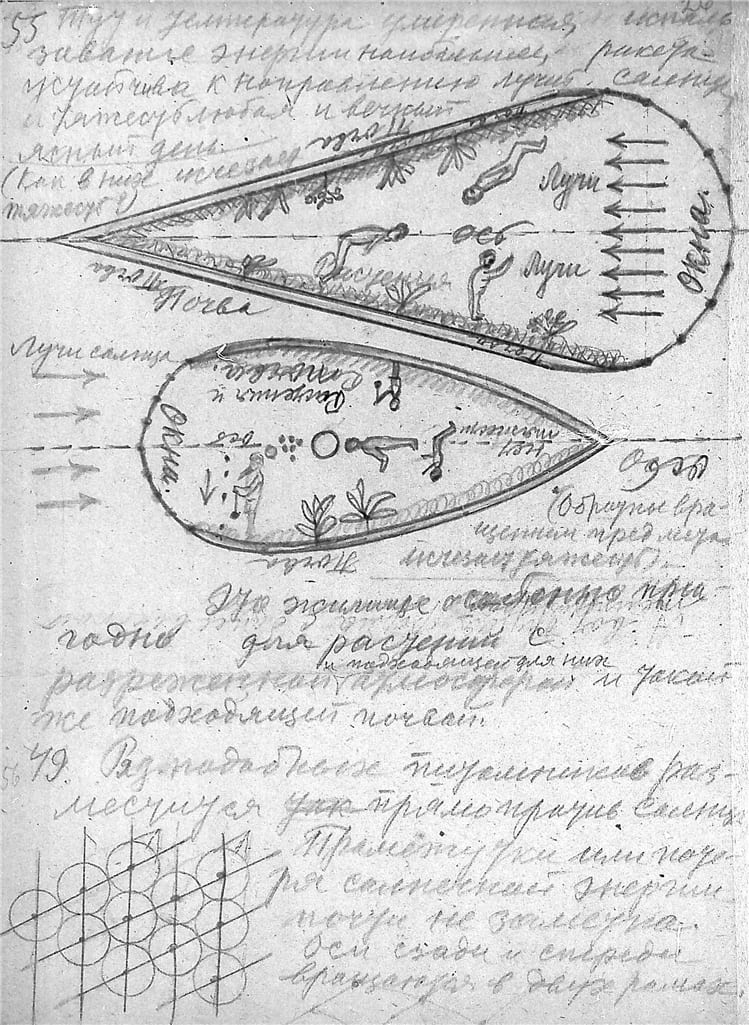
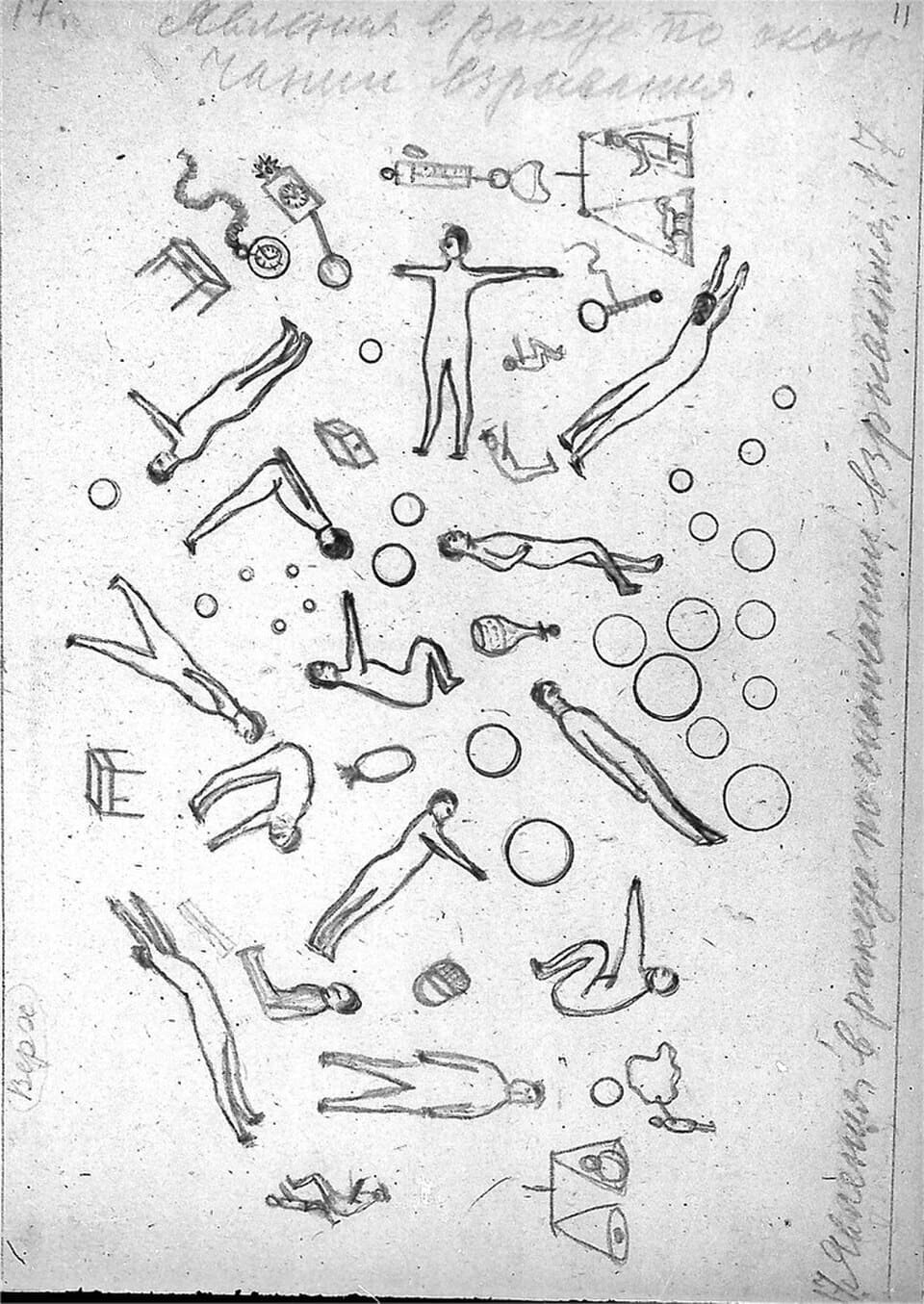
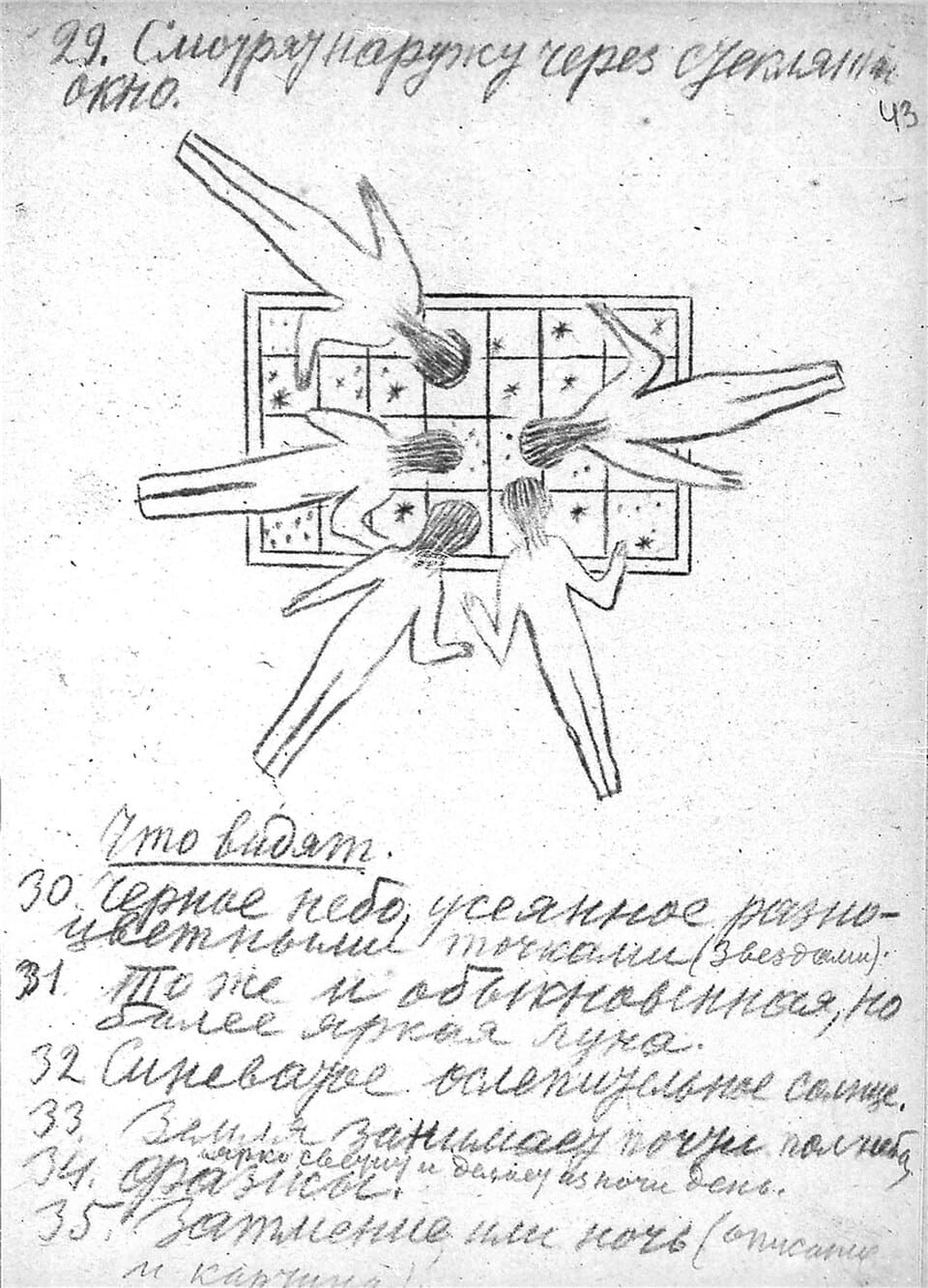
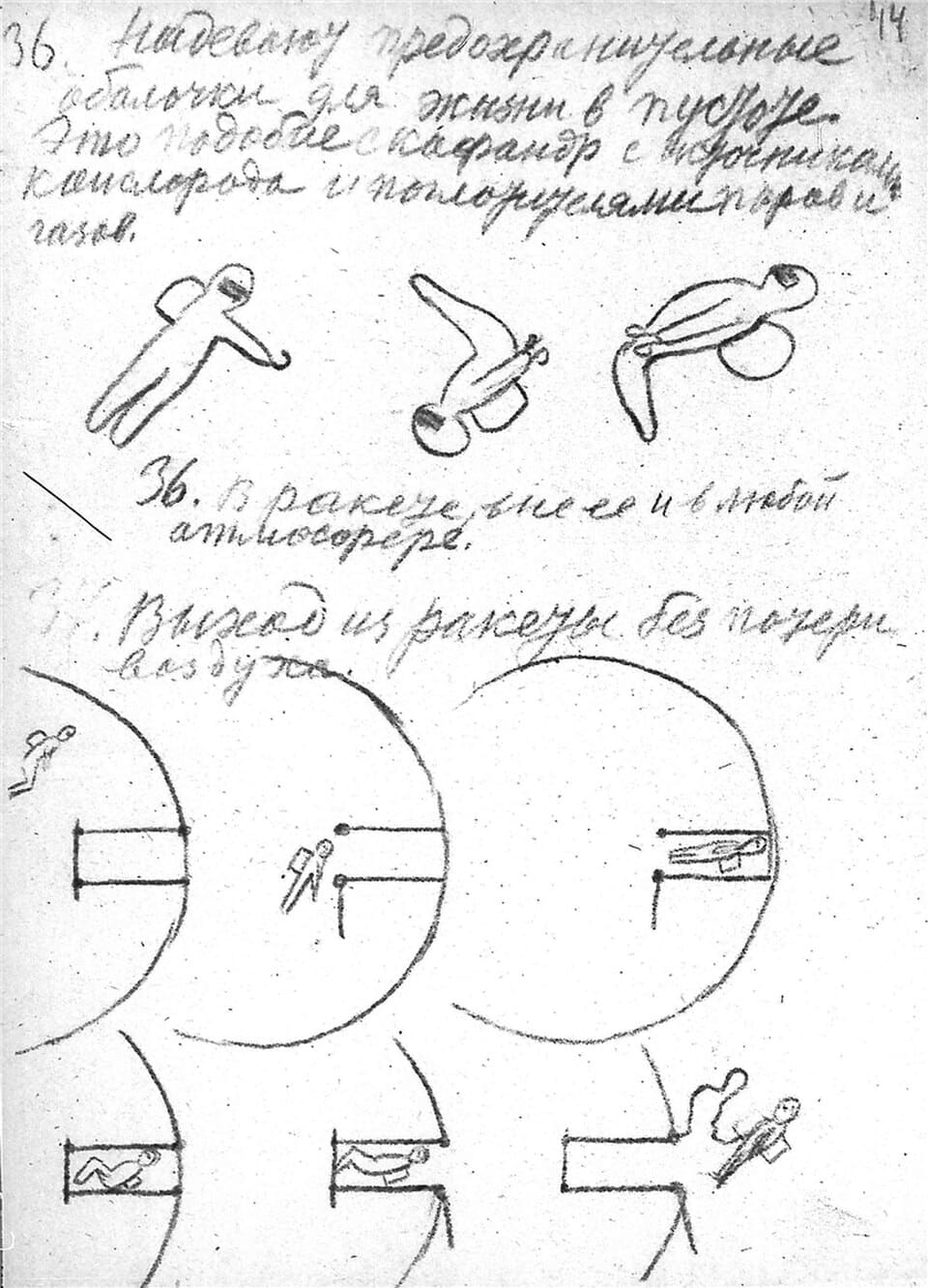
In this semi-fictional, semi-astronomical work, Tsiolkovsky used the method of a thought experiment: what if gravity on Earth suddenly disappeared? As a solution to the problem of overcoming gravity, he proposed building a colossal tower at the equator, rising vertically into outer space. This was Tsiolkovsky’s answer to how a space elevator would work: balance gravity against centrifugal force, and no rocket is needed at all. And this is also why, in every design since, a space elevator has to be on the equator: only there does the planet’s own rotation pull the cable straight upward instead of at an angle.
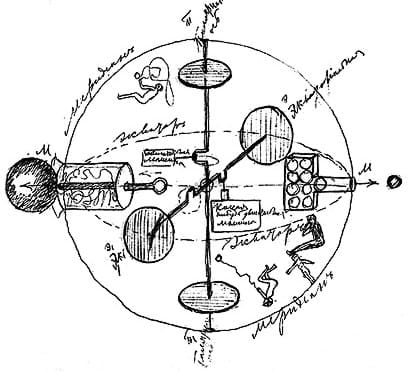
The scientist calculated mathematically that as one climbed the tower, the centrifugal force from Earth’s daily rotation would increase while gravitational pull would decrease. At the height of geostationary orbit (about 36,000 km), these forces would reach perfect balance. A person who climbed to the top of such a “heavenly tower” (or “Sky Castle”) would find themselves weightless and able to step out into open space, automatically becoming an artificial satellite of Earth — without a single rocket.
His contemporaries’ reaction was discouraging. Kaluga society and academic circles greeted the book with blank incomprehension and mockery, treating it as the fruit of a provincial teacher’s idle fantasies. Local newspapers published scathing reviews. One review of the time stated plainly: “Wouldn’t it be better for this idle writer, instead of indulging in fruitless dreams about the sky, to look at the earth and devote his inspiration to worldly matters — for instance, bribery, disorder on the railways, or the poor state of the streets and sidewalks?”
The idea went completely unnoticed by the world scientific community — above all because it critically outpaced the technological capabilities of its era. A basic engineering calculation showed that with the materials available in the 19th century, including the strongest steel of the day, a cable of such length would inevitably snap and be crushed under its own colossal weight. Building the “heavenly tower” would require materials with strength on the order of interatomic molecular bonds — something 1895 metallurgy didn’t even suspect existed.
And so Tsiolkovsky’s great insight was forgotten for nearly seventy years: the idea had simply outpaced its time, remaining a piece of science fiction, waiting in the history of ideas for its moment to come. Exactly how many original copies of the 1895 book have survived in archives and private collections outside the Kaluga State Museum of the History of Cosmonautics remains genuinely unknown even today — the print run was quite small.
Sources: