
Optical coatings are thin layers of special materials applied to the optical elements of binoculars, such as eyepieces and objective lenses, as well as prisms. Their main purpose is to reduce light reflection from optical surfaces, which lead to light loss, and to increase light transmission within the entire optical system of the binoculars. Thanks to coatings, the image becomes brighter, more saturated, and clearer.
Why is it necessary to reduce light loss at all?
In binoculars, as in complex optical systems, the light beam passes a complex path from the objective, reflecting from prisms to the eyepieces, and enters the user’s eye. During its way a certain percent of light reflects from the surface of optic elements and is inevitably lost. Light loss leads to darkening images, especially when observing in low-light conditions. Reducing reflections saves more light passing through the system, improving overall optical performance.
Without a coating, a significant portion of the light – about 4% on each surface – is lost. Given the complex design of binoculars and a large number of optical elements, the total light loss reaches 50% or even more. The use of anti-reflective coatings allows to reduce the percentage of light loss to only 0.5% for each element, which significantly increases the brightness and contrast of the image.
Coatings for lenses and prisms are applied using the vacuum deposition method, which is a high-tech process that ensures high-quality and uniform allocation of materials on the surface of optical elements.
In this article, we will try to describe as fully as possible what optical coatings are used in binoculars, and what each coating is intended for. Let’s start with a brief overview of how optical coatings affect the performance of binoculars, and then we’ll move on to a description of each type of coatings.
In budget models, the most popular is a single-layer anti-reflective coating, as it reduces light reflections at minimal cost. In more expensive binoculars, a full anti-reflective coating is used, which covers all optical surfaces and provides higher light transmission. This makes the image brighter and more contrasty, which is especially important for observations in difficult conditions, such as low light and fog. We will also learn how to determine whether your binoculars are coated with anti-reflective material and how to choose a coating when buying.
Types of binocular lens coatings
By fullness of coating
The most common designations that can be seen in the characteristics of binoculars:
Single-layer coating
This is the basic level of coating, where one layer is applied to one or more optical surfaces. It reduces reflection to 1.5-2%, which improves light transmission but is not ideal for complex optical systems.
Fully Coated optic
Each optical element of the system is provided with a single layer of coating. This approach provides better brightness and contrast of the image compared to the previous one.
Multi-Coated optic
Several layers of coating on one or more lens surfaces. This reduces reflections to less than 1%, improving light transmission and image contrast.
Fully Multi-Coated
All optical surfaces are multi-coated, which allows for light transmission of up to 95% or more. Optical equipment manufacturers can create highly effective anti-reflective coatings, experimenting and achieving better results. For example, Celestron recently developed a new StarBright XLT coating, which is used in their telescopes.
Colored coatings of lenses


YELLOW
This color coating improves contrast and visibility in low-light or foggy conditions. It also reduces glare and provides a clearer image when observing objects at long distances.
RED, RUBY
Found in budget binoculars. This coating reduces brightness, improving contrast in strong light conditions, such as bright sunlight. However, it can distort natural colors, so it is not suitable for observing nature.
BLUE, LIGHT BLUE
This coating is often used to reduce glare and increase image contrast. It can improve -visibility in bright light conditions, such as daytime observation.
PURPLE
Improves light transmission in certain wavelengths, making the image richer and more contrasty. Used in specialized models, such as the Bushnell Spectator Sport or Nikon Aculon, where increased contrast is required for observations.
VIOLET
Designed to minimize reflections and improve image quality when observing in low-light conditions.
Specialized lens coatings
Water-repellent coatings: Protect lenses from water by causing drops to roll off and not leave marks. This is especially useful in rainy weather or when observing near bodies of water.
Anti-reflective coating: Minimizes light reflection, increasing light transmission and improving image quality.
Abrasion-resistant coating: Increases the durability of lenses, protecting them from scratches and mechanical damage.
Anti-reflective coating: Reduces glare, creating more comfortable conditions for observation in strong light conditions. Differs from anti-reflective coating in its focus on eliminating glare from specific light sources.
Hydrophobic coating: Protects from dirt, fingerprints, and moisture, making it easier to care for lenses.
Prism coatings: types, what they are used for
Prisms are the most important part of binoculars. They refract light and transmit the image to the eyepieces. The percentage of the light beam that reaches the observer and what quality is affected by the type of optical glass the prisms are made of and the coating of their reflective surfaces.
Phase-correcting coating: Used in roof prisms to correct phase shifts that occur when light passes through the prism. This increases the sharpness and contrast of the image.
Dielectric coating: Used to increase the reflectivity of prisms. This coating allows for reflection of up to 99%, which is important for image brightness.
Silver and aluminum coatings: These coatings are used to increase reflection in Porro prisms. Although they are less effective than dielectric coatings, they are cheaper to produce.
User experience shows that binoculars with multilayer coatings provide a noticeably brighter image at dusk and dawn. It is also often noted that phase-correcting coatings in roof binoculars eliminate the “blurry” effect of the image, which manifests itself as insufficient clarity and blurring of details during observation. This effect occurs due to phase shifts of light waves passing through the prism, which reduces the overall sharpness and contrast of the image. This is often found in budget models without optical coating.
The dielectric coating of prisms deserves special attention, since it improves the image more effectively than all others. We will talk about it further.
Dielectric coating of prisms
Dielectric coating is one of the most modern and effective types of coatings in binoculars. It is applied to the reflective surfaces of roof prisms. Its main task is to increase the reflectivity of the surfaces, which is critical for the brightness and contrast of the image..
The dielectric coating consists of several dozen thin layers of dielectric materials, such as silicon oxide SiO or titanium dioxide TiO2. Each layer has a strictly calculated thickness, which allows the coating to work effectively at certain wavelengths of light. The final reflectivity of prisms with such a coating reaches 99%, which significantly exceeds the performance of aluminum (87-89%) and silver (93-95%) coatings, which we will consider below.
The dielectric coating has high durability and resistance to corrosion, which makes it a preferred choice for premium binocular models. It also ensures minimal light loss, which is especially important for observations in low-light conditions, such as the night sky or twilight. Ideal for astronomical observations. For example, such premium binoculars as Nikon Monarch HG, Zeiss Victory SF, and Swarovski EL have this coating.
Advantages of dielectric coating:
- Maximum image brightness due to high reflectivity.
- Preservation of natural colors without distortion.
- High durability and resistance to external influences.
- Excellent results in low-light conditions.
Dielectric coating is most often found in roof prisms since their design requires minimal light loss. For astronomical binoculars, the dielectric coating is also important, as it helps maintain high image brightness when observing faint objects in space.
How to check if binoculars have a coating?
Turn the binoculars with the lenses towards you and slowly turn them, peering into the glass. If there is a coating, the reflection will be colored or muted
The easiest way, of course, is to look at the specifications of the binoculars in the user manual or on the manufacturer’s website. It should indicate not only the presence of a coating but also its type. But if you buy binoculars from an unverified seller, the declared characteristics may differ from reality. Fortunately, you can determine the presence of a lens coating yourself by visual assessment.
Manual test

Turn the binoculars with the lenses towards you and slowly turn them, peering into the glass. If there is a coating, the reflection will be colored or muted. On the photo here you can see blue coating. If there is no coating, then the lens will be white and bright. For example, single-layer coatings usually give a bluish or greenish tint, while multi-layer coatings can be violet or purple.
How to choose binoculars with the right coating?
When choosing binoculars, it is important to consider the purpose of their use and the observation conditions:
For nature and bird lovers: Choose models with a full multi-layer anti-reflective coating (“Fully Multi-Coated”) to get bright and contrasting images even in low light conditions.
For astronomy: Binoculars with a dielectric prism coating are better suited for observing stars, as they provide maximum light transmission. For astronomy purposes, it is also important that the lenses have an anti-reflective coating.
For tourism and sports: If you are looking for a budget option, a single-layer coating may be enough, but pay attention to models with phase-correcting coatings if you choose roof prisms.
By budget: Premium binoculars with a dielectric coating, such as Zeiss or Swarovski, are suitable for professionals. For beginners, a model with Multi-coated optic is enough.


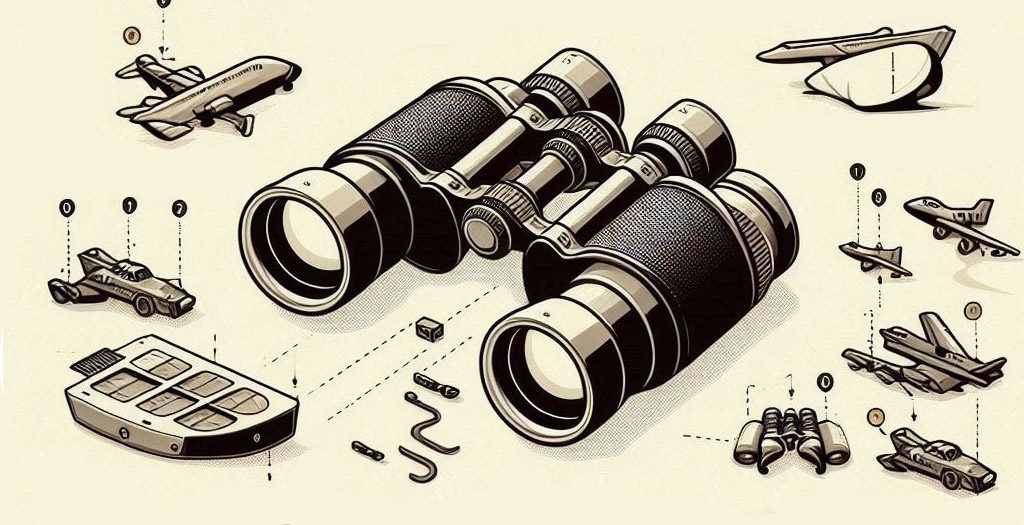






[…] Binocular lens and prism coatings […]
Hello, you used to write excellent, but the last several posts have been kinda boring?K I miss your great writings. Past several posts are just a little out of track! come on!
Hi! Thanks for your passion and your high value of my articles 🙂 Please, stop trying to spam here 🙂