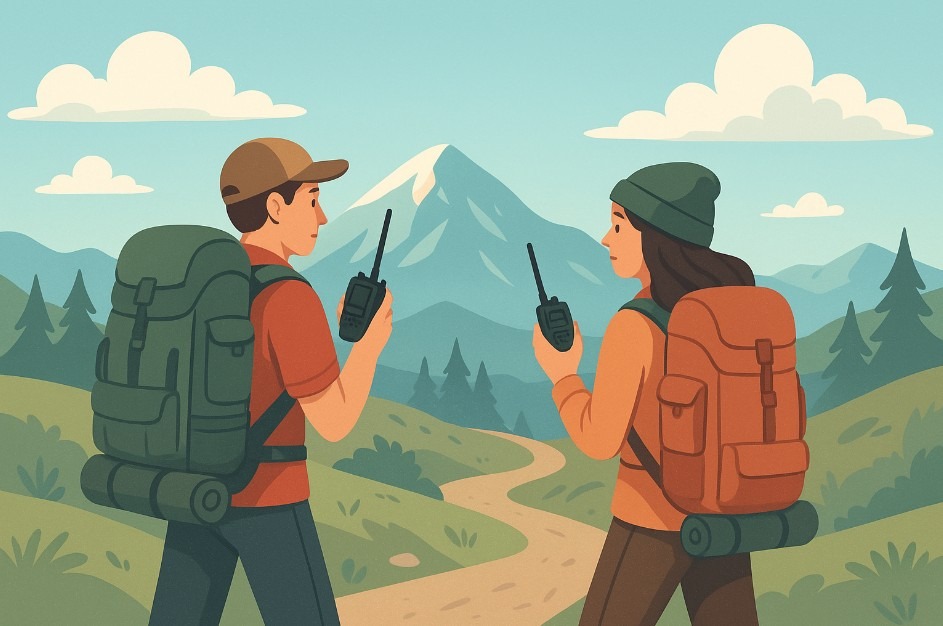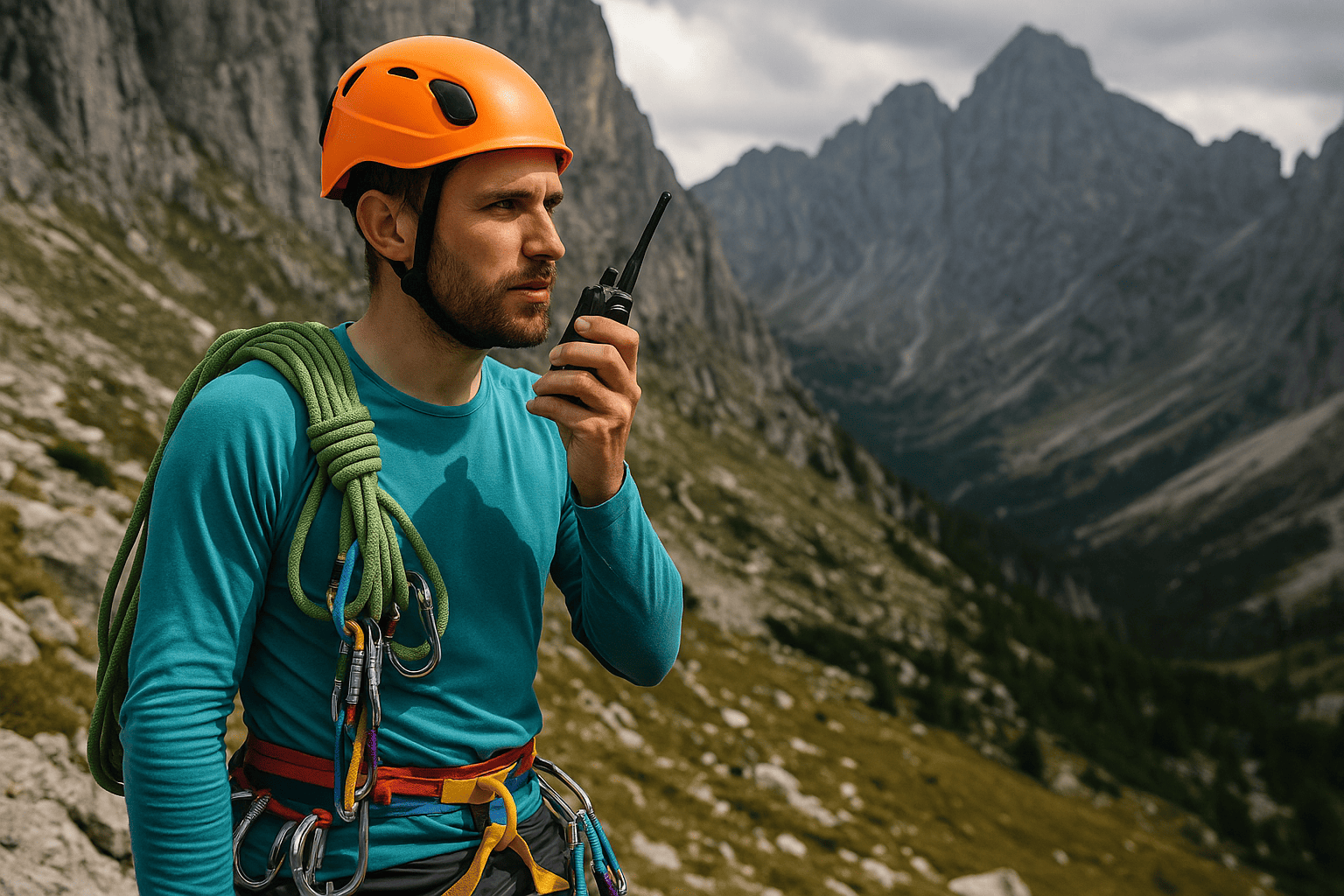
Climbing in the mountains is as much about managing risk and communication as it is about strength and technical skill. In many cases, your phone won’t work. A good walkie-talkie (or two-way radio) can be a lifeline: for coordination between climbing partners, alerting in emergencies, coordinating when one rope team is out of sight, or when weather changes fast. But not all radios are made equal, especially for mountainous terrain.
In this article, we’ll start by discussing what features matter in a “mountain radio,” how mountains and weather affect radio signals (summer vs. winter, altitude, snow, etc.), what famous climbers tend to prefer, and then I’ll give you a curated TOP-10 list of the best walkie-talkies in 2026, with a detailed comparison table and commentary.
What to Look for in a Walkie-Talkie for Mountain Climbing
Important factors for mountain walkie-talkies: Power · Frequency · Mountain Range Performance · Battery Life · Weather Resistance · Privacy Codes · Ease of Use
- Power / Transmit Wattage: Higher power helps, but legal limits matter (e.g. GMRS in the US, PMR446 in Europe). 2-5 watts is typical for serious backcountry handhelds. Too low and you’ll lose signal quickly behind ridges.
- Frequency Band: UHF vs VHF; licensed vs license-free. Some bands penetrate vegetation or snow differently; line of sight matters a lot. For Europe often PMR446; for US, GMRS or hybrid FRS/GMRS; sometimes amateur (ham) radios if you have the license.
- Range in Real Mountain Conditions: Advertised “line of sight” ranges are almost always optimistic. In valleys, behind ridges, through snow or forest, range drops sharply. Getting good mountain-terrain tests is key.
- Battery Life and Cold Performance: Cold drains battery fast; you want a radio that still works in subzero, that you can recharge (USB-C helps), optionally use spare batteries, or attach auxiliary power. Reserve battery life for emergencies.
- Ruggedness & Weather Resistance: Waterproof or at least splash/snow proof; shock resistance (drops, rock, rope abrasion), durable antenna, glove-friendly buttons, display protection.
- Channels, Privacy Codes, Features: Enough channels to switch when interference, privacy/sub-channels (CTCSS/DCS), scan modes, channel lock, maybe weather-alert, or repeater support for GMRS if applicable. Also accessory support (hand mics, mounts, etc.).
- Simplicity & Size/Weight: With gloves, with wet hands, high altitude, you don’t want a complicated device. Also lighter means less gear weight; attachment to harness/backpack is helpful.
How Mountains and Weather Affect Radio Communication
Terrain and weather affect the clarity of radio communication
Let’s go through the physics and practical effects:
- Line-of-Sight is King: Radio waves in the UHF/VHF bands used by walkie-talkies travel essentially straight unless scattered. Mountains, ridges, rock faces, forest cover block or absorb signal. If you and your partner are on peaks with a valley between, chances are you’ll lose contact unless high enough or via reflection.
- Reflections, Absorption, and “Radio Shadows”: Snow, ice, rock reflect or absorb signals differently. Dense forest and wet snow can absorb. Valleys (especially deep ones) create shadows where no signal reaches. Sometimes reflections off rock faces can give weird multipath effects (echoes, interference).
- Altitude & Atmospheric Effects: At higher altitude, thinner air can slightly affect propagation; more importantly, terrain tends to be more open so better line of sight. But cold severely affects battery chemistry. Also snow and ice accumulation can detune antennas or cause connection issues.
- Seasonal Differences (Winter vs Summer): In summer, vegetation (leaves) may block more; in winter leaves are off, snow may help reflect or also absorb. Also humidity, rain vs snow change moisture content in atmosphere, which affects attenuation. Cold degrades battery life; gear is more brittle. Weather (snowstorms, fog) can reduce visibility and sometimes cause static or interference.
- Regulatory & Licensing Constraints: Depending on country, you may need a license to use higher-power radios (GMRS in USA), or only license-free bands (PMR446 in Europe). Also legal limits on wattage, frequencies, output power.
What Do Experienced Climbers / Mountaineers Use?
From gear reviews, forums, and test expeditions: many climbers prefer simple rugged radios, often from brands like Rocky Talkie, Motorola Talkabout, Midland, sometimes more professional two-way radios with VHF/UHF if they have radio licenses or are guiding in remote regions. They value:
- Glove-friendly buttons, large push-to-talk (PTT) switch, audible click so you know it’s transmitting.
- Good battery life even when cold, splash/snow proofing.
- Moderate weight and ability to clip securely to harness or backpack so you don’t drop it.
- If possible, repeater support (in GMRS), or ability to monitor two channels so you can keep backup contact.
- Simplicity over fancy features: climbers often say “the radio survived a fall, the buttons still work” more than “it has GPS”.
Top-10 Walkie-Talkies for Climbing in 2026
| Radio | Band & Power / Frequency | Price (approx.) | Battery / Battery Life | Distinctive Features | Drawbacks |
|---|---|---|---|---|---|
| Rocky Talkie Mountain Radio | FRS (license-free), 2 Watts; 128 channels (121 privacy codes), 7.5 cm non-removable antenna | ≈ US$110 / equivalent | 1550 mAh Li-ion; ~4 days in cold use; USB-C | IP56 splash/snow proof; shatterproof screen; carabiner + leash; huge channel/code set; easy buttons; tested in real mountain terrain | Not fully waterproof (no submersion); range lower than max in worst terrain; non-removable antenna helps durability but limits upgrade |
| Rocky Talkie 5 Watt Radio | GMRS, 5 Watts; removable & shorter/longer antenna options | ≈ US$180 | 1800 mAh battery; ~5 days use; USB-C; good cold temp behavior | IP67 waterproof; NOAA weather alerts; dual-channel monitoring; more range; rugged build; supports GMRS repeaters | Larger/heavier; requires GMRS license in US; cost; more power draws more battery in some modes; antenna length/bulk |
| Midland GXT1000 | GMRS, ~5 Watt class; many channels | ≈ US$90 | Battery: rechargeable + AA / pack (varies) ; life decent but less than RM 5-Watt in cold/high drain | Affordable; reasonable range; good for occasional backcountry; features basic weather alert; many units/parts available | Less rugged; not waterproof to IP67; antenna & battery non-removable or less durable; performance drops more in extreme cold / behind obstacles |
| Motorola Talkabout T800 | Hybrid FRS/GMRS; ~2-5 W depending on model; uses app for mapping/location | ≈ US$130-160 | Rechargeable battery packs; maybe also AA in some models; life moderate | Bluetooth/app features; location sharing; good community; solid brand; decent range; alert functions | More complexity; extra features can fail; cost of licenses; possibly less rugged for extreme abuse; some models heavier |
| Motorola Talkabout T600 / T605 H2O | FRS/GMRS hybrid; ~2 Watts in many cases | ≈ US$120-140 | Rechargeable; also uses AA/standard batteries; water-friendly | Floating versions; waterproof cases; good weather resistance; useful for snow, rain, splash; rugged buttons | Waterproof versions often bulkier; floatation aids add cost; battery life still suffers in very cold; range constrained by power & terrain |
| Midland XT511 / XT50/XT67 series | GMRS / FRS depending on model; 2-5 Watts; many channels | ≈ US$80-110 per pair | Rechargeable / AA combo; moderate battery life | Good value; proven durability; widely available; decent coverage for moderate trips; often includes weather alerts | Not top tier in ruggedness; limitations in waterproofing; less premium battery; fewer accessory options; sometimes heavy or large |
| Cobra (or Uniden) offshore / all-weather models | Depends on model: many UHF/GMRS, some marine VHF hybrids | ≈ US$130-180 | Good battery; sometimes float / waterproof; sealed construction | Marine features (float, strong waterproofing); good speaker volume (wind noise compensation); sometimes NOAA alerts | Often heavier; more expensive; not all features useful for climbing; sometimes poor channel privacy codes; licensing constraints |
| Backcountry Access (BCA) / similar avalanche-/ski-gear radios | Often VHF or hybrid; lower wattage but optimized for snow, avalanche beacon compatibility, weather info | ≈ US$200-300 depending on extras | Strong battery; often designed for cold; some rechargeable; some fixed packs | Great cold weather performance; designed for alpine; often extra features useful in winter climbing or ski touring; very rugged housing | Higher cost; heavier; more technical; sometimes license needed; channel flexibility lower; may be overkill for summer hill walking |
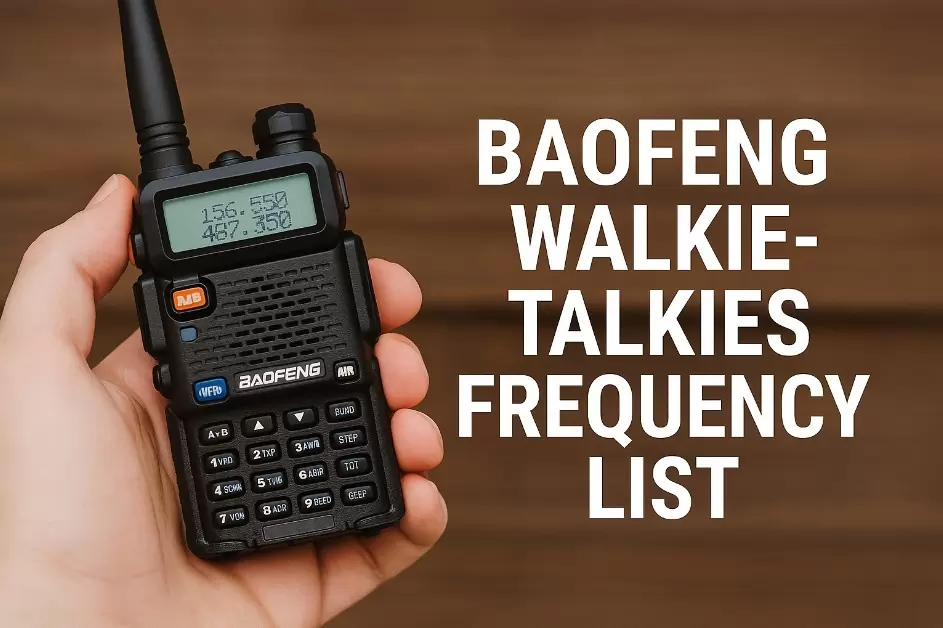
| Baofeng UV-5R (or equivalent dual band amateur handhelds) | Dual Band VHF/UHF; up to ~5 Watts (depending on modification / model); amateur bands | ≈ US$30-60 | Variable; often rechargeable battery packs; may need spare batteries; life suffers in cold | Very flexible frequency range; good for advanced users; cheap; many accessories; can monitor multiple bands | Requires amateur radio license; less rugged stock; less waterproof; usability in gloves often poorer; risk of illegal transmission if misused |
| PMR446 digital / analogue European models (e.g. Motorola XT etc.) | PMR446 band (~446 MHz), up to 0.5–2 W depending on regulation; license-free in Europe | ≈ €50-€120 depending on ruggedness | Battery life moderate; often AA or built-in; cold reduces performance | Simplicity; legal compliance in Europe; decent for day climbs and routes where you stay visible; lightweight | Limited range; behind ridges will lose signal; not as many features; waterproof ratings often lower; pricing vs features less premium |
| High-end licensed VHF / UHF professional radios (Entel, Hytera, Motorola pro line, etc.) | Often 4-5+ Watts; possibly digital; licensed frequencies; rugged, IP rated; meaningful spectral output | ≈ US$300-600+ | Very good battery; spare packs; often designed for many hours; cold performance baked in | Best ruggedness; trusted in guide services or SAR; dual band; more control; long lifetime | Cost; weight; complexity; licensing; overkill for casual climbing or summer routes |
More Detailed Comparison & Ratings
Below I rate some of the top models from the table according to key criteria: distance & signal quality; battery life; weather / ruggedness; suitability for beginners; and price.
Rocky Talkie Mountain Radio — Detailed Comparison & Ratings
- Range & call quality: 7.8/10 — reliable line-of-sight; holds clarity in light tree/snow cover.
- Battery life: 8.5/10 — strong cold-weather stamina for multi-day use.
- Weather / ruggedness: 8.2/10 — IP56 splash/snow; shatter-protected screen.
- Beginner-friendly: 9.0/10 — license-free FRS, simple controls, glove-friendly.
- Price friendliness: 7.2/10 — mid-premium, but great real-world value.
Rocky Talkie Mountain Radio
Rocky Talkie 5 W (GMRS) — Detailed Comparison & Ratings
- Range & call quality: 9.0/10 — best-in-group; repeater-ready for serious routes.
- Battery life: 8.6/10 — efficient for a 5 W handheld.
- Weather / ruggedness: 9.2/10 — IP67 waterproof; durable housing.
- Beginner-friendly: 7.8/10 — straightforward UI, but GMRS license (US) required.
- Price friendliness: 6.5/10 — pricey, aligned with performance.
Rocky Talkie 5 W (GMRS)
Midland GXT1000 — Detailed Comparison & Ratings
- Range & call quality: 7.4/10 — solid in open alpine; dips behind ridgelines.
- Battery life: 7.6/10 — good for weekend trips; bring spare AAs in cold.
- Weather / ruggedness: 7.0/10 — not fully waterproof; fine for showers/snowfall.
- Beginner-friendly: 8.0/10 — straightforward menus, lots of channels.
- Price friendliness: 8.4/10 — strong value.
Midland GXT1000
Motorola Talkabout T800 — Detailed Comparison & Ratings
- Range & call quality: 7.6/10 — dependable for mixed terrain.
- Battery life: 7.4/10 — rechargeable pack; carry spares for cold days.
- Weather / ruggedness: 7.6/10 — decent sealing, not submersible.
- Beginner-friendly: 8.2/10 — app features help teams coordinate.
- Price friendliness: 7.9/10 — fair for the feature set.
Motorola Talkabout T800
Motorola T600 / T605 H2O — Detailed Comparison & Ratings
- Range & call quality: 7.5/10 — typical for 2 W class; better on open terrain.
- Battery life: 7.9/10 — good endurance; AAs add flexibility.
- Weather / ruggedness: 8.8/10 — floats; excellent wet-weather/climate performance.
- Beginner-friendly: 8.3/10 — intuitive; great for glacier/wet routes.
- Price friendliness: 7.1/10 — moderate-premium.
Motorola T600 / T605 H2O
Midland XT50 / XT67 (PMR446) — Detailed Comparison & Ratings
- Range & call quality: 7.0/10 — EU legal 0.5 W ERP; fine for day climbs.
- Battery life: 7.6/10 — light, efficient; cold reduces capacity.
- Weather / ruggedness: 7.4/10 — Adventure variants improve sealing.
- Beginner-friendly: 8.2/10 — plug-and-play, license-free in EU.
- Price friendliness: 7.8/10 — good mid-range choice.
Midland XT50 / XT67 Series
Cobra / Uniden All-Weather Models — Detailed Comparison & Ratings
- Range & call quality: 7.3/10 — good in wind/noise thanks to loud speakers.
- Battery life: 7.8/10 — solid for day-to-multi-day use.
- Weather / ruggedness: 8.3/10 — strong sealing; some float.
- Beginner-friendly: 7.6/10 — simple; a bit heavier.
- Price friendliness: 7.5/10 — fair for the durability.
Cobra / Uniden All-Weather
BCA BC Link (2.0) & Similar Alpine Radios — Detailed Comparison & Ratings
- Range & call quality: 7.8/10 — optimized for backcountry team comms.
- Battery life: 8.2/10 — remote mic/PTT helps conserve power in cold.
- Weather / ruggedness: 8.6/10 — designed for winter conditions.
- Beginner-friendly: 7.0/10 — pro-leaning layout.
- Price friendliness: 5.8/10 — premium niche gear.
BCA BC Link (2.0) & similar
Baofeng UV-5R (Amateur) — Detailed Comparison & Ratings
- Range & call quality: 7.6/10 — flexible VHF/UHF; antenna upgrades help.
- Battery life: 6.8/10 — OK; bring a spare pack in cold.
- Weather / ruggedness: 5.2/10 — not built for abuse/wet.
- Beginner-friendly: 4.0/10 — requires license; steeper learning curve.
- Price friendliness: 9.5/10 — ultra-budget.
Baofeng UV-5R (Amateur)
PMR446 Pro (Motorola XT420/XT460) — Detailed Comparison & Ratings
- Range & call quality: 6.9/10 — EU 0.5 W ERP; excellent audio clarity.
- Battery life: 8.5/10 — pro-grade packs last long days.
- Weather / ruggedness: 8.4/10 — business-class durability.
- Beginner-friendly: 8.6/10 — simple, reliable, license-free in EU.
- Price friendliness: 6.8/10 — higher than hobby units.
PMR446 Pro (XT420/XT460)
References & Sources
- “Understanding Walkie Talkie Range”, RockyTalkie blog
- “Mountain Radio – Rugged Backcountry Radio specs”, RockyTalkie.com
- “PMR446 technical information”, Wikipedia
- “General Mobile Radio Service (GMRS)”, Wikipedia