
Hello, dear visitors! Make yourselves at home, whether you’re actually at home or not. By the way, have you ever felt that your true home isn’t the place where you currently live? I have. Some of us believe that home isn’t a place at all, but a soulmate we’ll meet someday. Others find home in different cultures, in which they feel a sense of belonging.
But what if our souls come from far, far away? Far out in the deep sky, where time shifts and fades, and matter burns. Did you know that the distance in time between our planet and the stars we see is so vast that what we observe now is already history? Fascinating, isn’t it?
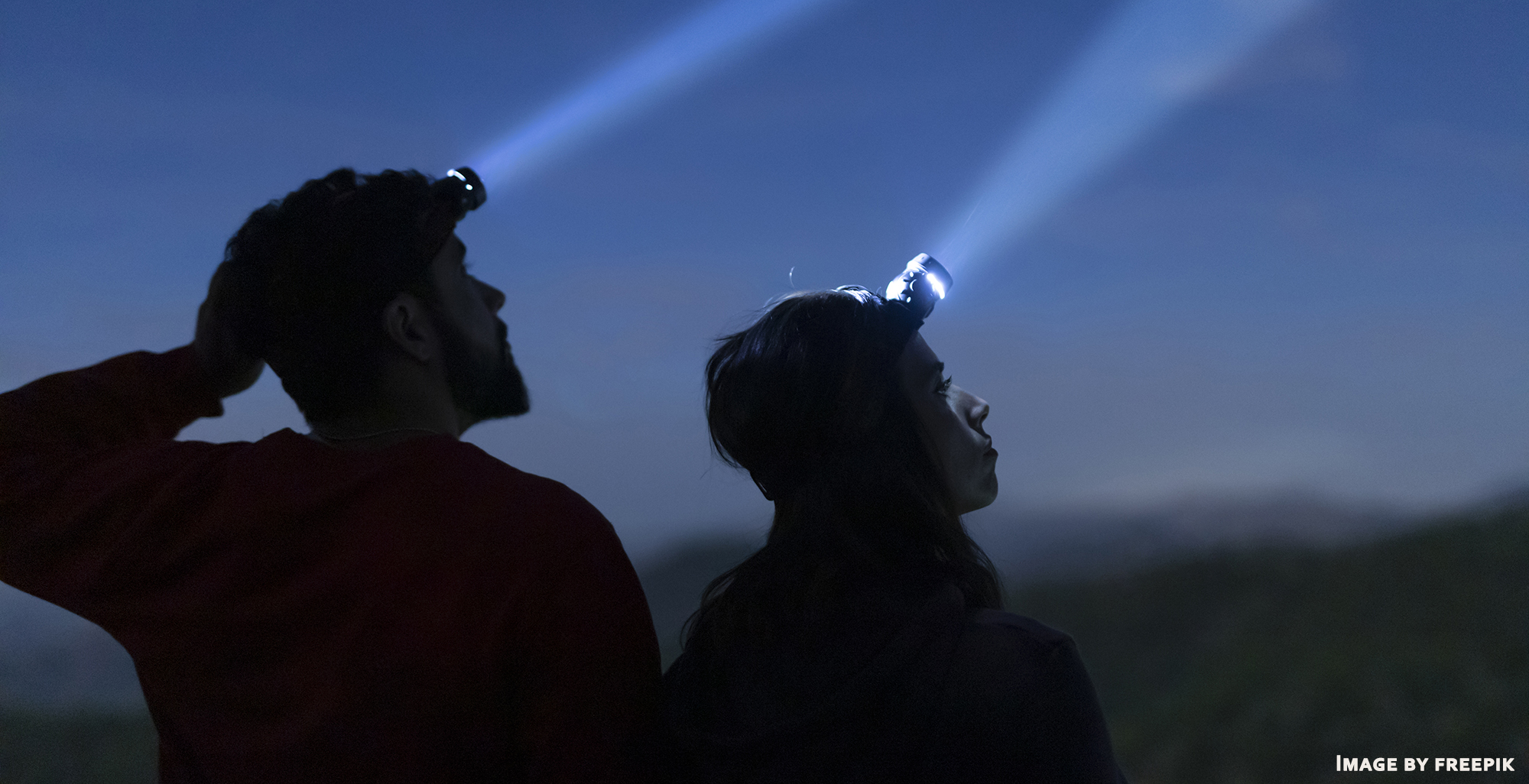
This is one of the reasons why people leave their apartments in bustling megacities and venture out into the fields, setting up telescopes and gazing into the sky for hours on end.
Astronomy binoculars VS telescopes

Maybe you’re one of those skywatchers who prefers astronomical binoculars over huge telescopes? And there’s good reason for that! Here’s why many people choose binoculars for stargazing:
- Two-eyed viewing: Binoculars let you use both eyes, which is a big advantage. Your brain interprets the image better, giving you a deeper and more three-dimensional view.
- Wide-field observations: Binoculars are ideal if your goal isn’t to focus on a single deep-sky object. Most binoculars have a wide field of view, making them perfect for scanning the sky. You can use them to get an overview, then switch to a telescope for higher magnification or specialized filters.
- Planets and the Moon: Thanks to their lower magnification and wider view, binoculars are great for observing planets in our galaxy. If your goal is simply to see the Moon or planets’ surfaces, a powerful telescope isn’t necessary.
- Portability: Even large, professional binoculars with wide lenses are more compact and lightweight than most telescopes. This is a clear advantage for outdoor observing.
- Ease of use: Binoculars are simple to operate and don’t require lengthy setup or adjustments, making them ideal for beginners.
So, what can astronomical binoculars be used for?
- Observing extended objects
- Getting acquainted with the night sky
- Watching bright variable stars
- General stargazing
- Beginner astronomy
When binoculars aren’t enough:
- Studying fine details on planetary discs
- Observing faint galaxies and nebulae
- Viewing stars dimmer than about 11th magnitude
Don’t worry about image quality—binocular lenses are comparable to telescope optics. Large objectives can reach 150–200 mm in diameter for bright, clear images. Lightweight binoculars under 1 kg can be held by hand, while heavier models usually mount on a tripod, which is helpful for magnifications of 12× or higher.
Astronomy binoculars: what can you actually see?
Never look at the Sun through binoculars or a telescope without a proper solar filter!
- The Milky Way: Probably the most famous feature of our galaxy. You can see it with your naked eyes, but binoculars open up a whole new world of detail. Don’t forget a chocolate bar for the experience!
- Planets: With 12× binoculars, Jupiter appears as a small disc with its four largest moons. At 20×, you can see its equatorial bands. Saturn’s rings, Uranus, Neptune, Mars, and Venus are also visible.
- The Moon: With 12× binoculars, you can explore its seas, craters, mountains, valleys, and mysterious domes.
- Deep-sky objects: With 25× binoculars, you can study the Andromeda Galaxy and scattered star clusters.
- The Sun: Never look at the Sun through binoculars or a telescope without a proper solar filter! Astronomers joke that you can only look at the Sun twice—once with each eye. With a solar filter, however, you can safely observe sunspots, the solar corona, and prominences.


The best astronomy binoculars
A word of advice: Don’t go for an overly powerful pair of binoculars. For example, a 20× binocular with only a 30 mm objective will give you a very narrow field of view—it’s like peering through a tiny keyhole.
Several models are especially popular among astronomers for stargazing:
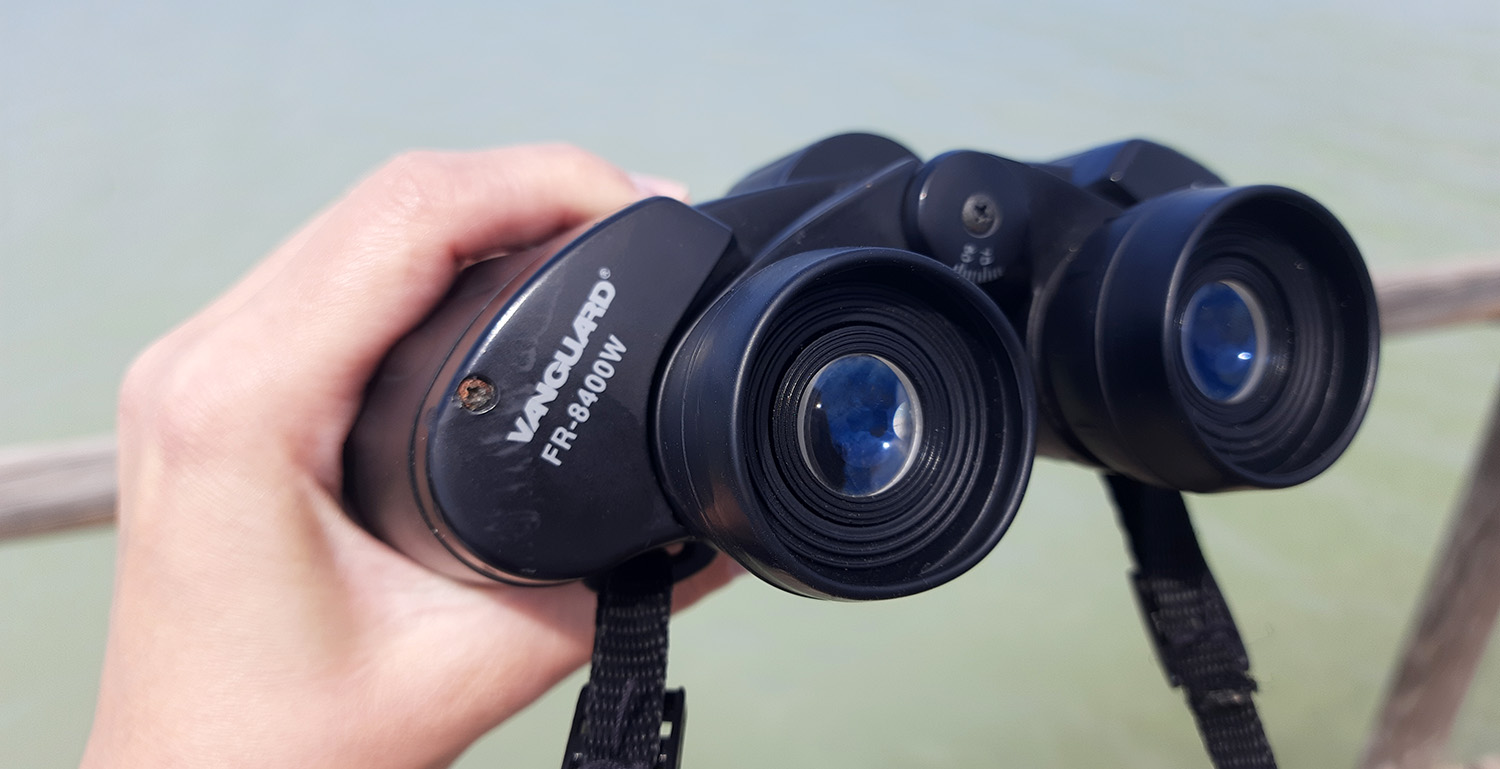
- 8×40 wide-angle binoculars: Great for spotting a variety of objects in the sky. They are small and lightweight, so you can use them anywhere without a mount.
- 7×50 binoculars: The most common type, often used alongside a telescope. They allow you to locate interesting stars quickly thanks to their wide field of view and bright image.
- 10×50 binoculars: Ideal for observing the Moon, Jupiter, and other large objects. They provide a bit more detail, which can be further enhanced with a wide-angle eyepiece.





Lovely just what I was looking for.Thanks to the author for taking his clock time on this one.