If you don’t like to sit back and prefer active recreation, then you’ve probably thought about buying binoculars. If so, then we’ve put together the most detailed guide to choosing binoculars for you, it’s right here. Let’s go!
How to choose binoculars for their intended purpose
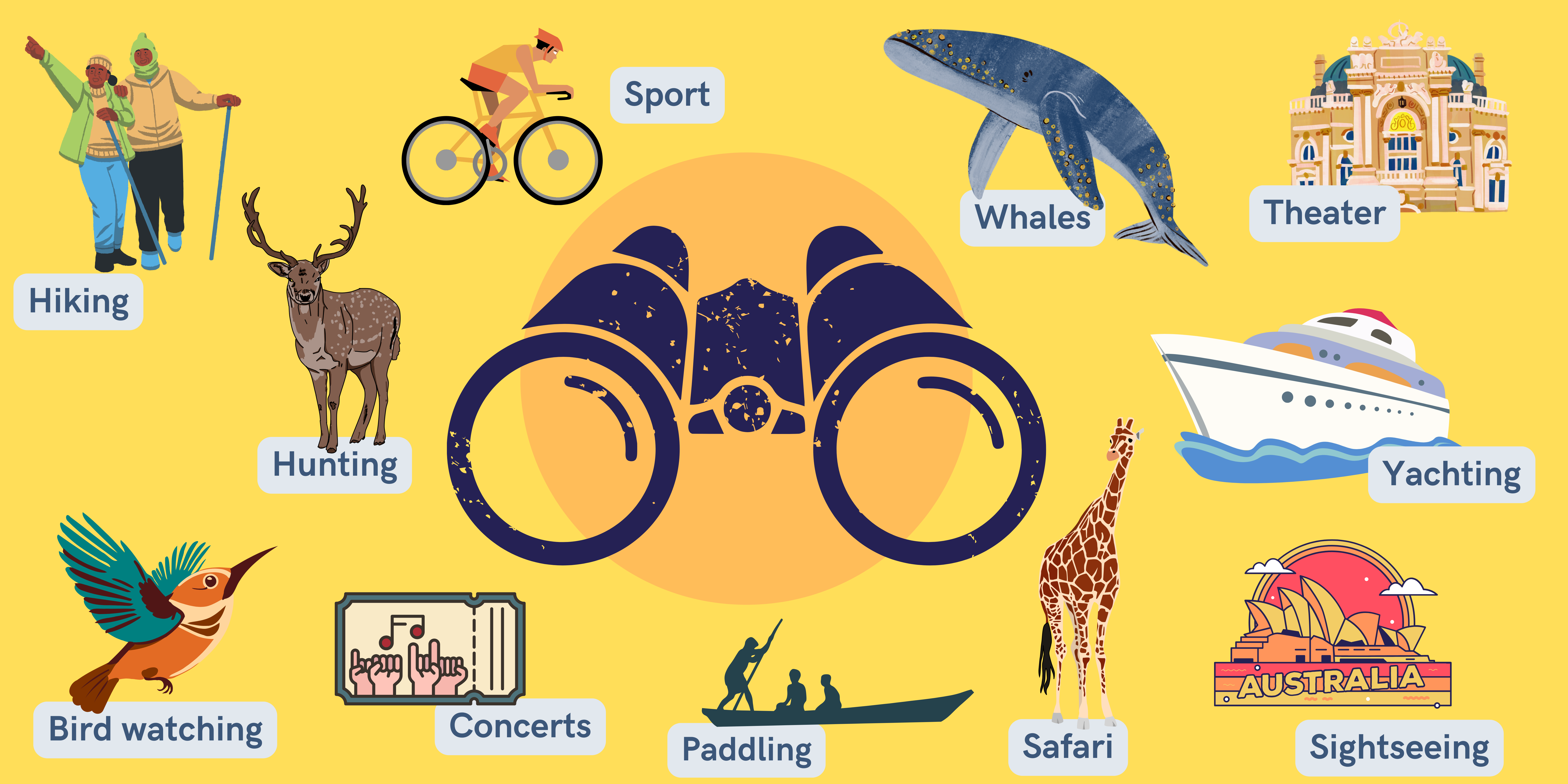
When choosing binoculars, you need to rely not only on magnification and price, but also take into account a lot of other parameters. Binoculars don’t necessarily have to be expensive, but usually good binoculars are not cheap. However, this is a digression, let’s get to the point. Hunters, fishermen, city tourists, yachtsmen, etc. choose different binoculars. Depending on the observation conditions, certain parameters are important to us.
Hunters, fishermen, city tourists, yachtsmen, etc. choose different binoculars
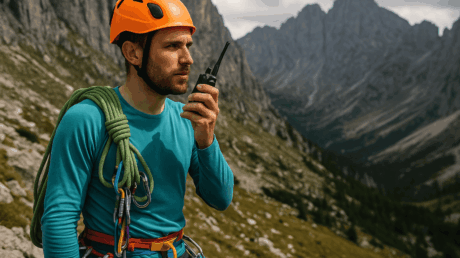
For example, a hunter 🦌 does not need magnification higher than 8–10 times, as high power will only interfere with handheld observations. For hunting, a wide field of view is more important so that it is convenient to track game, large lenses and illuminated optics so that the image is bright enough in the conditions of a shady forest. For a hiker, 🚶 lightness, compactness and also a wide field of view are obviously important. Optics should be of a high class if we go on a hike to admire the scenery. Let’s take a closer look at how to choose binoculars depending on the scope of application. After that, we will go through the inside of binoculars, describe what, why, why and how it is better.
How to choose binoculars for bird watching and hunting
Binoculars for bird watching and hunting are the TOP of the most popular queries for binoculars in Google. At the moment, there are more than 30 million bird watching enthusiasts in the world, not to mention hunting.
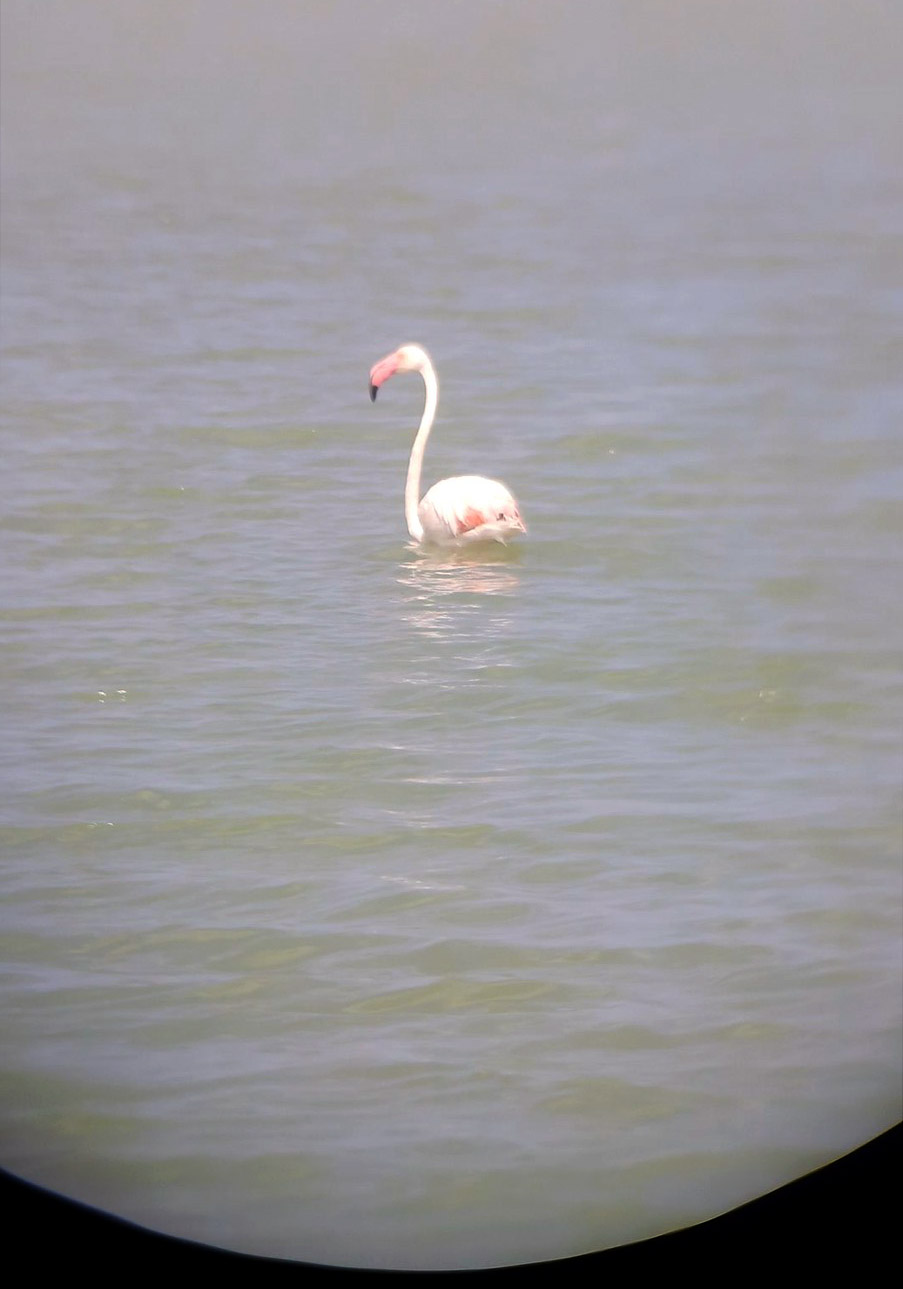
The most popular ratio of magnification and lens diameter for bird watching and hunting binoculars is 8×42 mm (a view on a flamingo throuth binoculars 8×40 to the left). This provides sufficient magnification for observation without a tripod (the image will not shake), while the picture will be bright, which is important on a cloudy day.
👈 On the left, a view of a flamingo through 8×40 binoculars.
For the binoculars to be able to form a bright image in low light, the diameter of its exit pupil must be at least 5 mm
Why will the image be bright? Because the exit pupil diameter will be 5.25 mm (Exit pupil = Objective diameter / Magnification), and from our article about binocular magnification we know that in order for the binoculars to be able to form a bright image in low light, the diameter of its exit pupil must be at least 5 mm. We will not go into technical details here, but the article linked above has a lot of them, so go ahead. 8×42 is a good 👌 ratio, but 8×50 is even better 👍. Then the exit pupil will be 6.25 mm, which will improve brightness and increase the field of view.
Exit pupil = Objective diameter / Magnification
Magnification
If you do not plan long ambushes with a tripod, do not take binoculars with a magnification of more than 10x. If you do plan, then binoculars with a power of 10x and higher are suitable for observing very long distances (from 5 km and above). If you are interested in how far binoculars can see, read here.
If you do not plan long ambushes with a tripod, do not take binoculars with a magnification of more than 10x
Next, for bird watching, we will need high-quality optics. An anti-reflective coating will add brightness, and ED glass will ensure the absence of light aberrations and allow you to enjoy the natural beauty of the plumage. The latter is not necessary, cheaper BaK-4 glass is also good, but an anti-reflective coating is a must-have.


Observation with 8×40 binoculars – Kentish Plover (Charadrius alexandrinus) in Las Salinas de San Pedro del Pinatar
For birds and game: 8×42 mm – very good. Exit pupil diameter – at least 5 mm. Magnification less than 10x is for handheld viewing; higher magnifications require a tripod. BaK-4 glass or better is recommended.
Body
If you are going on a multi-day hike and the range of night and day temperatures will be large, I recommend binoculars with a nitrogen-filled housing. It protects the optics from fogging, which occurs as a result of temperature changes or short-term immersion in water. But this technology makes the binoculars quite expensive. If harsh conditions are not expected, the housing protection from dust, water and splashes will be enough. For hiking binoculars, this is a mandatory requirement. The degree of dust and moisture protection should be IP54 and higher. More details on IP protection levels will be below.
Rubber coating is also a convenient option to prevent the binoculars from slipping from your hands, especially if they are heavy.
You can find specific models of binoculars in a separate article about binoculars for birdwatching 👈.
Whale watching, paddling, boating, yachting
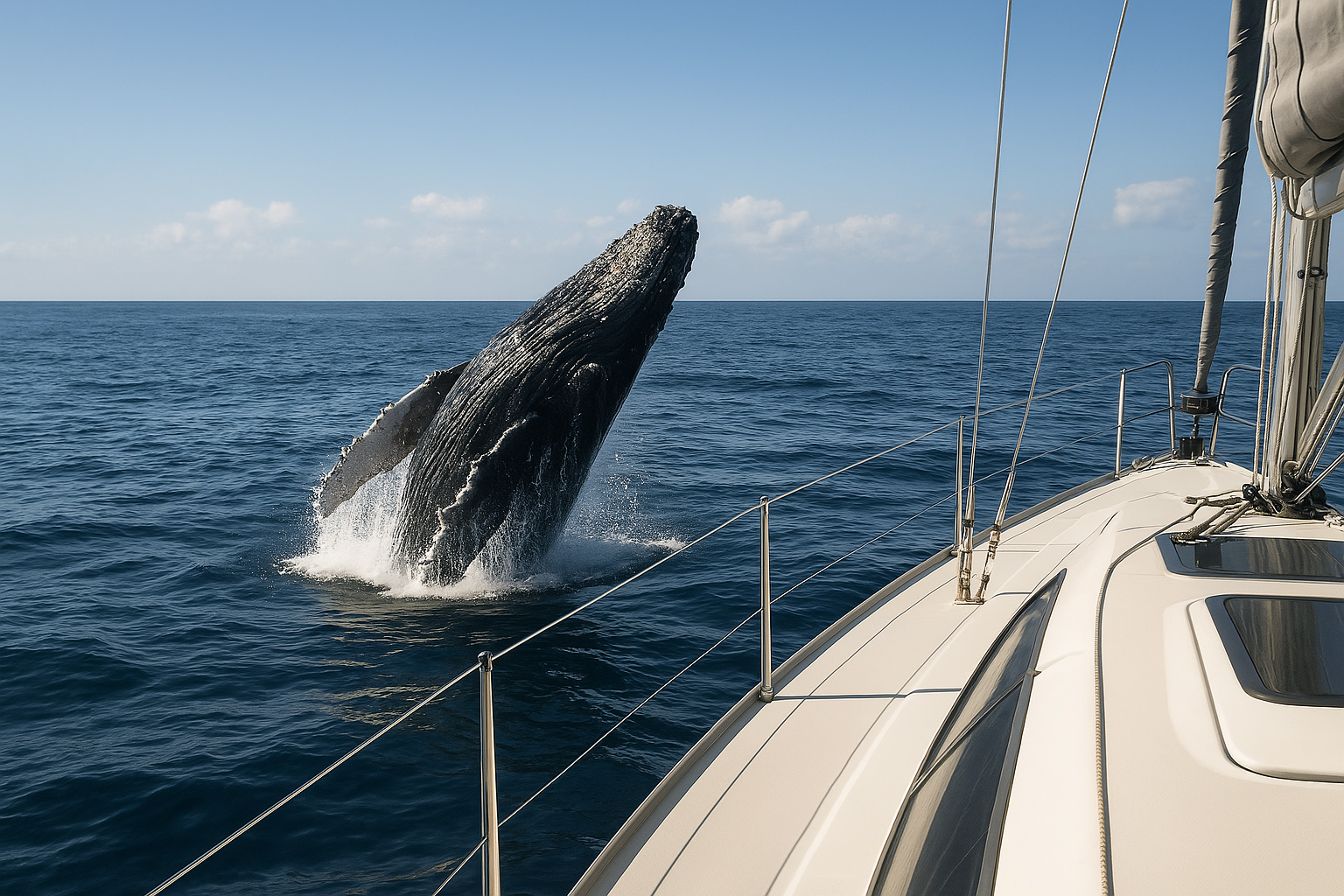
The requirements logically follow from the field of application. At a minimum, the body should be splash-proof, meaning IP54 / IP55. The highest level of dust and water protection is IP68: it maintains the functionality of the device even after prolonged submersion in water (but not deeper than 1 meter!). Nitrogen filling also prevents the lenses from fogging when exposed to water or temperature changes.
It’s also necessary to separately mention that there are so-called “floating” binoculars. They don’t sink at all and stay on the surface of water like a float if dropped in water. Naturally, you’ll have to pay extra for this feature.
A magnification of 6–8x is recommended, since using a tripod on a rocking vessel is problematic. Objective lens diameter should be 32 to 42 mm, depending on what you need more: compactness or field of view (in which case larger objective lenses are needed).
For marine use: Rugged body with a minimum IP54/IP55 rating. Nitrogen-filled body – anti-fog. 6–8x magnification. Objective lens diameter – 32–42 mm.
For stadiums and concerts
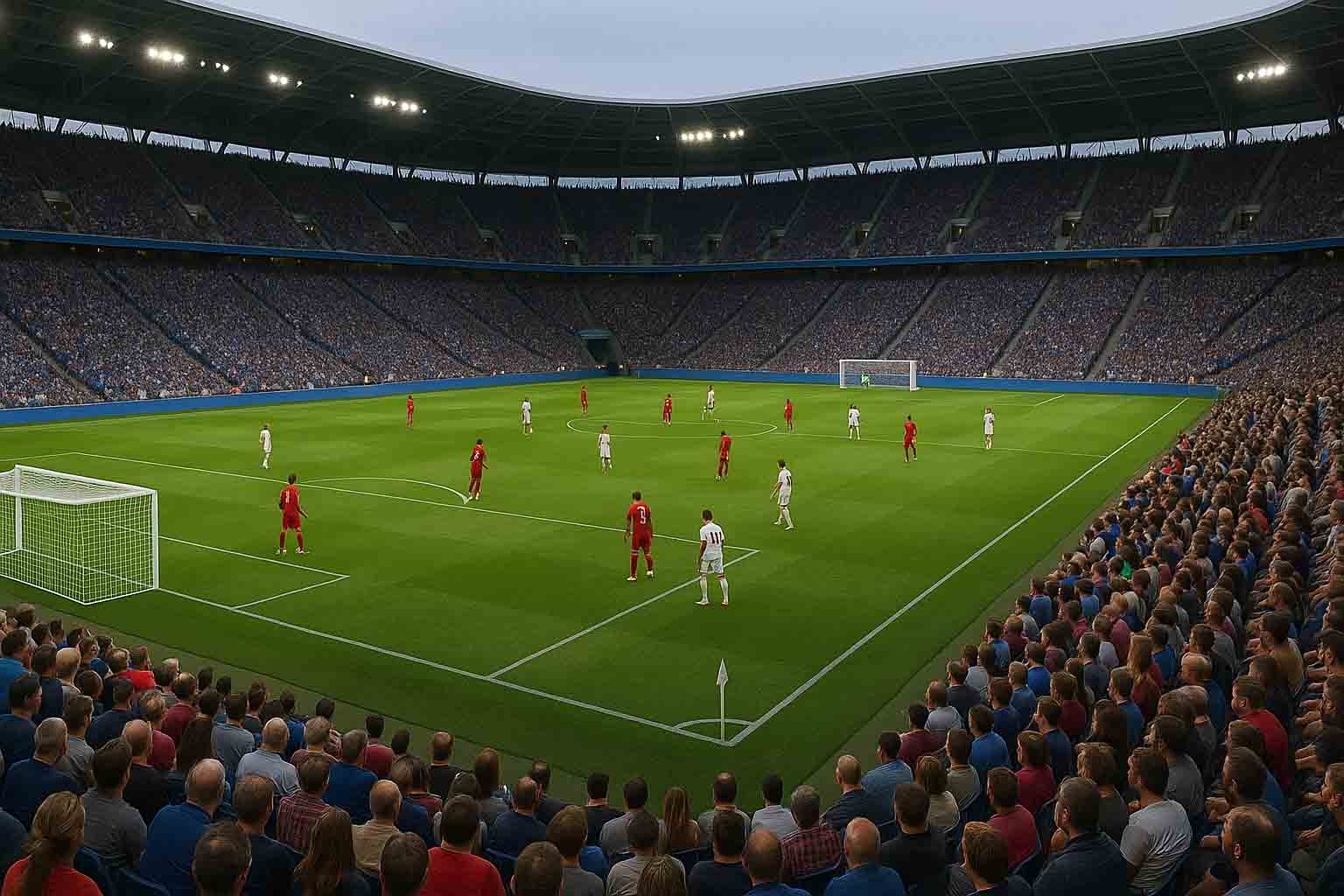
Compact binoculars with low magnification are recommended. A magnification of 6–8x is quite sufficient for distances of 1–3 km. The wider the field of view, the better; you can look for a specification of 100–120 m. Since sports venues and people on stage are well lit, there’s no need to worry too much about the binoculars’ brightness. Objective lenses with a diameter of 30 mm should be enough.
You also don’t need to spend money on body protection, but it’s better to choose higher-quality optics: BAK-4 or ED glass, or at the very least – BK-7 with anti-reflective coating. If you’re interested in the differences between BK-7 and BAK-4 glass (they’re actually quite significant), read our article. The differences between BAK-4 and ED are described too. Manufacturers usually offer a line of binoculars called Sport — consider these for purchase.
For stadiums and concerts: 6–8x magnification. The field of view is 100–120 m. Lenses with a diameter of 30 mm will be sufficient.
For theater
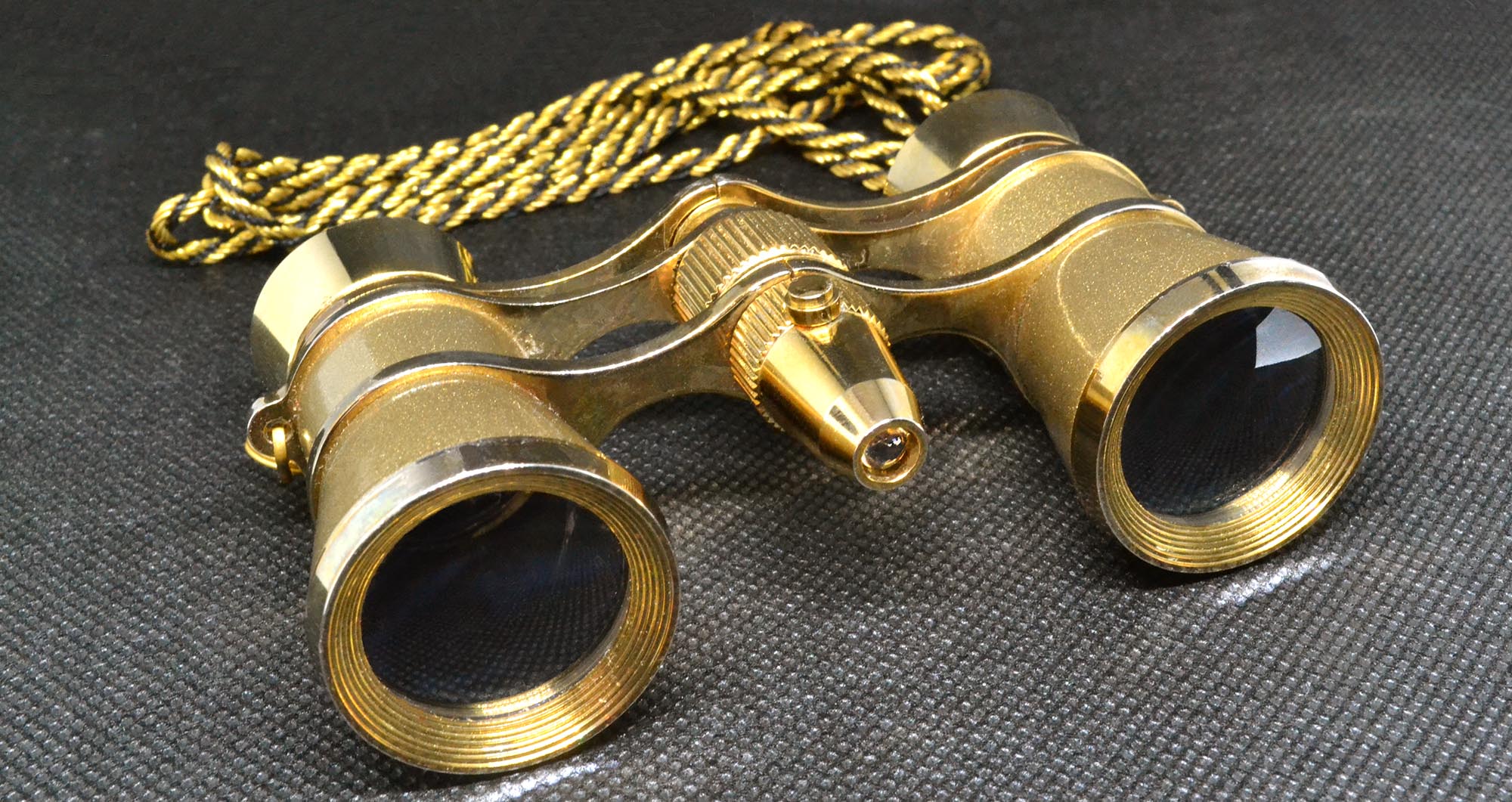
A separate topic is the so-called opera binoculars, or theater binoculars. These are elegant, compact models that resemble antique lorgnettes more than modern binoculars. They are built using an optical design that is neither Porro nor Roof, like 99% of modern binoculars, but the old Galilean design — but that doesn’t mean they are outdated. Oh no, they are still very popular specifically for theatrical performances.
Opera binoculars have the lowest magnification of all: only 3–5x, but that’s all you need in a theater. The objective lens diameter is around 25 mm, and with this combination, they have an average exit pupil diameter of 6.5 mm, which is quite large. So the image is bright and has a fairly wide field of view. In addition, theater binoculars are often equipped with a small flashlight to illuminate seat numbers in the dark. If you’re still unsure whether to get opera binoculars or regular ones for the theater, read our review specifically on this topic!
For theater: “opera glasses” in the Galilean design, with magnification no more than 5x and 25–35 mm lenses are sufficient. Exit pupil of 6.5 mm.
Binoculars for children
Binoculars for children are made to be protected, protective, and with minimal optical specifications. How to choose a child’s first binoculars?
- The binoculars should be small and lightweight, comfortably fitting in a child’s hand
- Rubberized body and preferably with a strap to hang around the neck
- It’s very good if the eyepiece lens is slightly recessed — this reduces the chance that the child will scratch it
- Soft, large eyecups to protect the child from bruises due to uncoordinated movements
- Lenses: you can choose binoculars with either glass or plastic lenses. In the second case, if the child breaks the binoculars, there’s no risk of cutting themselves
- Large focus ring with a pronounced texture to make focusing easier for small fingers
- Depending on the child’s age and preferences, you can choose a bright-colored body or a more serious design
Binoculars for children should be small and lightweight. The lenses are plastic and recessed. The body is rubberized.
How do I know what size binoculars I need?
Children’s binoculars are clear enough — let’s move on to choosing the size. Is it important? Absolutely!

So, binoculars come in large, medium, and compact sizes.
- Big ones
The first group includes astronomical binoculars, designed for use with a tripod. Their average magnification is 16–20x, and their objective lenses reach 70–100 mm in diameter. These binoculars are typically 25–50 cm in size and weigh 3–6 kg or more. If your main goal isn’t stargazing, you don’t need such a beast.
Large binoculars are for observing stars – astronomical binoculars
2. Middle-sized
The average binoculars for field observation (for example, 8×42, 10×42) are about 12–15 cm long and 12 cm wide. That’s for Porro prism binoculars, which provide a more stereoscopic image. Roof prism binoculars are more compact and not as wide, since the objective lenses aren’t spaced far apart. The average weight of a versatile binocular is 500–800 grams. That’s an optimal weight for handheld viewing — heavier models are possible to use, but your hands will get tired quickly. Most binoculars fall into the medium size category: travel, field, marine, birdwatching, hunting, and military binoculars.
Medium-sized binoculars, or standard binoculars, are used for birdwatching, hunting, and military purposes. They are also useful for travel, fieldwork, and at sea.
3. Compact binoculars
Compact binoculars are considered to be those measuring 6–15 cm in length with an average weight of 150–400 g. There are also ultra-compact models weighing only 100–150 g. Sports series (for stadium viewing), lightweight urban travel binoculars, and theater binoculars usually fall into the compact category.
Compact binoculars, or standard binoculars for urban travel and for theaters.
Size of binoculars
| Binocular type | Magnification | Objective size | Length | Weight | Best for |
|---|---|---|---|---|---|
| Large (astronomical) | 16–20x | 70–100 mm | 25–50 cm | 3–6+ kg | Stargazing, long-range |
| Medium | 8–10x | 42–50 mm | 12–15 cm | 500–800 g | General use, nature, travel, marine |
| Compact | 6–10x | 25–30 mm | 6–15 cm | 100–400 g | Sports, theater, city travel |
Only one recommendation can be made regarding binocular size selection: if you’re not looking for astronomical binoculars, it’s best to go with the medium size, since it will provide a wider field of view and a brighter image with sufficient magnification. Choose compact binoculars (that is, with small objective lenses up to 30 mm) only if image brightness and field of view are not a priority for you.
How much does a binoculars cost?
Binoculars can be divided into price categories, each of which differs in optical quality, body materials, and additional features.
💰 Budget (up to $100)
Features:
- Simple optics (BK-7 glass, no advanced coatings)
- Plastic body or cheap aluminum
- Usually weak protection against moisture and dust
- Less sharp image, brightness drops at the edges
- Typically 8×40, 10×50 or compact 8×21 models
Who is it for?
🎓 Beginners, children, and travelers for casual observation.
💰💰 Mid-range ($100–$500)
Features:
- Improved optics (BaK-4 glass, multi-layer coatings)
- Durable body (magnesium alloy, rubber armor)
- Water protection, nitrogen-filled (prevents fogging)
- Sharp and bright image even in low light
- Popular models: 10×42, 12×50, 15×70
Who is it for?
🔭 Nature lovers, hunters, bird and star watchers.
Features:
- High-quality optics (ED or HD glass, full multi-coating)
- Extremely clear and high-contrast image with minimal distortion
- High light transmission, ideal for twilight conditions
- Ergonomic body, enhanced water and shock protection
- Often used in astronomy and wildlife observation
Who is it for?
🌿 Professional observers, serious travelers, hunters.
Features:
- Advanced technologies (fluorite lenses, unique coatings)
- Maximum sharpness, contrast, and color fidelity
- Flawless assembly, lightweight and durable materials
- Innovative stabilization systems (in some models)
- Brands: Zeiss, Leica, Swarovski
Who is it for?
📷 Professionals, photographers, those who want the highest quality.
What do the numbers (specs) on binoculars mean?
Manufacturers indicate the main specifications on the binoculars’ body: magnification and objective lens diameter in the NxNN format.
- The first number is the magnification
- The second is the diameter of the objective lenses
They often also specify the field of view – either angular (with a degree symbol) or linear (per 1000 m).
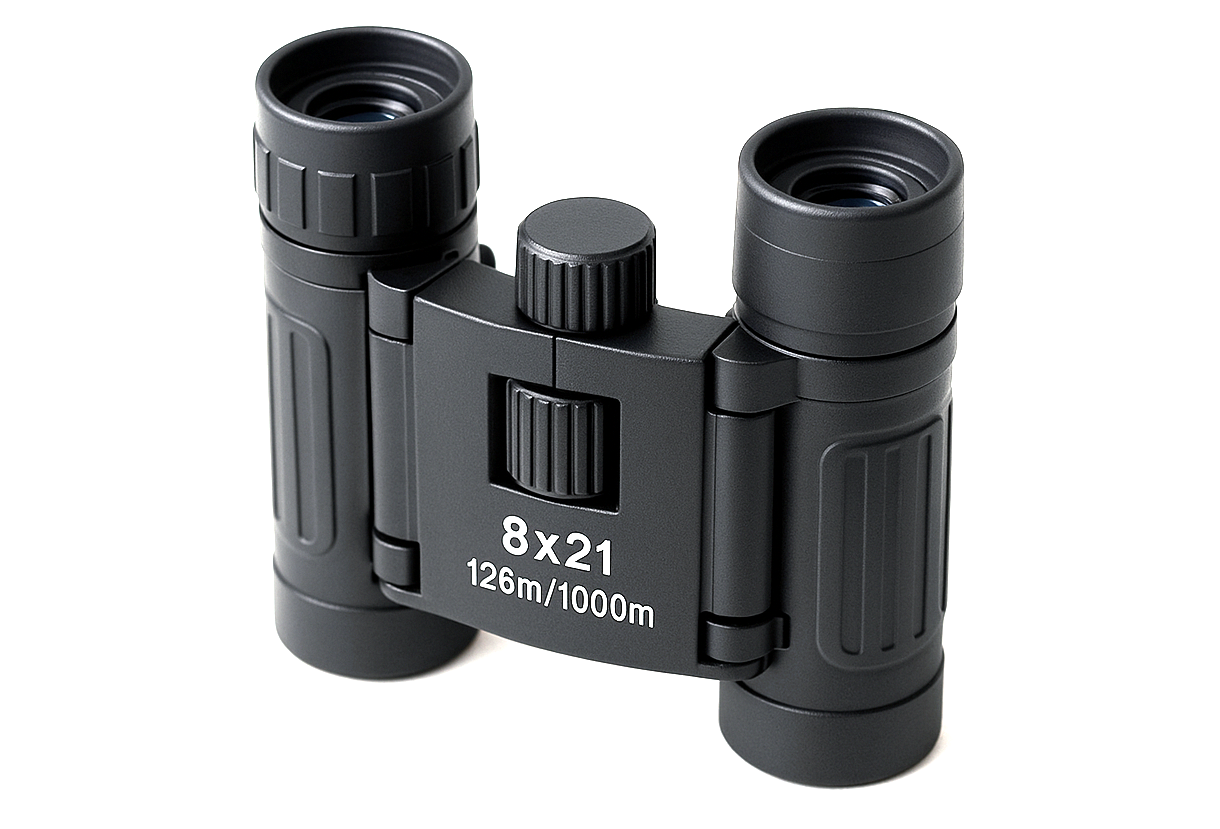
For example, in this image, we can read: this model has a magnification of 8x and 21 mm objective lenses. The stated field of view is 126 meters at 1000 m distance.
What does the 10×50 mean on binoculars?
The 10×50 marking on the body means that the binoculars have 10x magnification and 50 mm objective lenses. This is a good ratio for wide-area observation and a bright image even in the evening.
What does 30×60 binoculars mean
The 30×60 marking means that the binoculars have 30x magnification and 60 mm objective lenses. This is a large binocular designed for long distances. It’s better to use it during the day, as the exit pupil diameter is only 3 mm, so brightness in twilight will be lacking.
What do binoculars consist of?
Let’s go through the main parts and features of binoculars that must be considered when choosing one.
Objectives
The objective is the front lens (or lens system) of the optical tube, aimed at the observed object. It gathers light, and the larger it is, the brighter the image and the wider the field of view (the width of the visible area through the binoculars). One of the most important parts of a binocular.
Eyepieces
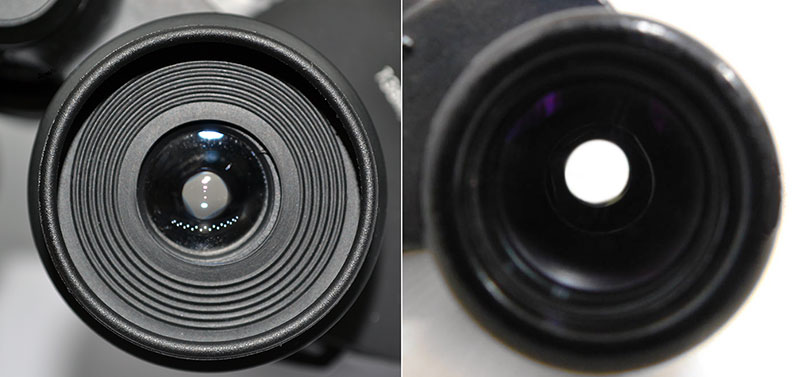
The rear lens (or lens system) of the optical tube, closest to the observer’s eye. Through the eyepiece, you can see the exit pupil. When testing binoculars, make sure the eyepiece section is stable and doesn’t wobble — it should feel like one solid piece with the body.
What is the objective lens on binoculars?
Lenses can be made of plastic or optical glass. Plastic lenses are typically found only in the cheapest or children’s models. It’s very important that both the objectives and eyepieces are made of high-quality optical glass. The most common types of optical glass are:
- BK-7 – the most affordable among optical glasses
- BaK-4 – higher quality
- ED glass – extra-low dispersion, premium quality
Binoculars’ body
The body holds together all the optical elements and protects them. Often, the body is covered with rubber armor to improve grip. Travel and field binoculars often come with various levels of water and dust protection based on the IP standard specified by the manufacturer.
What types of body protection are there and what are they for?
Dust and water protection levels:
- IP54 – minimum level: protection from coarse dust and water splashes
- IP55 – protection from heavy rain and coarse dust
- IP65 – full protection from dust and rain
- IP66 – dust-tight and protection from powerful water jets
- IP67 – dust-tight and immersion in water up to 1 meter for less than 1 minute
- IP68 – dust-tight and can operate underwater
| IP Rating | Dust Protection | Water Protection |
|---|---|---|
| IP54 | Limited protection | Light splashes |
| IP55 👌 | Coarse dust | Heavy rain |
| IP65 👍 | Full dust protection | Rain and splashes |
| IP66 💪 | Dust-tight | Powerful water jets |
| IP67 💪💪 | Dust-tight | Temporary immersion |
| IP68 💪💪💪 | Dust-tight | Continuous underwater use |
Some especially rugged models may comply with the MIL-STD 810 standard — a military specification for resistance to extreme conditions: wide temperature ranges, vibration, shock, and impact.
As mentioned earlier, marine binoculars may feature floating bodies, meaning they don’t sink in water.
Focusing ring
Located between the optical tubes, the central focusing ring allows you to focus the image. Bring the eyepieces to your eyes and try to focus on a distant target. If the image is sharp and clear, the binoculars are working properly.
Eyecups
Most binoculars have rubber eyecups that fold or twist. Fixed eyecups also exist but are less common. Why are eyecups important?
- First, they ensure you don’t press your eyes too hard against the eyepieces. The soft material makes viewing comfortable.
- Second, foldable or twist-up eyecups are especially useful for eyeglass wearers. If you wear glasses, you need either binoculars with long eye relief (about 18 mm) or foldable eyecups. With glasses, fold the eyecups down; without glasses, keep them up.
Eye Relief. How to choose binoculars for glass wearers
Let’s look more closely at using binoculars with glasses. Binoculars have a specific focal point — an optimal distance from the eyepiece at which the image appears fully and sharply. This distance is called eye relief.
For eyeglass wearers, recommended eye relief starts from 11 mm.
For those who wear glasses, the glasses themselves increase the distance between the eye and the eyepiece, which can cause part of the image to be cut off if the eye relief is too short. For comfortable viewing in glasses, choose binoculars with eye relief from 12 to 20 mm. 12 mm is the bare minimum — always check if you can see the entire image when buying.
| Eye relief | Suitable for glasses? | Comfort |
|---|---|---|
| <10 mm | ❌ Nope | Narrow, uncomfortable |
| 12–14 mm | It’s possible, but it’s tight. | Fine |
| 15 mm and more | ✅ Yep | Comfortable, even with glasses |
By the way, if you have mild myopia, you can use binoculars without glasses by adjusting the sharpness with the central focusing wheel. Its range usually compensates for about -4 to -5 diopters.
Diopter correction ring
If your left and right eyes have different vision (and for many people there is at least a slight difference), then diopter correction is exactly what you need. Around 80% of modern binoculars are equipped with a diopter adjustment ring for one eyepiece (usually the right one). It’s easy to use: first, adjust the focus for your left eye using the central focusing wheel, then fine-tune the diopter ring on the right eyepiece. Premium-class binoculars may offer individual diopter correction for each eyepiece.
Prisms. Which are better: Roof or Porro?
Prisms are responsible for bending the light inside the optical tube from the objective lens to the eyepiece. Like lenses, they can be made from different types of optical glass. The higher the quality of the glass, the better the image quality. There are two main prism systems used in binoculars: Porro and Roof.
The roof prism system is more complex to manufacture and allows for more compact binocular designs. The Porro system can be identified by the distinctive offset in the body shape. Binoculars with Porro prisms are generally cheaper, bulkier, but provide a more three-dimensional image. If you’d like a more detailed explanation of the differences between Roof and Porro prisms 👈 check out our dedicated article.
What magnifications do binoculars have, and which should you choose?
| Magnification | Observation distance | Suitable for |
|---|---|---|
| 6x – 8x | up to 300 m | Walks, sports, theater, on-the-go viewing, kids |
| 8x – 10x | 300–1000 m | Tourism, hunting, birdwatching, stationary use |
| 10x – 12x | 1000–1500 m | Observing animals, mountains, coastline, ships |
| 15x – 25x | 1500 m and beyond | Astronomy, distant ships, scenic viewpoints (requires tripod) |
Binoculars for long distance
For long-distance observations, you’ll need magnification of 12x or higher.
At such magnifications, a tripod is essential because it becomes impossible to keep the image steady by hand. Some models feature image stabilization. These are more expensive but eliminate the need for a tripod.
High magnification also requires large objective lenses, otherwise the image will appear dark. Binoculars with 50 mm or larger lenses are recommended.
Examples of good long-range binoculars:
| Purpose | Magnification | Objective diameter | Example model |
|---|---|---|---|
| Terrestrial objects | 15x – 20x | 70–80 mm | Celestron SkyMaster 15×70 |
| Sea, coast | 20x – 25x | 80–100 mm | Nikon Aculon 20×50, Oberwerk 25×100 |
| Astronomy | 20x – 25x | 70–100 mm | SkyMaster 25×100 + tripod |
Which is better, 12×50 or 10×42 binoculars?
12×50 and 10×42 binoculars have similar specs. The main difference is that with 10x magnification you can still handhold the binoculars, while at 12x a tripod is typically needed. Comparing exit pupil diameters: 4.16 mm for the first and 4.2 mm for the second. There’s virtually no difference here—both can be used in low light conditions. Image quality and brightness will depend on the coatings and optical type: BK-7, BAK-4, or ED glass. The prism type also matters: Roof or Porro. Roof prism binoculars tend to be more expensive but compact, while Porro models are bulkier and cheaper, with a more three-dimensional image.
Which is better, 10×25 or 30×60 binoculars?
The difference is more pronounced here. A 30×60 binocular cannot be used without a tripod. A 10×25 binocular is good for viewing individual objects—it’s useful when you need to look at something in detail. It’s not suitable for wide-area observations due to its narrow lenses. Its field of view is small, and brightness is weak: the exit pupil diameter is just 2.5 mm. So it’s best used only in good daylight.
The 30×60 model also doesn’t have a wide field of view or high brightness, but it’s slightly better: with a 3 mm exit pupil, which is just 1 mm short of the minimum required for twilight viewing.
These binoculars also differ significantly in size. Naturally, the 30×60 is much larger and heavier. They are suited to different purposes. The first is good for hunting, yachting, kayaking, city tourism, etc., while the second is better for astronomy or viewing very distant objects from land (if there’s no image stabilization, use only with a tripod on a stable surface).
Are zoom binoculars any good?
If you haven’t decided on a magnification, you might consider binoculars with variable magnification. It makes sense—it’s essentially multiple binoculars in one. These models are usually equipped with a magnification selector switch, typically located on the right eyepiece. The higher the selected magnification, the more detail you’ll see—but the narrower the field of view.
If you choose a zoom binocular, go with a reputable manufacturer. These models are complex to produce and cost more, and the zoom mechanism tends to break easily.
Field of view: angular and linear

What else should you consider when choosing binoculars? Field of view, of course. We’ve already mentioned it, now let’s go into detail. Linear field of view is the distance between two extreme points in the image seen through the binoculars. It can also be measured in degrees. For general-use binoculars, a field of view of about 110 m or 6–7° is sufficient.
The field of view is inversely proportional to the focal length. That is, the higher the magnification, the narrower the field of view.
When do you need a wide field of view, and when is high magnification better?
- A wide field is needed for panoramic observation—to cover a broad area at once.
- High magnification is better for examining an object in detail.
Twilight factor
Is the twilight factor important when choosing binoculars? Yes, but not extremely. If you only plan to use your binoculars during the day, you can ignore this factor altogether. It matters in twilight conditions, where it affects image detail—the higher it is (above 17), the better the detail in low light. Coatings on the lenses improve brightness in low light, but can’t fully compensate for a low twilight factor. For more details, read our dedicated article.
Exit pupil and image brightness
Another indicator of image brightness in low light is the exit pupil diameter. It should be 5 mm or larger to provide a detailed image in twilight. This figure is usually specified, but you can check it yourself: point the binoculars at a light source and project the eyepiece shadow onto a wall. You’ll see a bright circle in the middle—that’s the exit pupil. Adjust it to get a sharp image and measure its diameter.
Optical coatings: what are they, which one to choose?
As a light beam passes through a complex optical system with many lenses, much of the light is lost. As a result, the image reaching the eye is not as bright as it could be. To reduce light reflection, manufacturers apply special thin films to the lenses and prisms—these are called anti-reflective coatings. They come in:
- single-layer,
- multi-layer,
- fully coated.
Manufacturers also use other coatings:
- Anti-glare: reduces glare and improves image quality in bright light.
- Hydrophobic: repels water and dirt, helping keep the binoculars clean in tough conditions.
- Scratch-resistant: protects the lenses from scratches.
- Phase-correction: used on Roof prisms to enhance contrast and sharpness.
- Dielectric: also used on Roof prisms to enhance brightness and contrast; common in higher-end binoculars.
- Silver coating: another prism coating that enhances brightness and contrast.
- Colored coatings: come in blue, yellow, orange, green, etc., and enhance image quality in specific environmental conditions. You can detect the color by tilting the objective lenses slightly away from the light source.
How to test out binoculars
Testing binoculars before purchasing is crucial. While products from brands like Nikon, Carl Zeiss, and Bushnell generally meet their claimed specs, if you’re buying from a lesser-known manufacturer, it’s best to test first. What should you check?
- Is the actual magnification as stated? Divide the objective lens diameter by the exit pupil diameter. You can also turn the binoculars toward a light source and project the exit pupil onto a wall.
- Are the optical barrels aligned? This issue is mostly seen in knockoffs and cheap models. Look through the binoculars at vertical and horizontal lines. If they stay straight, alignment is fine.
- Does it have anti-reflective coating? A shady seller might hide how many coating layers there are, but not the presence or color. Tilt the lenses—if coated, you’ll see colored reflections. If not, the glare will be white.
- Is the body free of looseness? Check the binocular body, especially the bridge between eyepieces. The interpupillary distance should stay fixed and not shift on its own.
- Are the optics and housing defect-free? Check for scratches, smudges, or condensation. The image should be clear and spotless.
- Are the prisms really made of BAK-4 glass and not something cheaper? Look into the binoculars at a slight angle. BAK-4 glass will show a round, even exit pupil. BK-7 glass will show a cut-off, squared edge.
How to care for and store your binoculars properly
Proper care will extend your binoculars’ lifespan by years.
- Always use lens caps and keep the binoculars in the provided case.
- Only clean lenses with microfiber cloths and optical cleaning fluid.
- Clean the housing with a damp (not wet) cloth. Do not let water inside!
- If the eyecups unscrew, they can be rinsed under water and thoroughly dried.
- Avoid sharp temperature changes where the binoculars are stored. If the housing isn’t nitrogen-purged, condensation may form inside.