At the of the article you can find a Walkie talkie 10 codes lingo for militaries: printable pdf
Oh, think back to those fun kid days when walkie-talkies seemed like cool spy gear straight out of a movie? As grown-ups, though, we see they’re way more than just playthings – they’re essential gear in all sorts of fields. The thing is, they’re not much help if you don’t know the lingo. You know, those special terms and codes that keep chats quick, sharp, and easy to understand.
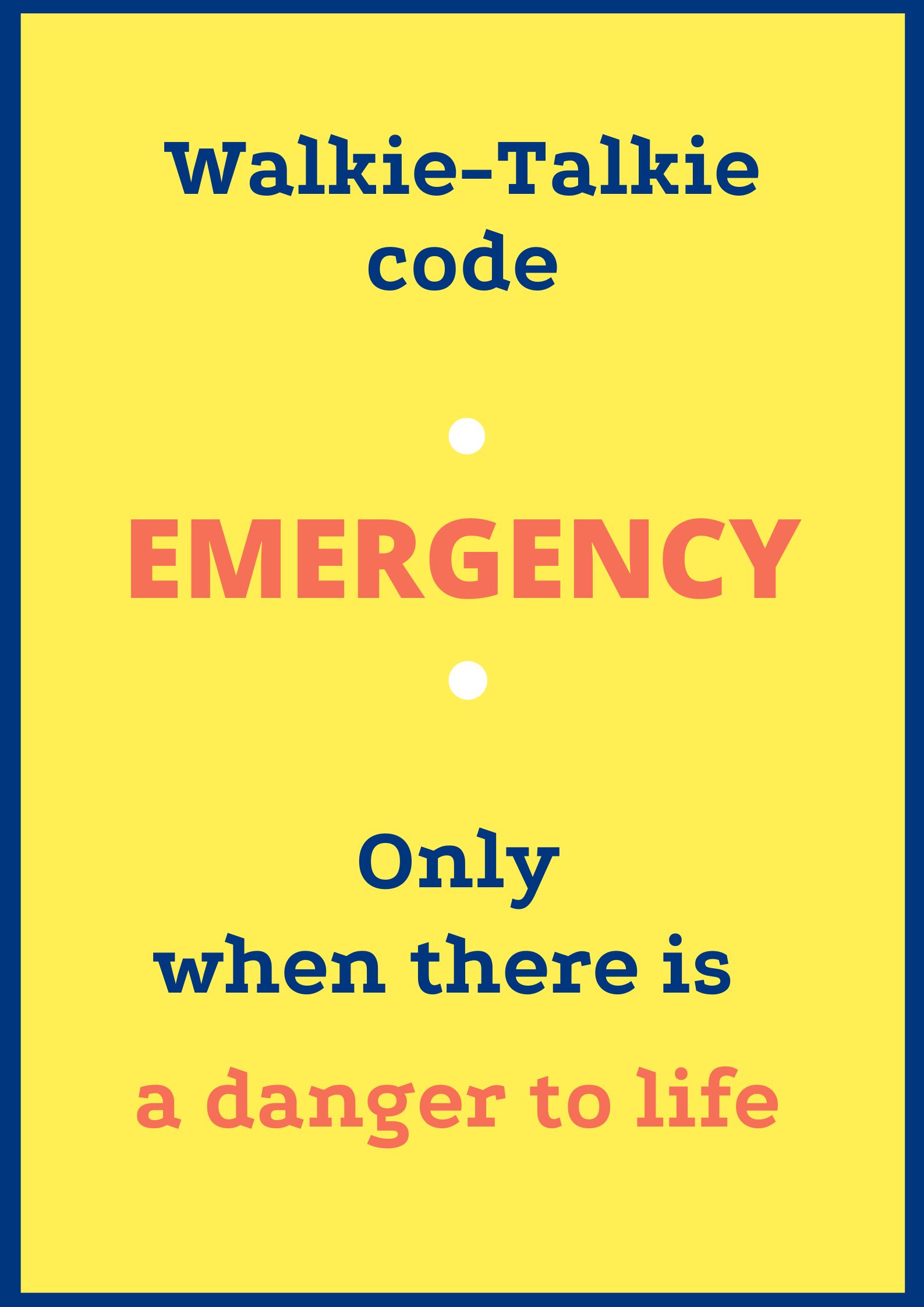
Don’t sweat it – we’ve got you covered with this handy guide. Hang on tight while we break down all the essentials on walkie-talkie chatter, starting from the ground up and going into some expert advice.
Walkie-Talkie Codes
You might be thinking, why even mess with all these codes? Couldn’t we just talk like we do on the phone? Well, yeah, in theory – but walkie-talkies aren’t exactly known for that crystal-clear sound you get from your smartphone. Things like static, loud background racket, or spotty signals can twist your words into a total mess before you know it.
That’s exactly why keeping things short and sweet rules the roost in radio chats. Alright, let’s dive straight in and check out some key standard codes that ought to be in every user’s back pocket:
| Walkie-Talkie Code | Meaning |
|---|---|
| Affirmative | Yes |
| Negative | No |
| Eyes on | Spotted something or someone |
| What’s your 20? | What’s your location? (look further, why) |
| Roger that or Roger | Message received and understood |
| Disregard | Ignore that last message |
| Stand by | Hang tight, I’m tied up but will get back soon |
| On it | I’m handling what you asked |
| Go for “name” | Yep, “name” is ready to hear you out |
| Loud and clear | Your signal’s coming through perfectly |
| Loud and clear | Your signal’s coming through perfectly |
| Go again or say again | Repeat that, please |
| Radio check or mic check | Is my radio working okay? |
| Do you copy? | Are you hearing me loud and clear? |
| Over and ou | Wrapping up my transmission, awaiting yours |
This lingo is a game-changer because it streamlines everything. Each phrase is super short – just a word or two – to cut through the noise. No distortions, no confusion; just smooth, efficient chats.
That’s exactly why you’ll often see police officers, military personnel, and security teams using walkie-talkies every day – they help keep everything running smoothly, especially when the stakes are high.
Why “What’s Your 20?” Means “Where Are You?” in Walkie-Talkie Talk
In our table we mentioned that “20” means “location”. A little strange, isn’t it? Yep. Let’s look, why is it so? The phrase comes from the old 10-code system, a set of quick-reference codes dreamed up in 1937 by the Association of Public-Safety Communications Officials (APCO) for police officers on the air. In that system, 10-20 is the shorthand for “location.”
Now, the number 20 itself? It’s not like it was chosen for some mystical reason tied to geography. It was simply a handy number that kept the phrase short and easy to say—important back when radio signals were fuzzy and cutting in and out. Using codes like 10-20 meant you could pass along info quickly without wasting precious airtime.
Over time, “What’s your 20?” became the casual, everyday way to ask someone’s location, especially among police, soldiers, and long-haul truckers chatting over CB radios.
Picture it:
– “Base, what’s your 20?”
– “Grid 45, heading north”
It’s quick, it’s clear, and it works even when the line is full of static. That’s the magic of those classic 10-codes—they were designed for speed, clarity, and getting the point across when every second counted.
The Phonetic Alphabet (NATO Phonetic Alphabet)
When it comes to mastering walkie-talkies, the NATO phonetic alphabet is real secret weapon. It’s the perfect tool for clearly spelling out letters and numbers when pesky static tries to scramble your message. Developed by the International Civil Aviation Organization (ICAO) and adopted by NATO in 1956, it dodges mix-ups between similar sounds like “B” and “D” or “M” and “N.”
Here’s the full rundown of the NATO phonetic alphabet:
| Letter | Spelling |
|---|---|
| A | Alpha |
| B | Bravo |
| C | Charlie |
| D | Delta |
| E | Echo |
| F | Foxtrot |
| G | Golf |
| H | Hotel |
| I | India |
| J | Juliet |
| K | Kilo |
| L | Lima |
| M | Mike |
| N | November |
| O | Oscar |
| P | Papa |
| Q | Quebec |
| R | Romeo |
| S | Sierra |
| T | Tango |
| U | Uniform |
| V | Victor |
| W | Whiskey |
| X | X-ray |
| Y | Yankee |
| Z | Zulu |
For numbers, emphasize clarity: 1 – Wun, 2 – Too, 3 – Tree, 4 – Fower, 5 – Fife, 6 – Six, 7 – Seven, 8 – Ait, 9 – Niner, 0 – Zero:
| Number | Spelling |
|---|---|
| 1 | Wun |
| 2 | Too |
| 3 | Tree |
| 4 | Fower |
| 5 | Fife |
| 6 | Six |
| 7 | Seven |
| 8 | Ait |
| 9 | Niner |
| 0 | Zero |
Picture this: In aviation, it’s used for flight callsigns like “Flight Alpha Bravo Charlie.” Police might relay license plates as “Suspect vehicle: Sierra Tango Uniform 123.” Military ops lean on it for grid coordinates. Compared to older versions – like the vintage military (Able, Baker, Charlie) or civilian (Adam, Boy, Charles) – the NATO one is streamlined for global use, cutting through accents and interference. Especially handy in diverse teams where language barriers could spell trouble.
Military Walkie-Talkie Jargon, AKA Ten Code Lingo
Let’s take a closer look at where this lingo came from. Ten Codes first appeared in 1937 in Illinois, created by the Association of Public-Safety Communications Officials (APCO) for police officers on duty. The goal was simple – make communication fast and crystal clear, even when radio signals weren’t great, turning potential chaos into smooth, organized exchanges.
That’s how the 10-code system was born: say “ten” followed by a number. These days, it’s a go-to tool in military circles for keeping operations running seamlessly. Here’s the must-know list:
| 10-code | Meaning |
|---|---|
| 10-1 | Poor transmission |
| 10-2 | Signal’s good and clear |
| 10-3 | Stop transmitting |
| 10-4 | Got it, message received |
| 10-5 | Relay this message to someone else |
| 10-6 | Busy or stand by |
| 10-7 | Out of service |
| 10-8 | Back in service |
| 10-9 | Say that again |
| 10-10 | Transmission complete |
| 10-20 | What’s your location? |
It’s no wonder military personnel use top-tier gear like Hytera radios – their missions can be a matter of life and death. The codes they use are short and to the point, designed for split-second decisions when every moment counts. You’ll find them in any high-pressure role where clear communication can be the line between success and failure.
Expanded Historical Context
Now, let’s take a step back and dive into the cool story of how these codes came to be – it’s quite a ride! They started as a police innovation in Illinois, then spilled into the world of CB radio in the ‘40s and ‘50s, where truckers loved them for their road-trip chatter. By the 1970s, APCO had given the system a fresh polish, though local variations began to emerge. In Europe – especially the UK – 10-codes often took a back seat to plain language or the Q-codes favored by ham radio enthusiasts.
Jump ahead in time: the U.S. military adopted them in 1958, and FEMA pushed for standardized use in disaster response by 2005. Key milestones? 1937: APCO introduces the codes; 1940: CB radio takes off; 1958: the military comes on board; 2005: emergency operations get an update. Backed by APCO records and Midland Radio histories, it’s a clear example of how these codes evolve with technology and adapt across borders.
Phrases for Two-Way Radio Communication
Radio chats aren’t solo acts – they’re team efforts where everyone stays looped in. No one gets left guessing what’s next.
That’s why two-way radio phrases are just as crucial. Here’s a starter pack of common ones:
– Roger so far: Got what you’ve said up to now in a longer message
– Come in: Hey, confirm if you’re hearing me
– Radio check: How’s my signal? You copy?
– Wilco: Will comply
– Read you loud and clear: Signal’s top-notch
Expanding the Phrase and Code List with Examples and Scenarios
To make this list even more practical, we’ve expanded it to 20–30 entries and slipped in a few hidden gems, like Q-codes for ham radio enthusiasts (think QSL for “acknowledged” or QTH for “location”). Each code comes with real-world dialogues and scenarios, so they jump off the page with context and clarity.
- Affirmative: “Affirmative, proceeding to checkpoint.” (Scenario: Military patrol confirming orders.)
- Negative: “Negative on that request.” (Scenario: Denying a routine logistics ask.)
- Eyes on: “Eyes on suspect at north gate.” (Scenario: Security alert in action.)
- What’s your 20: “Team lead, what’s your 20?” – “I’m at grid 45.” (Scenario: Search and rescue coordination.)
- Roger that: “Roger that, changing course.” (Variation: “Roger” for even quicker replies.)
- Disregard: “Disregard last transmission, error.” (Scenario: Quick fix during live ops.)
- Stand by: “Stand by, handling emergency.” (Scenario: Tense wait in a crisis.)
- On it: “On it, deploying now.” (Scenario: Immediate response to a task.)
- Go for “name”: “Go for John.” – “John here, report.” (Scenario: Calling out a teammate.)
- Loud and clear: “Loud and clear, proceed.” (Scenario: Pre-mission signal test.)
- Go again: “Go again, signal weak.” (Scenario: Battling stormy weather.)
- Radio check: “Radio check, over.” – “Five by five.” (Scenario: Daily gear rundown.)
- Do you copy: “Do you copy my position?” (Scenario: Sharing coords under pressure.)
- Over and out: “Over and out.” (Scenario: Signing off a convo.)
- Wilco: “Wilco, adjusting plan.” (Variation from “Roger” – implies action, not just acknowledgment; Scenario: Aviation directives.)
- Break: “Break, urgent message.” (Scenario: Cutting in for critical info.)
- Mayday: “Mayday, engine failure.” (Scenario: International distress call.)
- QSL: “QSL, message received.” (Ham radio scenario: Hobby chats confirmed.)
- QTH: “QTH is base camp.” (Scenario: Pinpointing spots.)
- Copy that: “Copy that, en route.” (Alternative to “Roger”; Scenario: Police pursuit.)
These adapt on the fly: Shorter in emergencies, fleshed out in casual use.
Industry-Specific Code Variations
You know what’s cool? Walkie-talkie lingo isn’t a one-size-fits-all deal – it shifts and shapes to match each industry’s unique vibe. Let’s dive in and unpack some custom examples, real-world chats, and why they’re such a big deal.
Police (Police 10-Codes)
Expanded list: 10-13 – “Weather conditions?” (Dialogue: “10-13 at scene?” – “Clear skies.”); 10-23 – “Arrived at scene”; 10-42 – “Ending tour of duty.” Why specific? Privacy and quick status updates in the field.
Firefighters
10-75 – “Fire alarm”; “Engine 5, 10-75 at building.” (Dialogue: “Copy, en route.”); “Size up” – Assess the blaze. Why? Focus on hazards for swift evacuations.
Construction
“10-1 on site” – Spotty connection; “Hold the line” – Pause ops; (Dialogue: “Crane operator, eyes on load?” – “Affirmative.”). Why? Noisy sites demand safety-first shorthand.
Film Industry (Film Set Lingo)
“10-1” – Bathroom break; “Flying in” – Gear on the move; (Dialogue: “10-1, back in five.” – “Roger.”). Why? Keeps shoots flowing without disruptions.
Military
10-36 – “Time check”; “Sitrep” – Situation report. (Dialogue: “Sitrep: all clear.” – “Wilco.”). Why? Tactical secrecy in ops.
Radio Etiquette and Best Practices
Smooth transitions lead us to etiquette – the unsung hero of radio success. Think of it as manners for the airwaves: Hit the PTT button only when speaking, pause after, and tweak volume as needed. Common pitfalls? Interrupting or rambling on, which sparks confusion.
Try drills: Role-play scenarios with your team. Mix in some modern flair with apps like Zello on smartphones: “Zello check, over.” Quick tip: Ditch the extra jargon and run weekly practice sessions to keep your skills razor-sharp.
Comparison with Other Code Systems
Building on that, how does walkie-talkie lingo stack up against cousins like CB radio or Morse code? CB’s more chatty (e.g., “Breaker” to jump in, “10-4 good buddy” for truckers). Morse is dot-dash for signals (SOS: …– – –…). Digital apps add encryption layers.
For clarity, check this comparison table:
| System | Example | Application | Differences |
| Walkie-Talkie | Roger | Short commands | Audio-focused, simple |
| CB-Radio | 10-4 good buddy | Trucking | Trucking |
| Morse | .- (A) | Text signals | Non-voice |
| Q-Codes | QRT (stop) | Ham radio | Technical, global |
Advantages and Limitations
Of course, no system is perfect – so let’s take a closer look at the pros and cons. The biggest advantage? This lingo slices through the noise, delivering quick, clear communication when every second counts in high-pressure situations. But hey, drawbacks exist: Code clashes in mixed teams or obsolescence with fancy digital radios offering better encryption.
Our advice? Tailor codes to your crew – draw from real cases, like 2020 rescues where 10-codes saved lives. In emergencies, always double-check receipts.
Regional and Cultural Aspects
Shifting perspectives, lingo varies by region too. U.S. folks love 10-codes, while the UK favors plain talk (“Received”). Europe often nods to Q-codes. Of course, nothing’s perfect – let’s dive into the good and the not-so-good for a complete picture. The major perk? This jargon cuts through the noise with ease, making communication lightning-fast when the pressure’s on and every moment matters.
Practical Recommendations
To wrap things up with some practical tips: pick radios that work seamlessly with your codes – like waterproof models for tough, on-site construction work. Team them up with headsets for that effortless, hands-free vibe. Dive into resources: Zello apps, YouTube tutorials. Grab our PDF cheat sheet [here]. Toss in infographics or audio clips for fun learning.
This guide dives wide and deep, arming you with practical know-how for any scenario. Stay connected!